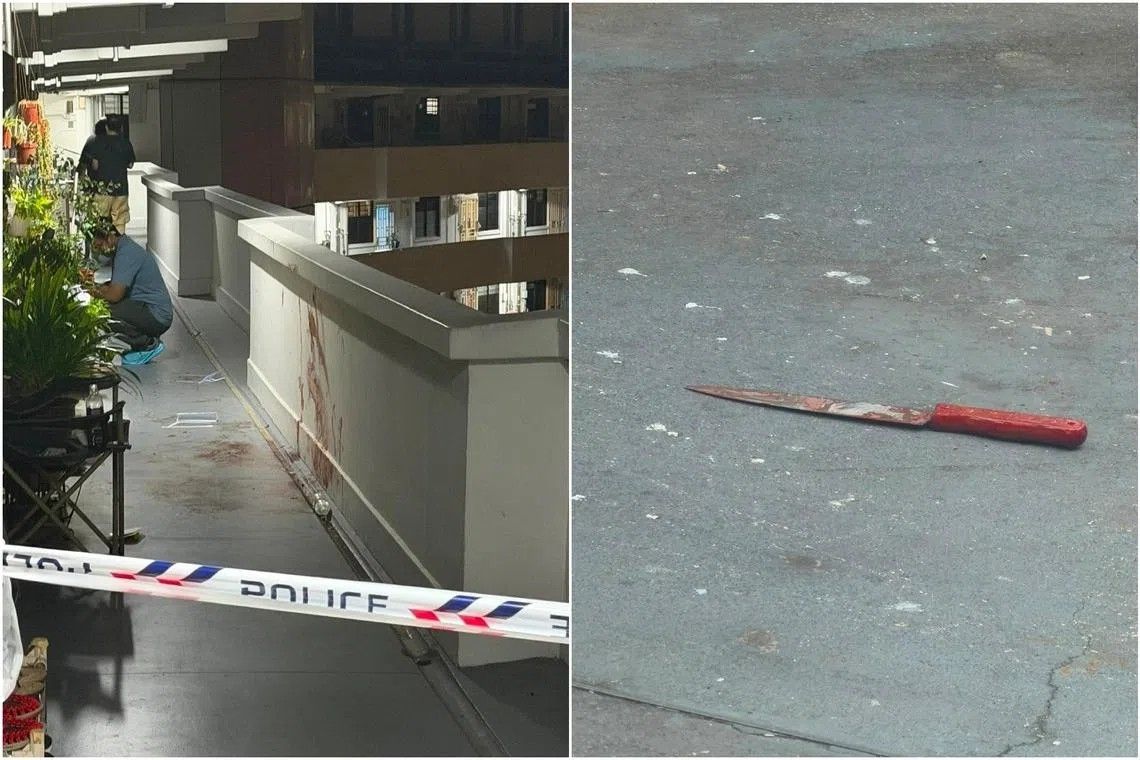
A Singapore man has been formally charged with murder in connection with the fatal incident involving his neighbour at Block 55 Lengkok Bahru, situated near Redhill Road. Ng Swee Seng, aged 59, appeared before a district court via video link on July 22 to face charges related to the death of Thiyagarajan Karunakaran, also 59. The case marks another violent crime within Singapore's public housing estates, where such incidents remain relatively rare but carry significant impact on residential communities.
Authorities received multiple calls reporting the incident shortly before 5 pm on July 20, with officers arriving to discover the victim lying unresponsive in the lift lobby on the 16th floor of the residential block. Emergency services transported Thiyagarajan immediately to the National University Hospital, where he was pronounced dead shortly after arrival. The circumstances surrounding the confrontation between the two men remain under investigation, though initial police findings suggest the altercation occurred within the common areas of the apartment block rather than within a private residence.
Physical evidence at the scene provided investigators with crucial details about the nature of the incident. When journalists from The Straits Times visited the location on July 21, prominent bloodstains were visible throughout the 16th-floor corridor, including a distinct bloodied footprint that indicated the violent nature of the encounter. Such forensic evidence helped establish the crime scene and assisted police in reconstructing the sequence of events leading to the victim's death. The presence of blood in the corridor rather than a single contained location suggests the altercation may have extended beyond a brief confrontation.
According to residents interviewed at the block, the two men occupied separate units on the same floor, positioned several apartment spaces apart from one another. This spatial arrangement suggests they were not immediate neighbours but shared the same residential level, a detail that may become relevant to understanding the origins of their conflict. The resident who spoke to media outlets had lived in the block for approximately four years and would have been familiar with the general dynamics and composition of the floor's occupants.
The incident raises questions about safety and security within Singapore's public housing estates, which accommodate the majority of the island's population. While serious violent crimes remain uncommon within these developments, which are typically managed by the Housing and Development Board, cases of neighbour-related violence underscore ongoing tensions that can emerge within multi-unit residential settings. The confined nature of public housing, where numerous families live in close proximity with shared common spaces, creates an environment where personal disputes can occasionally escalate into serious confrontations.
The charging of Ng Swee Seng represents a critical stage in the judicial process, though the case will now proceed through Singapore's courts for trial. Murder charges in Singapore carry potential capital punishment, making this among the most serious criminal allegations within the jurisdiction. The court appearance via video link on July 22 followed standard procedure for initial charges, with the accused remaining in custody pending further legal proceedings.
For residents of Block 55 Lengkok Bahru and neighbouring buildings in the area, the incident has drawn unwanted attention to what was previously an ordinary residential community. Such events, though statistically uncommon, leave a lasting psychological impact on apartment dwellers who share common spaces with their neighbours. Many residents in public housing developments rely on these communal areas for daily routines, and violent incidents inevitably alter perceptions of safety and security within their living environments.
The case also highlights the importance of community relations and conflict resolution mechanisms within residential estates. Public housing authorities in Singapore typically provide channels for residents to report disturbances and seek mediation in neighbour disputes, services that become increasingly valuable in preventing minor disagreements from escalating into dangerous confrontations. The circumstances leading to the fatal encounter between Ng and Thiyagarajan remain unclear at this stage, though investigators will likely examine whether prior complaints or signs of tension existed between them.
As the legal process unfolds, the incident serves as a reminder of the challenges inherent in managing densely populated residential areas where diverse populations live in close quarters. While Singapore's housing estates remain safe compared to many global standards, cases such as this demonstrate that vigilance and community engagement remain essential. The investigation into the precise circumstances of the confrontation, including what triggered the violent exchange, will likely provide greater insight into how such incidents can be prevented in future.

