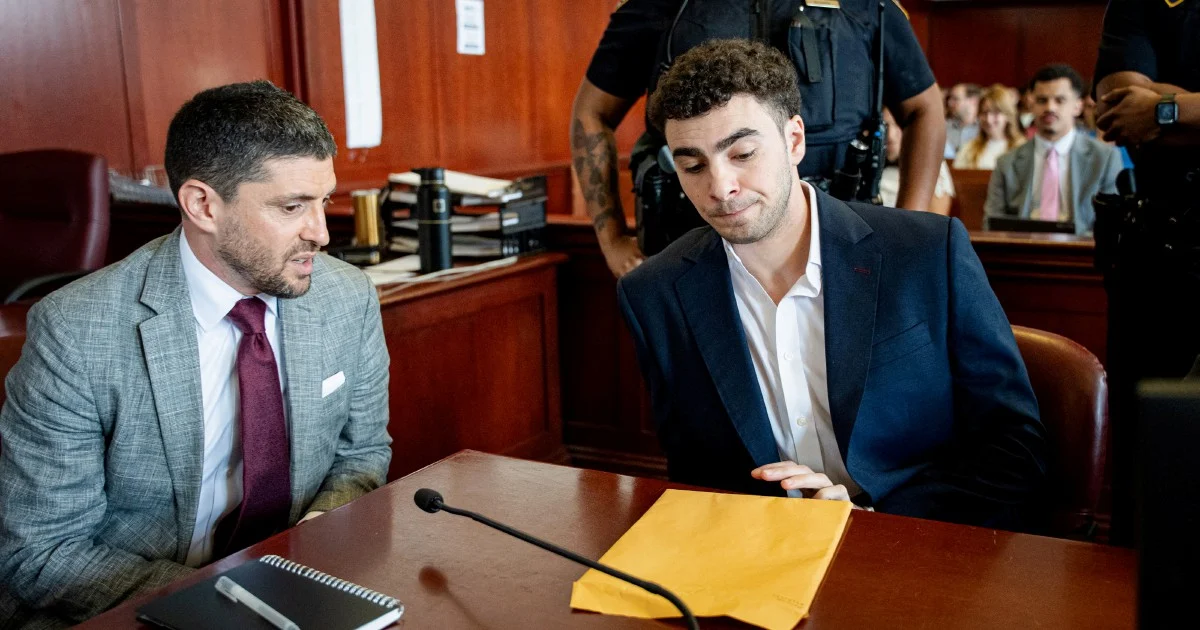
Luigi Mangione, the defendant charged with murdering health insurance chief executive Brian Thompson on a Manhattan street, has made a significant tactical shift in his legal strategy by shelving plans to introduce evidence regarding mental health complications around the time of the alleged homicide. The decision, communicated through a court filing submitted on Friday, represents a substantial recalibration of the defence approach as the high-profile case prepares for trial proceedings.
The withdrawal of mental health defence components is noteworthy given how such testimony typically functions in American criminal proceedings. Mental health evidence does not necessarily result in acquittal; rather, it can be deployed strategically to demonstrate reduced culpability, request sympathy from juries, or support arguments for lesser sentences if conviction occurs. By removing this line of defence preparation, Mangione's legal team appears to be pivoting toward alternative strategies, though the specific reasoning behind the decision remains unclear from publicly available information.
The Thompson homicide garnered substantial media attention both nationally and internationally, partly due to its execution-style nature and the prominence of the victim as head of United Healthcare, one of America's largest health insurers. The shooting occurred in December on a Manhattan sidewalk, shocking commuters and raising broader questions about public safety in urban centres. The circumstances of the alleged crime—reportedly carried out with apparent precision and deliberation—may have influenced how defence counsel assessed the viability of a mental health crisis narrative with potential jurors.
Mental health defence strategies in high-profile criminal cases often prove double-edged. While medical evidence regarding psychological distress can generate sympathy, it simultaneously risks portraying defendants as unpredictable or dangerous to public safety, potentially backfiring during jury deliberations. Defence teams must carefully weigh whether introducing such testimony strengthens their overall case theory or merely provides prosecutors with opportunities to emphasise the defendant's potential dangerousness and unreliability.
For Malaysian observers following international legal proceedings, this case illustrates how defence strategies evolve as trials approach. Unlike jurisdictions with inquisitorial systems, the American adversarial model permits defence teams considerable latitude in crafting narratives and determining which evidence to present. Strategic decisions made months before trial can fundamentally reshape the case trajectory and jury perceptions.
The decision occurs within the broader context of a case that has attracted considerable public commentary regarding healthcare industry practices and corporate accountability. Some observers have noted that the alleged victim's role managing insurance denials and coverage restrictions added a political dimension to public discourse surrounding the homicide, though such considerations should remain irrelevant to criminal proceedings focused on establishing guilt or innocence regarding specific charges.
Court filings in high-profile cases often signal broader litigation movements before they become publicly evident. By withdrawing mental health defence components, Mangione's legal team signals confidence in alternative approaches or recognition that such evidence would prove counterproductive. Trial strategy documents filed with courts frequently contain language indicating "for now," suggesting that strategic decisions remain fluid and subject to revision based on emerging circumstances or legal rulings.
The withdrawal also raises questions about expert witnesses and psychological evaluations that may have been conducted during case preparation. Defence teams typically commission comprehensive mental health assessments when such defences are being contemplated, involving extensive evaluation of the defendant's psychological history, medication records, and clinical observations. The resources devoted to such evaluations continue regardless of whether the evidence ultimately reaches trial, representing significant costs absorbed by the defence.
From a procedural standpoint, withdrawing defence components before trial affords several advantages. It prevents prosecutors from obtaining advance notice of psychological evidence, eliminating opportunities for them to prepare counter-expert testimony or develop cross-examination strategies targeting specific mental health claims. This element of surprise, maintained through strategic withdrawal of certain defence elements until trial or jury selection, represents standard tactical maneuvering in complex criminal cases.
The implications for how American criminal justice handles corporate-related violence remain significant. Cases involving victims employed in controversial industries—including health insurance, pharmaceutical manufacturing, or financial services—occasionally generate public sympathy for defendants despite serious criminal charges. Defence strategies must navigate this terrain carefully, neither invoking such public sentiment explicitly nor ignoring its potential influence on jury composition and deliberations.
As the case proceeds toward trial, additional strategic decisions will likely emerge through court filings and procedural motions. The withdrawal of mental health defence evidence represents merely one element of an evolving litigation strategy that will continue adapting as discovery proceeds and trial dates approach. For legal observers across Southeast Asia, following how American defence counsel structures arguments in complex, high-profile cases provides insights into comparative criminal procedure and strategic decision-making under pressure.
%22%2F%3E%3C%2Fpattern%3E%3C%2Fdefs%3E%3Crect%20width%3D%22100%25%22%20height%3D%22100%25%22%20fill%3D%22url(%23ph5ran1g)%22%2F%3E%3Crect%20width%3D%22100%25%22%20height%3D%22100%25%22%20fill%3D%22url(%23ph5ran1p)%22%2F%3E%3Ctext%20x%3D%2250%25%22%20y%3D%2250%25%22%20text-anchor%3D%22middle%22%20dominant-baseline%3D%22central%22%20fill%3D%22rgba(255%2C255%2C255%2C0.95)%22%20font-family%3D%22Georgia%2C%20'Times%20New%20Roman'%2C%20serif%22%20font-weight%3D%22700%22%20font-size%3D%22226%22%20letter-spacing%3D%22-0.02em%22%3EMarcos%3C%2Ftext%3E%3C%2Fsvg%3E)
%22%2F%3E%3C%2Fpattern%3E%3C%2Fdefs%3E%3Crect%20width%3D%22100%25%22%20height%3D%22100%25%22%20fill%3D%22url(%23ph4j85ng)%22%2F%3E%3Crect%20width%3D%22100%25%22%20height%3D%22100%25%22%20fill%3D%22url(%23ph4j85np)%22%2F%3E%3Ctext%20x%3D%2250%25%22%20y%3D%2250%25%22%20text-anchor%3D%22middle%22%20dominant-baseline%3D%22central%22%20fill%3D%22rgba(255%2C255%2C255%2C0.95)%22%20font-family%3D%22Georgia%2C%20'Times%20New%20Roman'%2C%20serif%22%20font-weight%3D%22700%22%20font-size%3D%22272%22%20letter-spacing%3D%22-0.02em%22%3EPerak%3C%2Ftext%3E%3C%2Fsvg%3E)