%22%2F%3E%3C%2Fpattern%3E%3C%2Fdefs%3E%3Crect%20width%3D%22100%25%22%20height%3D%22100%25%22%20fill%3D%22url(%23ph5ran1g)%22%2F%3E%3Crect%20width%3D%22100%25%22%20height%3D%22100%25%22%20fill%3D%22url(%23ph5ran1p)%22%2F%3E%3Ctext%20x%3D%2250%25%22%20y%3D%2250%25%22%20text-anchor%3D%22middle%22%20dominant-baseline%3D%22central%22%20fill%3D%22rgba(255%2C255%2C255%2C0.95)%22%20font-family%3D%22Georgia%2C%20'Times%20New%20Roman'%2C%20serif%22%20font-weight%3D%22700%22%20font-size%3D%22226%22%20letter-spacing%3D%22-0.02em%22%3EMarcos%3C%2Ftext%3E%3C%2Fsvg%3E)
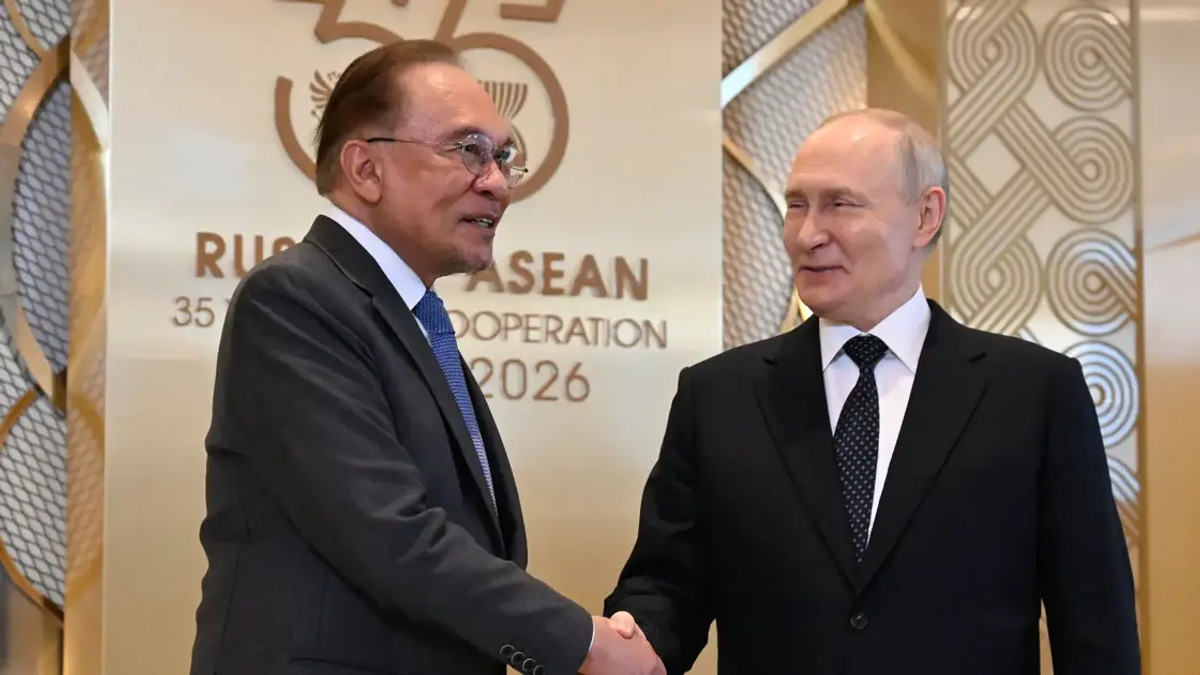
Philippine President Ferdinand R. Marcos Jr has signalled a significant appetite for deepening economic and strategic cooperation between ASEAN and Russia, arguing that the relationship has matured over three decades but remains far from reaching its full capacity. Speaking to Russia Today following his attendance at the ASEAN-Russia Commemorative Summit held in Kazan, Marcos articulated a vision of partnership that moves beyond conventional trade frameworks to embrace emerging technological domains where both sides stand to gain substantially.
The president acknowledged that while ASEAN-Russia dialogue relations have progressed steadily since their formalisation over 35 years ago, the trajectory of engagement has been modest when measured against the bloc's overall diplomatic trajectory. He noted significant variations across ASEAN member states, with certain nations having cultivated more robust bilateral relationships with Moscow than others, suggesting that a more coordinated regional approach could unlock greater synergies. This observation carries particular weight for Malaysia and other Southeast Asian economies seeking to diversify their international partnerships amid shifting global alignments.
Marcos identified advanced technology, artificial intelligence, data centre infrastructure, and power generation as priority areas where ASEAN and Russia could meaningfully collaborate. These sectors represent a marked departure from the traditional commodity-based and manufacturing-focused economic relationships that have historically characterised the ASEAN-Russia nexus. The emphasis on technology-driven cooperation reflects broader global trends where Southeast Asian nations are actively positioning themselves within emerging digital and energy ecosystems, and Russia's growing capabilities in these domains present credible partnership options that warrant serious consideration.
The Philippine leader's framing of ASEAN's international posture as one of deliberate diversification resonates with a broader Southeast Asian reality. For decades, the region's external relations were constrained by Cold War alignments and subsequently by the gravitational pull of major powers. Marcos's characterisation of the current moment as "a kind of momentum from the bipolar world" captures the genuine inflection point many ASEAN capitals perceive, where members increasingly view strategic autonomy not as neutrality but as active portfolio management across multiple great powers and economic systems. This has direct implications for Malaysian foreign policy, particularly as Kuala Lumpur navigates its own complex web of partnerships.
The recognition that entirely new domains of cooperation—sectors that scarcely existed during earlier phases of ASEAN-Russia relations—have emerged represents a genuine analytical insight. When the ASEAN-Russia dialogue partnership began in the late 1980s, cloud computing, artificial intelligence systems, and large-scale data processing were nascent or non-existent. Today they constitute fundamental infrastructure for modern economies. This temporal dimension underscores why even long-established international partnerships require periodic reimagining to reflect technological and economic realities. ASEAN nations, including Malaysia, face decisions about which technology providers and infrastructure partners to engage with, and Russia's participation in this space offers alternatives to existing dominant players.
The summit's concrete outputs—the Kazan Declaration 2026, the ASEAN-Russia Comprehensive Plan of Action spanning 2026 to 2030, and specialised agreements covering culture and energy cooperation—demonstrate that discussion has translated into documented commitments. The multi-year planning horizon suggests serious intent rather than symbolic engagement. For Malaysian stakeholders including government agencies, businesses, and research institutions, these frameworks establish formal channels through which cooperation can be structured and pursued, potentially opening opportunities in energy security, technological research, and cultural exchange.
Energy cooperation holds particular salience for Southeast Asia, where demand growth substantially outpaces current capacity expansion. Russia, despite geopolitical tensions constraining its European markets, possesses significant expertise in hydrocarbon extraction, processing, and alternative energy technologies. For resource-importing economies like Malaysia, diversified energy partnerships reduce vulnerability to supply disruptions and pricing volatility. Similarly, Russian capabilities in nuclear technology, liquefied natural gas, and renewable energy systems could be relevant to ASEAN's energy transition trajectories.
The artificial intelligence and data centre sectors merit specific attention from Malaysian perspectives. Southeast Asia has become increasingly attractive for data centre investment due to its geographic position, growing digital populations, and relatively competitive operating costs. Russian involvement in this sector could introduce alternative technology stacks and investment sources, reducing concentration risk among existing major players. For Malaysia's ambitions to position itself as a regional digital hub, engagement with diverse technology partners—including Russia—aligns with principles of technological pluralism that reduce dependency on any single ecosystem.
Marcos's broader point about ASEAN "growing up fast" and reassessing "who we deal with around the world" reflects genuine shifts in regional capitals' strategic thinking. This maturation involves moving beyond reactive responses to great power competition and instead proactively identifying where the region's interests align with potential partners across the geopolitical spectrum. Such pragmatism has always been central to ASEAN's approach, yet the current environment—marked by multiple competing frameworks, technological disruption, and energy transitions—demands more sophisticated calculation than earlier eras required.
For Malaysia specifically, the ASEAN-Russia dialogue expansion carries implications across several policy domains. Trade negotiations might yield new market access for Malaysian technology and manufacturing sectors. Scientific cooperation could yield collaborative research in energy efficiency and data management. Cultural exchanges might strengthen people-to-people connections that typically underpin durable international relationships. Additionally, Malaysia's regional leadership role means decisions about ASEAN-Russia engagement influence broader bloc positioning, making understanding these dynamics essential for Malaysian policymakers.
The summit's successful articulation of shared interests across such disparate domains—from culture through energy to advanced technology—suggests that despite geopolitical turbulence elsewhere, ASEAN-Russia cooperation possesses genuine foundations and growth trajectories. The challenge ahead involves translating declarative commitments into functional working relationships, institutional arrangements, and tangible benefits for participating nations. Malaysian engagement with these processes could position the country advantageously in emerging sectors while reinforcing ASEAN's broader strategy of inclusive partnership architecture that resists exclusive alignments.
%22%2F%3E%3C%2Fpattern%3E%3C%2Fdefs%3E%3Crect%20width%3D%22100%25%22%20height%3D%22100%25%22%20fill%3D%22url(%23ph3q5g4g)%22%2F%3E%3Crect%20width%3D%22100%25%22%20height%3D%22100%25%22%20fill%3D%22url(%23ph3q5g4p)%22%2F%3E%3Ctext%20x%3D%2250%25%22%20y%3D%2250%25%22%20text-anchor%3D%22middle%22%20dominant-baseline%3D%22central%22%20fill%3D%22rgba(255%2C255%2C255%2C0.95)%22%20font-family%3D%22Georgia%2C%20'Times%20New%20Roman'%2C%20serif%22%20font-weight%3D%22700%22%20font-size%3D%22226%22%20letter-spacing%3D%22-0.02em%22%3EPenang%3C%2Ftext%3E%3C%2Fsvg%3E)
%22%2F%3E%3C%2Fpattern%3E%3C%2Fdefs%3E%3Crect%20width%3D%22100%25%22%20height%3D%22100%25%22%20fill%3D%22url(%23ph104fig)%22%2F%3E%3Crect%20width%3D%22100%25%22%20height%3D%22100%25%22%20fill%3D%22url(%23ph104fip)%22%2F%3E%3Ctext%20x%3D%2250%25%22%20y%3D%2250%25%22%20text-anchor%3D%22middle%22%20dominant-baseline%3D%22central%22%20fill%3D%22rgba(255%2C255%2C255%2C0.95)%22%20font-family%3D%22Georgia%2C%20'Times%20New%20Roman'%2C%20serif%22%20font-weight%3D%22700%22%20font-size%3D%22226%22%20letter-spacing%3D%22-0.02em%22%3EExists%3C%2Ftext%3E%3C%2Fsvg%3E)