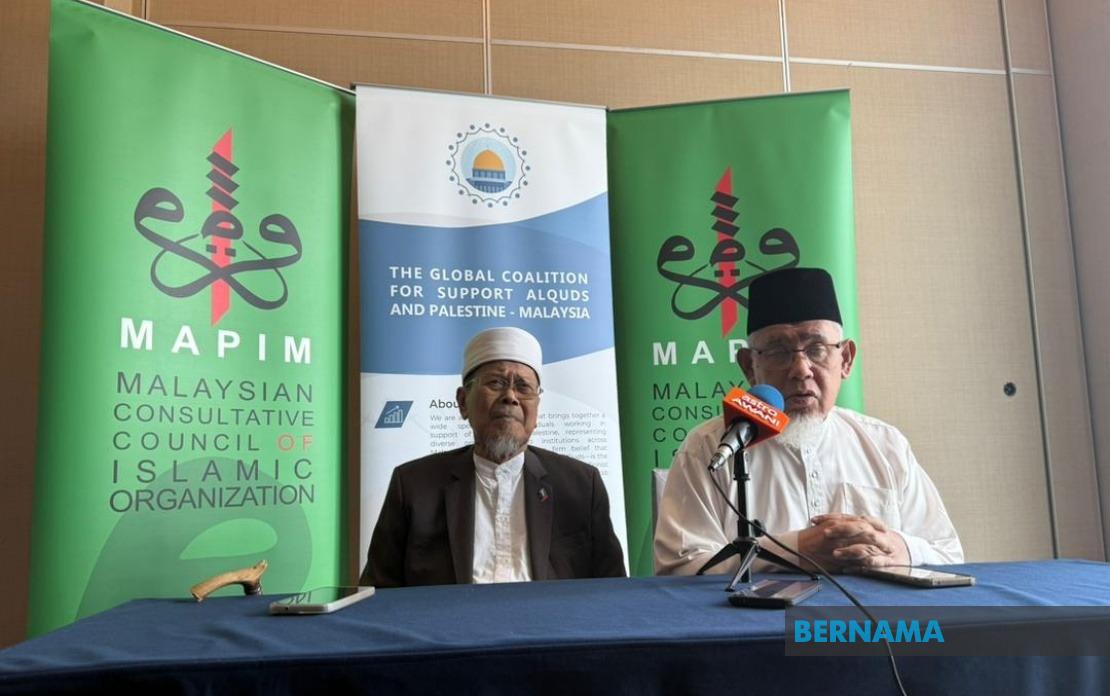
The Malaysian Consultative Council of Islamic Organisations (MAPIM) is launching an ambitious two-day Regional Mosque Conference 2026 in Ipoh starting tomorrow, representing a significant effort to galvanise mosque leadership across Southeast Asia and beyond. The gathering, organised jointly with the Perak Islamic Religious Department (JAIPk), arrives at a moment when Muslim-majority and Muslim-minority nations in the region are navigating complex questions about institutional resilience, community engagement, and the intersection of religious practice with contemporary social challenges.
According to MAPIM president Mohd Azmi Abdul Hamid, approximately 400 mosque representatives will converge on the Ipoh venue, drawing participants from across Malaysia alongside delegations from Indonesia, Singapore, Brunei, Timor-Leste, Myanmar, Cambodia, Thailand, and Vietnam. Notably, the conference will also host special participation from Türkiye, Iran, and Pakistan, signalling MAPIM's intention to position the gathering as a bridge between Southeast Asian and wider Islamic institutional networks. This geographic breadth underscores the organisation's ambition to elevate mosque-centred cooperation beyond bilateral relationships into a cohesive regional framework.
The conference's timing coincides with commemorations of World Mosque Day on August 21, observed annually to memorialise the 1969 arson attack on Al-Aqsa Mosque in Jerusalem. For MAPIM, this connection carries symbolic weight, yet Mohd Azmi has explicitly rejected the notion that such observances should remain ceremonial. Instead, he has framed the conference as an opportunity to translate commemoration into tangible institutional change, positioning mosques not merely as places of worship but as anchors of communal strength and resilience within Muslim populations throughout the region.
The conference blueprint incorporates seven principal objectives, each reflecting contemporary challenges facing mosque management and community leadership. Beyond establishing formal regional cooperation networks among participating institutions, the agenda emphasises youth mobilisation and economic engagement—recognising that sustainable mosque operations increasingly depend on cultivating younger generations and integrating communities into economic initiatives that generate resources for religious and social programmes. The inclusion of collaboration frameworks with Islamic non-governmental organisations signals recognition that mosques increasingly function within ecosystems of formal and informal institutions, and that institutional effectiveness demands inter-organisational coordination.
Participants will engage with a substantial academic and policy programme spanning presentations on institutional best practices, international dialogue sessions designed to facilitate cross-cultural exchange among mosque leaders, and dedicated discussions addressing the Palestinian cause and Al-Aqsa Mosque restoration efforts. These substantive sessions position the gathering as more than a networking exercise; they frame it as a venue where mosque leaders can collectively examine contemporary roles and responsibilities. For Malaysian delegates and observers, these discussions carry particular resonance given Malaysia's longstanding diplomatic voice on Middle Eastern affairs and the domestic political salience of Palestinian solidarity within Malaysian Muslim communities.
Three flagship initiatives will be formally unveiled during the conference, each designed to translate rhetorical commitment into practical mechanisms. A regional mosque coalition dedicated to Palestinian advocacy will institutionalise ongoing solidarity work currently dispersed across individual mosques and organisations. A newly commissioned book examining the evolving role of mosques in modern contexts will provide intellectual scaffolding for institutional reflection and policy-making. Most significantly, MAPIM is launching the MAPIM Gold Dinar—a fundraising mechanism designed to lower barriers to public contribution toward Al-Aqsa Mosque restoration by offering gold dinar purchases as an accessible donation vehicle. This innovation reflects sophisticated thinking about public engagement; by tethering fundraising to a tangible, collectible asset, MAPIM hopes to transform abstract charitable intent into concrete economic participation.
The Gold Dinar initiative merits particular attention for Malaysian audiences, as it demonstrates how traditional Islamic economic concepts are being adapted to contemporary fundraising contexts. The mechanism addresses a genuine challenge facing organisations seeking to mobilise diaspora and international Muslim support: converting emotional commitment and moral concern into sustainable financial flows. By creating an investment-like vehicle that simultaneously serves charitable purposes, MAPIM is attempting to align individual economic interest with community welfare—a pragmatic approach to bridging secular and religious motivations for resource contribution.
Mohd Azmi has articulated an expansive vision for the conference's impact, emphasising that MAPIM anticipates substantial output beyond deliberation. Participating mosques and Islamic NGOs will collectively develop a declaration and sustainable action plan with implementation timelines extending beyond the conference's conclusion. This emphasis on post-conference institutionalisation suggests organisers understand that two-day gatherings generate value primarily when they catalyse ongoing coordination structures. For regional mosque networks operating with limited coordination infrastructure, such formalised follow-up mechanisms could represent meaningful progress toward the integrated approach MAPIM seeks to establish.
The conference also signals MAPIM's broader strategic ambition to position itself as a coordinating hub for institutional Islam across Southeast Asia. By hosting this gathering and establishing the regional coalition framework, MAPIM is attempting to transcend its traditional role as a domestic advocacy organisation and stake a claim to leadership within broader regional religious networks. For Malaysian stakeholders, this positioning carries implications for how Malaysia's Islamic institutions are perceived internationally and how effectively they can project influence within Muslim-majority and Muslim-minority contexts throughout Southeast Asia.
The emphasis on global humanitarian advocacy, particularly regarding Palestine and Al-Aqsa Mosque, reflects deep currents within Malaysian Islamic discourse. These concerns are not peripheral to mosque institutional functioning but are woven into how many Malaysian Muslims conceptualise religious obligation and community solidarity. By centering these issues at a regional conference, MAPIM is validating this integration of global and local concerns while attempting to channel them into sustainable institutional frameworks rather than episodic mobilisation. This represents a subtle but significant shift in how religious advocacy is being institutionalised within mosque networks.
For observers monitoring religious institutional development across Southeast Asia, the Ipoh conference offers valuable insight into how mosque networks are adapting to contemporary challenges. The emphasis on youth engagement, economic participation, and inter-organisational collaboration reflects recognition that traditional mosque funding and governance models face sustainability pressures in increasingly urbanised, secular-influenced societies. The regional scope demonstrates that mosque leaders perceive common challenges transcending national boundaries—a potentially productive perspective if it translates into shared learning and coordinated problem-solving rather than abstract solidarity.
The conference arrives as Muslim-majority and Muslim-minority nations across Southeast Asia grapple with questions about the institutional role of mosques in plural societies. Whether through integration of economic functions, formalisation of youth leadership pipelines, or coordination of advocacy initiatives, mosques throughout the region are navigating shifts in their social positioning and their communities' expectations. MAPIM's gathering provides a venue for explicit reflection on these transformations and an opportunity to develop shared frameworks for institutional adaptation. The success of this initiative will depend substantially on whether the declared commitments to regional cooperation and sustainable action planning can overcome the significant coordination challenges inherent in establishing networks spanning diverse legal, political, and cultural contexts.

