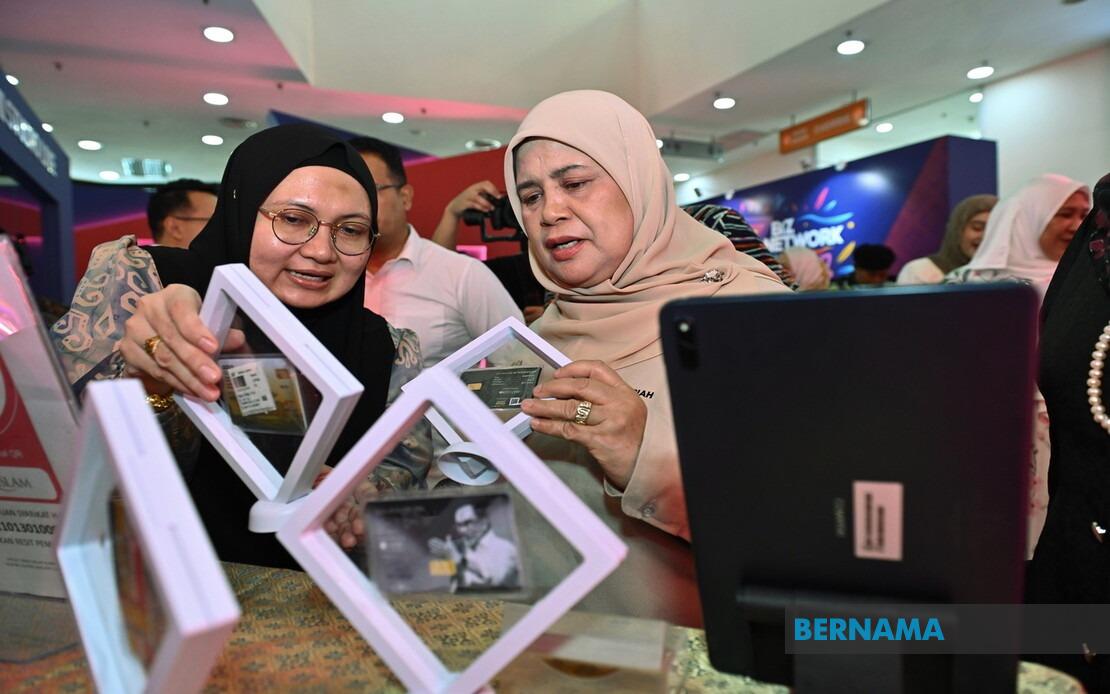
Majlis Amanah Rakyat (MARA) has embarked on an ambitious initiative to catalyse entrepreneurial growth in Sarawak, setting a RM1 million sales target through its flagship BizNetwork Sarawak programme. The scheme, which kicked off this week in Kuching, represents MARA's concerted push to equip disadvantaged business owners with digital competencies and market access tools essential for competing in today's increasingly online-driven economy. According to Datuk Rubiah Wang, Deputy Minister of Rural and Regional Development, the ambitious revenue goal reflects confidence built from the programme's proven track record in Peninsular Malaysia, where similar initiatives have successfully created pathways for entrepreneurs to expand their commercial reach.
The programme's early performance suggests momentum. During its first day alone, participating entrepreneurs collectively achieved sales of RM228,190, with several vendors reporting stock depletion by the programme's second day. This brisk start indicates strong consumer demand and effective execution by MARA's team in coordinating the event. The rapid movement of inventory underscores both the quality of offerings from Sarawak-based entrepreneurs and the effectiveness of the digital marketing training in translating online visibility into actual transactions. Such preliminary results provide encouragement that the RM1 million target, while ambitious, may prove attainable before the event concludes.
A distinguishing feature of BizNetwork Sarawak is its emphasis on digital literacy and modern selling techniques tailored to contemporary consumer behaviour. The initiative incorporates specialised training in digital marketing developed through collaboration between MARA and TikTok, with particular emphasis on live-stream selling—a methodology that has revolutionised e-commerce across Southeast Asia. By equipping entrepreneurs with hands-on experience in real-time video commerce, MARA is addressing a critical skills gap that often prevents talented business operators from transitioning to digital channels. This practical approach moves beyond theoretical instruction, enabling participants to learn through doing whilst simultaneously generating immediate revenue.
The recruitment of 32 entrepreneurs from Sarawak reflects MARA's targeted approach to fostering inclusive economic development across Malaysia's eastern territories. These participants represent diverse sectors and backgrounds, each bringing unique products and value propositions to the broader marketplace. By concentrating support on a manageable cohort, MARA can deliver intensive mentoring and technical assistance whilst maintaining quality control and ensuring meaningful outcomes for each entrepreneur. The selection process appears designed to identify individuals with genuine commercial potential and commitment to growth, rather than distributing support thinly across marginal ventures.
Beyond immediate sales generation, BizNetwork incorporates business matching sessions pairing entrepreneurs with established companies and potential commercial partners. These networking activities create opportunities for participants to forge lasting business relationships that extend far beyond the event itself. Access to wider distribution channels, wholesale buyers, and corporate procurement officers can fundamentally transform an entrepreneur's growth trajectory. For small operators in Sarawak who often face geographic constraints limiting their market reach, such introductions provide invaluable shortcuts to scaling operations that might otherwise require years of independent relationship-building.
The concurrent MARA In Fashion programme demonstrates the initiative's holistic approach to entrepreneurial development. By showcasing Borneo-inspired textile and apparel designs, MARA simultaneously promotes local creative talent whilst positioning Sarawak as a distinctive fashion region with authentic design credentials. This cultural angle provides competitive differentiation in saturated apparel markets, allowing local designers to command premium positioning based on heritage and uniqueness rather than price competition alone. The emphasis on Borneo-specific aesthetic elements taps into growing global interest in culturally-rooted fashion and ethical production narratives.
MARAlso highlighted the integration of advanced technology into its textile and vocational training curriculum. The incorporation of artificial intelligence tools for design optimisation represents forward-thinking pedagogy that prepares trainees not for today's industry standards but for tomorrow's competitive landscape. Rather than teaching static design principles, MARA is demonstrating how creative professionals can leverage computational tools to accelerate innovation cycles and produce more sophisticated outputs. This technological integration within TVET programmes positions graduates as genuinely modern practitioners capable of operating across traditional craftsmanship and digital workflows.
The government's financial commitment underscores its serious intent regarding Sarawak's entrepreneurial ecosystem. Four entrepreneurs at the event received MARA financing and development grants totalling RM333,000, representing tangible capital infusions that enable business expansion, inventory purchases, and infrastructure improvements. Such grants remove financing barriers that disproportionately affect rural and less-connected entrepreneurs, democratising access to growth capital typically concentrated among those with established banking relationships or collateral assets. The grants' inclusion within BizNetwork demonstrates integrated support architecture combining skill development, market access, and financial enablement.
For Malaysian policymakers, BizNetwork Sarawak exemplifies how centralised development agencies can adapt proven models to regional contexts whilst maintaining programmatic integrity. The Peninsular Malaysia success provided a template, yet Sarawak's distinct cultural assets and entrepreneurial composition required customised implementation. This flexibility within structured frameworks—applying consistent principles whilst accommodating local realities—offers lessons applicable across development programming. The initiative also demonstrates MARA's evolution from traditional subsidy-provider towards facilitator of market connections and skill upgrading, a philosophical shift increasingly necessary in knowledge-driven economies.
The programme's emphasis on digital channels reflects broader Southeast Asian trends where e-commerce adoption, accelerated by pandemic-era consumer behaviour shifts, has become prerequisite for commercial viability. For Sarawak entrepreneurs historically constrained by logistics costs and geographic distance from major population centres, digital channels fundamentally alter competitive dynamics. An operator in remote Sarawak can now access customers across Malaysia, Singapore, and beyond without establishing physical retail presence or complex distribution networks. BizNetwork equips participants to exploit these technological advantages, levelling playing fields historically tilted toward peninsula-based businesses.
Longer-term implications extend beyond individual participant success to broader economic inclusion objectives. By systematically building entrepreneurial capacity in Sarawak, MARA contributes to diversified economic development reducing reliance on commodities and large employers. A thriving SME sector generates employment, local procurement, and community wealth retention. Successful entrepreneurs often reinvest profits into their home communities and mentor emerging businesspeople, creating multiplicative development effects extending far beyond programme participants themselves. The RM1 million sales target, whilst commercially significant, represents just one measure of success; the real achievement lies in catalysing sustainable entrepreneurial culture.
As BizNetwork Sarawak continues, monitoring outcomes and capturing learnings will prove crucial for refining future iterations and applying successful elements elsewhere in Malaysia. The early sales figures and entrepreneurial enthusiasm documented suggest MARA has struck appropriate balance between ambition and attainability. The programme illustrates how targeted government support, properly calibrated and delivered through modern mechanisms, can meaningfully accelerate opportunities for entrepreneurs who possess capability and commitment but lack access to crucial resources—precisely the development challenge Malaysia must address to achieve inclusive prosperity.

