The Majlis Amanah Rakyat (MARA) is moving ahead with sweeping legislative reforms intended to modernise the agency and entrench stronger checks on leadership authority. The proposed MARA Bill 2026, which has received Cabinet policy approval, is scheduled for parliamentary presentation in November, marking a significant milestone in the government's push to strengthen governance standards across public institutions.
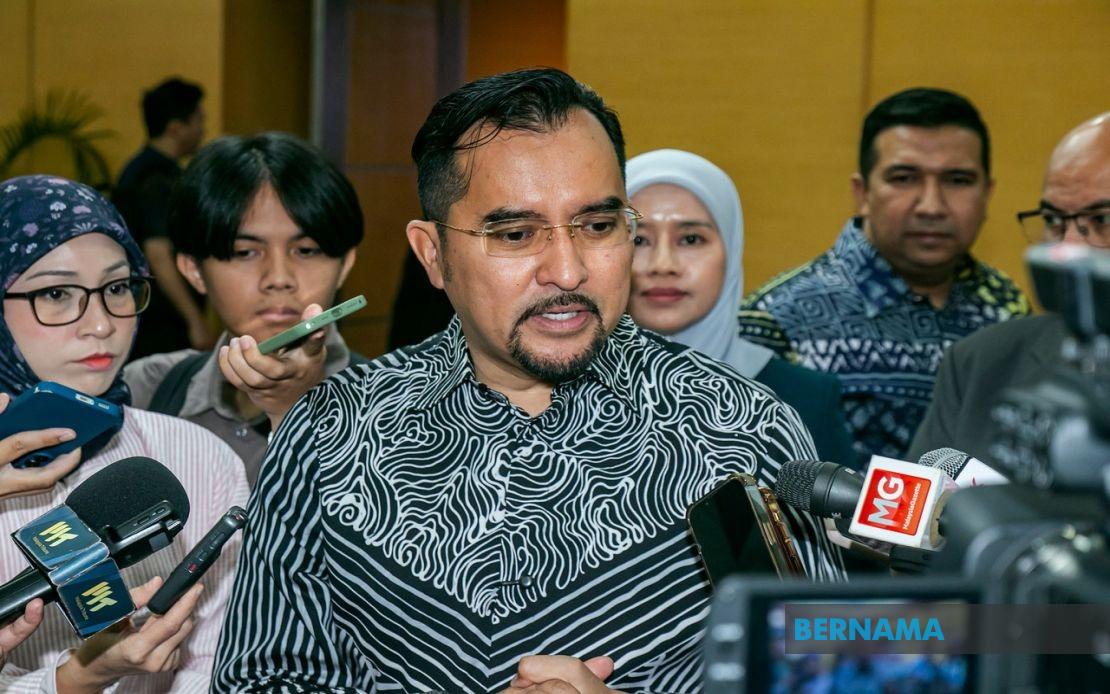
MARa chairman Datuk Asyraf Wajdi Dusuki outlined the Bill's architecture during remarks at the MARA Sponsored Pre-Departure programme, revealing that approximately 80 per cent of the legislation's framework focuses on good governance principles aligned with international benchmarks and contemporary corporate practices. The centrepiece of the reform package is a deliberate curtailment of chairperson authority—a structural shift intended to insulate the institution from concentrated decision-making and reduce vulnerability to misconduct.
The restrictions placed on the chairman's role represent a marked departure from the governance model established under the original MARA Act 1966. Under the new Bill, the chairman's responsibilities will narrow considerably, confining decision-making authority to Board of Directors oversight and policy determination while stripping away involvement in routine administrative functions. This arrangement introduces a separation of powers principle whereby the chairman functions principally as a check-and-balance mechanism rather than an executive operator.
Datuk Asyraf Wajdi framed the Bill's intent as institutional strengthening rather than personalised political positioning, emphasising that his tenure is transient while MARA's integrity is permanent. He articulated the aspiration to leave behind an institution fortified against systemic vulnerabilities—one that operates within robust governance safeguards that eliminate space for corruption, malpractice, misappropriation, or financial leakage. This framing reflects broader concerns within Malaysia's public sector regarding institutional resilience and the protection of stewardship mandates.
The Bill's genesis lies in documented governance failures and operational irregularities that prompted a comprehensive institutional review. The earlier August 12 statement from the chairman detailed the Bill's preventative ambitions: ensuring that past incidents involving abuse of power, governance weaknesses, misappropriation, and misallocation of resources become structurally impossible under the new legislative framework. These concerns have accumulated across MARA's tenure as custodian of programmes designed to safeguard Malay and Bumiputera economic and educational interests.
MARa's current governance architecture derives from legislation enacted in 1966—a regulatory framework that predates modern corporate standards and fails to reflect contemporary institutional risks. The chairman's argument that governance requirements evolve across decades carries particular weight for Malaysian policymakers grappling with sectoral modernisation. The disconnect between mid-twentieth-century legislation and twenty-first-century operational complexity creates regulatory gaps that the Bill 2026 is designed to close, anticipating that governance standards will continue shifting over the coming decades.
For Malaysian stakeholders, particularly Bumiputera business operators and beneficiaries of MARA's educational and development programmes, the Bill signals commitment to protecting institutional effectiveness through structural reform. Weakened governance architectures undermine an agency's capacity to deliver its core mandate—in MARA's case, advancing Malay and Bumiputera economic participation and professional development. By constraining chairperson discretion and embedding international standards, the legislation aims to enhance public confidence in programme delivery and resource stewardship.
The November parliamentary tabling timeline places the Bill on the legislative calendar during a period when Malaysia is navigating broader public sector accountability initiatives. The measure arrives alongside concurrent efforts to strengthen transparency mechanisms and reduce concentration of authority across government institutions. This convergence suggests a coordinated institutional reform agenda, though the Bill's ultimate passage and implementation will depend on parliamentary deliberation and potential amendments during the legislative process.
For the broader Southeast Asian context, MARA's governance overhaul reflects regional trends toward profoundising public institutional performance standards. As developing economies across ASEAN strengthen state-owned enterprise governance and government agency accountability, Malaysia's approach to legislative modernisation offers a case study in addressing institutional vulnerabilities through structural constraint rather than prosecutorial enforcement alone. The explicit focus on constraining executive authority through legislation rather than relying on individual accountability mechanisms suggests learning from past governance lapses.
The Bill's emphasis on alignment with international governance standards positions MARA within globally recognised best-practice frameworks while maintaining its foundational mandate to serve specific beneficiary communities. This balancing act—protecting institutional mission while embedding external governance standards—reflects the complexity of reforming agencies with constitutionally protected developmental roles. The success of the Bill's implementation will ultimately rest not merely on legislative text but on institutional culture change and stakeholder engagement across MARA's operational network.
The coming parliamentary session will test whether Malaysian legislators endorse the governance architecture outlined by the MARA leadership. The Bill's passage would represent not merely technical legislative updating but institutional validation that governance modernisation advances developmental effectiveness. For Malaysian citizens dependent on MARA's programmes and services, the Bill's trajectory symbolises whether systemic vulnerability to misconduct can be architecturally prevented rather than simply managed through post-incident accountability.

