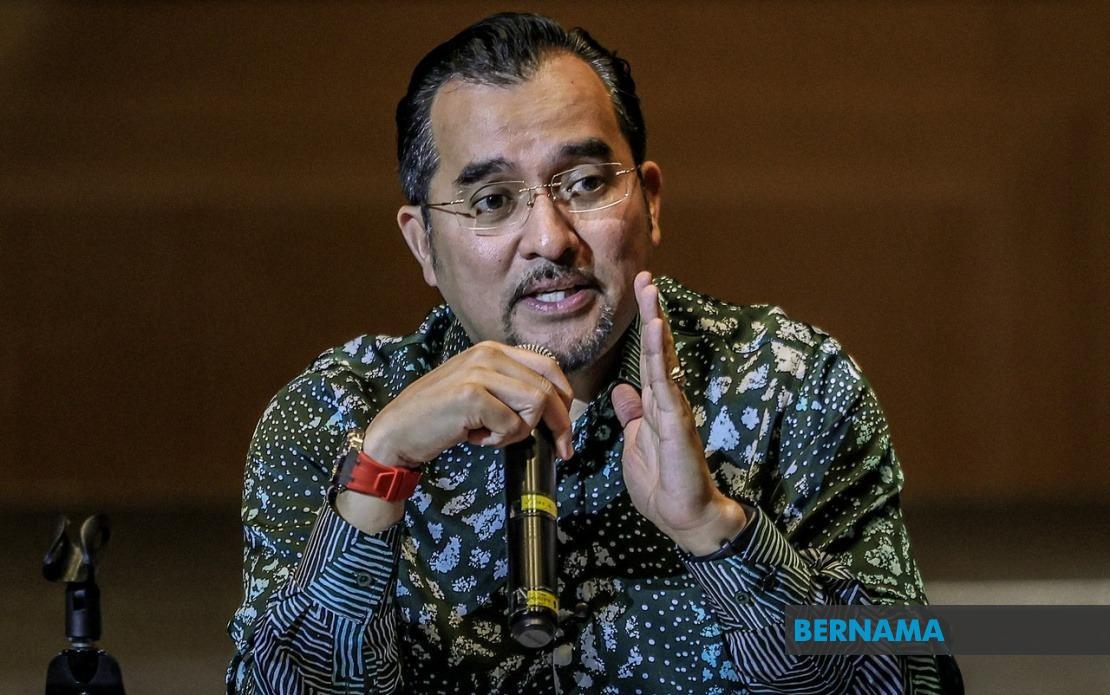
The Majlis Amanah Rakyat (MARA) is preparing sweeping institutional reforms through a new Bill expected to reach Parliament before the year closes, with governance restructuring dominating the legislative agenda. MARA chairman Datuk Dr Asyraf Wajdi Dusuki disclosed that approximately four-fifths of the proposed MARA Bill 2026 centres on corporate governance improvements designed to fortify the organisation's operational architecture and decision-making processes. The legislation, already endorsed in principle by the Cabinet, reflects mounting concern about management failures that have previously plagued the venerable Bumiputera development agency.
Historically, MARA has confronted repeated scandals involving the misuse of authority, structural vulnerabilities in governance, asset disappearance, procedural breaches, financial drainage, and systemic risks capable of inflicting lasting damage to an institution foundational to Malay and Bumiputera advancement. The new Bill represents an attempt to close institutional vulnerabilities and restore public confidence in an agency that manages substantial resources and public expectations. The scale of this overhaul signals recognition that incremental adjustments have proven insufficient to address deep-rooted governance deficiencies accumulated over decades of operation under the MARA Act 1966.
A centrepiece of the reform agenda involves fundamentally recalibrating the MARA chairman's executive reach. Under the current legislative framework, the chairman wields considerable authority beyond ceremonial board leadership. The revised Bill will narrow these powers, confining the chairman's purview to chairing the Board or Council and determining policy direction, effectively stripping the position of operational control previously granted under the 1966 Act. This distinction matters significantly for Malaysia's institutional development: concentrating power in a single chairman position has proven corrosive across many government-linked organisations, enabling individual misconduct to cascade through entire institutional structures without adequate checks.
Complementing this power redistribution, the legislation mandates a rigorous separation between the Board and MARA's management hierarchy, preventing board members from simultaneously holding executive management roles. The Bill further introduces formal "fit and proper" assessment criteria for board appointment, ensuring nominees meet defined competency and integrity standards before assuming office. Term limits will also apply to board service, institutionalising rotation and preventing entrenchment of particular power blocs. These mechanisms reflect international best practice in corporate governance, bringing MARA's standards closer to those expected of multinational corporations and advanced public institutions.
Financial stewardship receives parallel attention through tightened procurement protocols and enhanced budgetary oversight designed to align with both national standards and internationally recognised best practices. MARA's spending patterns and procurement processes have historically attracted scrutiny, with concerns about value-for-money and competitive tendering. The Bill attempts to remedy these through centralised control and transparent processes that reduce opportunities for inappropriate vendor selection or inflated expenditures. For Malaysian taxpayers and Bumiputera constituents relying on MARA's programmes, such financial discipline translates directly into expanded resources available for genuine development initiatives rather than losses to inefficiency or corruption.
The legislation establishes several mandatory board committees absent from current structures, including dedicated audit, investment, finance and governance, and risk oversight bodies. These committees function as independent watchdogs, each with defined mandates to scrutinise specific institutional dimensions. The creation of these permanent structures institutionalises oversight rather than relying on ad-hoc investigations triggered only after scandals emerge. For Southeast Asian governance observers, MARA's committee framework represents incremental progress toward institutionalised accountability in government-linked enterprises, a perennial challenge across the region.
A particularly significant innovation involves establishing a Syariah Committee for the first time within MARA's governance structure. This committee will ensure all institutional operations, investments, and policies comply with Islamic law principles. Given MARA's explicit mandate to advance Bumiputera—a constitutionally enshrined community characterised by Islam as a defining element—aligning institutional practice with Syariah strengthens the nexus between the agency's religious and developmental missions. This move also reflects evolving governance standards within Malaysia's Islamic finance and institutional sectors, where Syariah compliance has become expected rather than exceptional.
The legislative agenda extends beyond structural innovation to address systemic operational weaknesses identified through intensive review. MARA chairman Asyraf Wajdi established a specialist governance task force chaired by former Bank Negara Malaysia governor Tan Sri Muhammad Ibrahim following his appointment in March 2023. This task force conducted comprehensive institutional diagnostics, leading to multiple concurrent reforms alongside the Bill preparation. These measures included imposing stricter financial discipline organisation-wide, conducting forensic audits of subsidiary entities to uncover undisclosed liabilities or mismanagement, consolidating internal audit functions previously scattered across MARA and its holding company MARA Corp, and fundamentally restructuring the procurement division to eliminate discretionary spending pathways.
Monthly financial performance reporting to the MARA Council now operates according to international standards, providing management transparency previously absent from institutional culture. Establishing a structured reporting regime proves critical because information asymmetries—where senior leaders lack reliable data about lower-level activities—create environments where misconduct flourishes undetected. By institutionalising regular, standardised reporting, the reforms attack governance vulnerabilities at their source, making evasion or concealment substantially more difficult.
The Bill's comprehensive approach reflects accumulated institutional learning from MARA's previous difficulties and governance crises within comparable entities across Malaysia and Southeast Asia. Rather than narrow technical fixes addressing individual scandals, the legislation attempts systemic repositioning designed to prevent recurring failures across multiple institutional dimensions. This breadth indicates that the reform agenda targets not one specific abuse pattern but rather foundational structural weaknesses affecting how MARA allocates resources, selects leaders, monitors performance, and enforces accountability.
For Malaysian policymakers and Bumiputera development stakeholders, the MARA Bill 2026 represents a critical juncture determining whether institutional reform rhetoric translates into substantive governance elevation. The legislation's Parliamentary passage will signal governmental commitment to elevating standards within government-linked enterprises. Conversely, parliamentary delays or dilution of provisions would suggest that institutional inertia and resistance to change remain powerful forces within Malaysia's bureaucratic ecosystem. Given MARA's strategic importance to Bumiputera advancement and its management of substantial public resources, the Bill's outcomes carry implications extending far beyond the agency itself.

