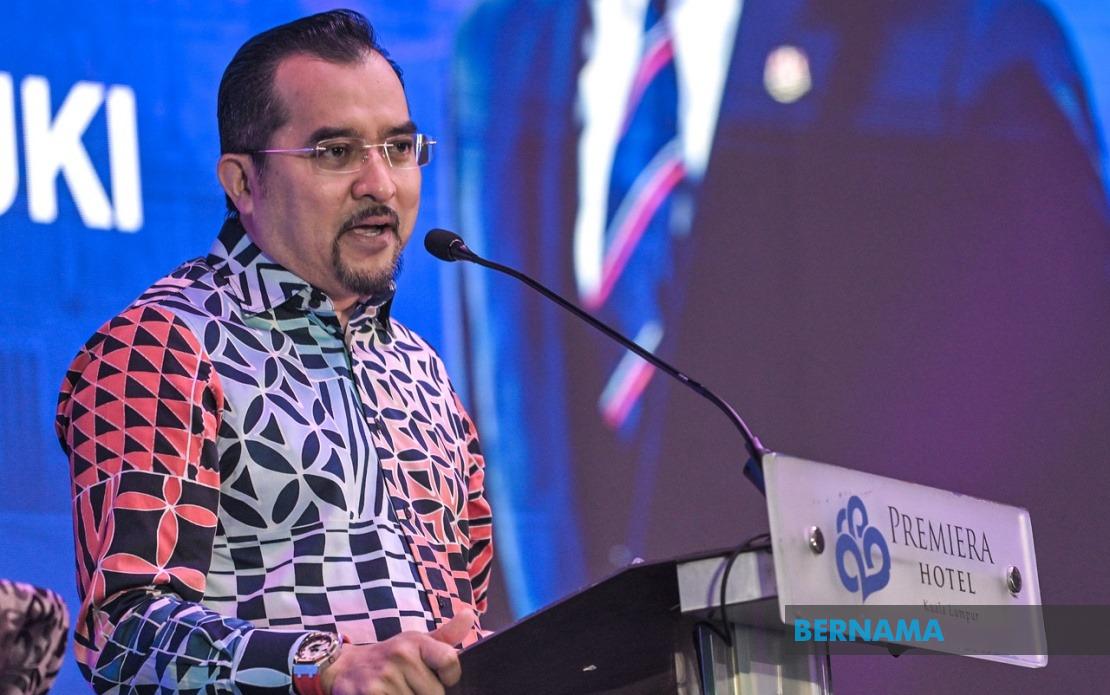
Malaysia's Majlis Amanah Rakyat (MARA) is moving to embed military-trained discipline into its network of junior science colleges by deploying four full-time wardens to each institution. The initiative, announced by MARA chairman Datuk Dr Asyraf Wajdi Dusuki, represents a strategic shift towards leveraging ex-military personnel's experience in organisational discipline and character formation—a decision that reflects growing concerns about student conduct and the effectiveness of traditional pastoral care systems in Malaysia's boarding schools.
The phased deployment begins this year with ten MARA Junior Science Colleges (MRSM), before expanding to encompass all 58 institutions nationwide by January 2026. Each college will employ two male and two female wardens, creating a dedicated layer of supervision separate from teaching staff. This staffing structure suggests MARA recognises that classroom teachers, already stretched across academic responsibilities, cannot adequately manage residential supervision and character development initiatives simultaneously. The introduction of specialised wardens therefore addresses a practical capacity gap that has long complicated discipline management in Malaysia's residential academic institutions.
The selection process for these wardens has undergone rigorous vetting in partnership with the Malaysian Armed Forces (ATM) and relevant government agencies. Male warden recruitment has already concluded, while female warden selection was expected to finalise at the time of Asyraf Wajdi's statement. This collaborative screening underscores MARA's commitment to appointing only those with exemplary service records, establishing clear competency standards for individuals entering educational environments. For Malaysian parents and students, this deliberate curation carries implications for institutional accountability and the credibility of the warden programme itself.
Mara's rationale centres on the premise that former military personnel possess intrinsic advantages in enforcing discipline and mentoring character. Military backgrounds typically involve exposure to hierarchical structures, standardised codes of conduct, and systematic approaches to accountability—qualities that, when transferred to educational settings, can theoretically enhance pastoral care consistency. However, the effectiveness of this model depends heavily on how wardens navigate the distinct demands of adolescent development, institutional dynamics, and contemporary student expectations, areas in which military training alone provides limited preparation.
The timing of this initiative aligns with MARA's broader institutional narrative around values-based education. Leadership has consistently emphasised that MARA graduates must embody not merely technical competence and skill but also strong moral and ethical foundations. By formalising a dedicated warden corps, the organisation seeks to translate this aspiration into concrete structural support. The emphasis on discipline and morality suggests MARA views character formation as sufficiently important to warrant permanent, full-time roles—a distinction that elevates pastoral concerns to institutional priority alongside academic achievement.
Parallel to the warden deployment, MARA disclosed its continued trajectory of employment success, particularly through its Technical and Vocational Education and Training (TVET) pathway. The organisation reported a 99.1 per cent graduate employability rate, a figure that positions MARA among Malaysia's most effective vocational education providers. This metric carries particular significance for a nation seeking to reduce skills mismatches and strengthen its semi-skilled workforce pipeline, areas where vocational institutions play pivotal roles in economic development.
The employment outcomes extend beyond mere job placement; MARA TVET graduates command premium starting salaries through industry partnerships. A recent recruitment drive by Samsung, which hired 700 MARA students at starting salaries of RM3,500, exemplifies this value proposition. Such figures suggest Malaysian employers recognise MARA training as translating directly into workplace-ready competencies, justifying higher entry-level compensation. For prospective students and families evaluating educational pathways, these employment metrics offer concrete reassurance about post-graduation prospects—a consideration often overlooked in public discourse prioritising academic rankings over vocational outcomes.
MARA's investment in excellence programming further signals institutional confidence in performance acceleration. The allocation of RM145,000 for special excellence programmes across five top-performing MRSMs—institutions recognised for outstanding SPM examination results—represents targeted reinforcement of institutional strengths. This funding approach acknowledges that peak performers require sustained investment to maintain competitive advantage, a principle increasingly recognised in Malaysian education policy yet inconsistently resourced across the sector.
The broader context of these initiatives reflects evolving thinking about residential education in Malaysia. As urbanisation accelerates and family structures diversify, boarding institutions increasingly shoulder responsibilities extending well beyond academic instruction. Discipline maintenance, character development, and pastoral support now constitute core institutional functions demanding dedicated expertise and resources. MARA's deployment of specialist wardens responds to this expanded mandate, attempting to ensure that residential college experiences cultivate not simply credentialed individuals but well-formed citizens equipped with stable values and refined conduct.
For Southeast Asian education policymakers observing Malaysian approaches, MARA's warden initiative offers instructive lessons about balancing specialisation with integration. By creating a distinct warden cadre, MARA implicitly acknowledges the limitations of expecting teachers to serve dual roles. Yet this separation also risks fragmenting student experience if wardens and teachers operate without robust communication frameworks and shared developmental objectives. Successful implementation thus hinges on institutional architecture ensuring wardens function as integral team members rather than parallel structures.
The investment in both military-backed discipline infrastructure and employment-linked vocational success positions MARA at an interesting institutional crossroads. The organisation simultaneously emphasises character formation—a value-heavy concern—and labour market integration—an outcome-focused priority. This dual emphasis reflects contemporary Malaysian education tensions between aspirations for holistic human development and economic pressures demanding demonstrable employability returns. How MARA synthesises these commitments across its student experience will shape Malaysian vocational education approaches for the coming decade.

