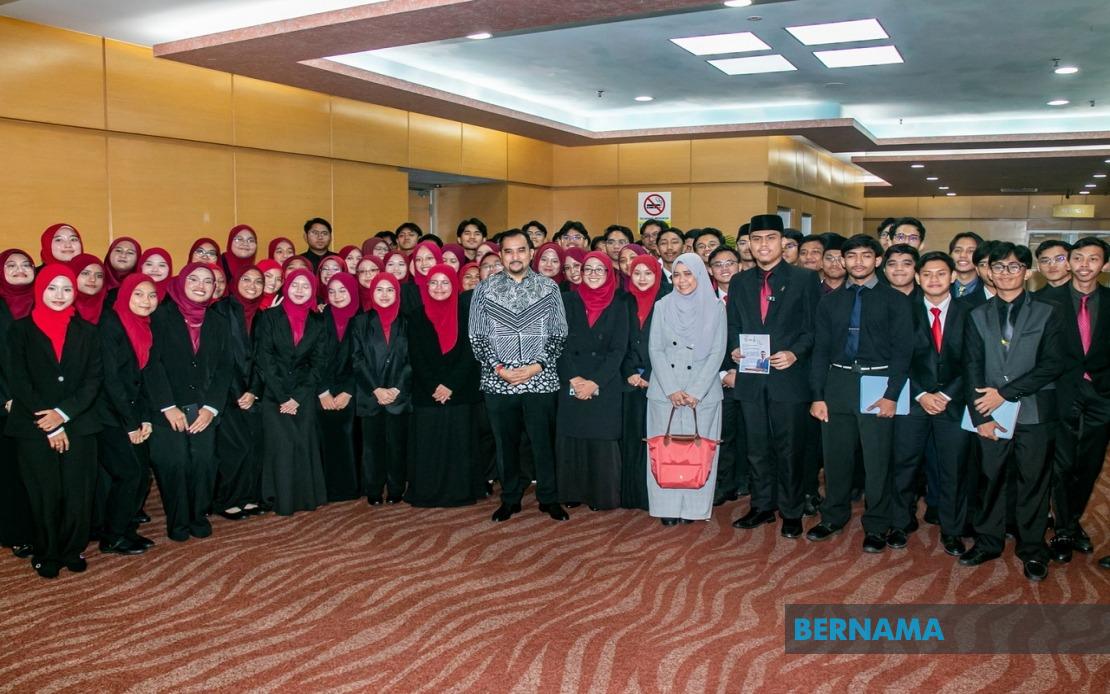
Majlis Amanah Rakyat (MARA) has revived a dormant medical education initiative, resuming placements at Al-Azhar University in Egypt for the first time since 2019. The state-backed development agency has enrolled 78 students in the programme's reopened first cohort, marking a significant expansion of overseas study opportunities for aspiring Malaysian doctors within MARA's wider scholarship ecosystem.
The reinstatement follows formal approval from the Cabinet, with MARA chairman Datuk Dr Asyraf Wajdi Dusuki announcing the development at a pre-departure ceremony for sponsored students. The decision carries considerable financial implications for participating families, as the total investment per student across the five-year medical course stands at RM350,000. This figure reflects a substantial subsidy negotiated with Al-Azhar, which has granted a 50 per cent discount to the agency, effectively halving what would otherwise represent a considerable expense for Malaysian households.
The cost comparison with domestic medical education underscores the strategic value of the revival. Pursuing a medical degree through Malaysian institutions typically demands outlays ranging from RM700,000 to RM800,000 per student, figures that place such training beyond the reach of many middle and lower-income families. By contrast, the Al-Azhar pathway offers comparable qualification at less than half the domestic price, democratising access to medical training for a broader demographic of Malaysian students. MARA chairman Asyraf Wajdi attributed the decision to proceed to Prime Minister Datuk Seri Anwar Ibrahim's personal backing, indicating high-level political commitment to expanding educational access.
The medical programme represents just one facet of MARA's broader international scholarship push this year. Alongside the Al-Azhar intake, the agency is dispatching 600 additional students to overseas destinations beginning next week, representing a staged rollout to universities across multiple continents. These scholars originate from MARA's three residential preparatory colleges: Kolej MARA Seremban in Negeri Sembilan, Kolej MARA Banting in Selangor, and Kolej MARA Kuala Nerang in Kedah, institutions that serve as pipeline feeders for the agency's international placement system.
The geographic distribution of placements reflects strategic partnerships spanning developed nations and emerging economies. Destinations include New Zealand, Canada, Australia, South Korea, the United Kingdom, and Egypt, positioning MARA scholars within research-intensive and growth-oriented tertiary systems. This diversification across multiple educational jurisdictions reduces concentration risk and exposes Malaysian students to varied academic cultures and labour markets, potentially enhancing their competitive positioning in an increasingly globalised professional landscape.
Quality metrics disclosed by MARA demonstrate the calibre of institutions recruiting its scholars. Eleven sponsored students have secured places at Imperial College London, one of Britain's most selective and research-intensive universities. More broadly, the agency reports that 40 MARA-sponsored students have gained admission to institutions ranking within the world's top ten by international standards, while a further 107 have been accepted to universities occupying the top twenty globally. These metrics suggest that MARA's selection and preparation processes are successfully identifying and developing academically competitive candidates capable of accessing elite tertiary institutions.
The resurrection of the Al-Azhar medical scheme carries implications beyond mere cost reduction. Egypt's Al-Azhar University, one of the Islamic world's most venerable educational institutions with over a millennium of academic tradition, provides an alternative pathway to medical qualification with particular resonance for Malaysian Muslims. The university's integration of Islamic scholarship with contemporary medical science offers a distinctive educational experience, potentially appealing to students seeking professional training aligned with faith-based values. The 50 per cent discount extended to MARA suggests deepening educational cooperation between Malaysia and Egypt, with ramifications for bilateral cultural and professional exchange.
From a regional perspective, MARA's scholarship expansion addresses a persistent challenge facing Southeast Asian nations: the limited domestic capacity for medical education relative to demand. Malaysia's own medical schools, though respected, operate under considerable pressure to accommodate qualified applicants. By leveraging partnerships with international institutions, particularly those offering discounted terms, MARA effectively exports demand while maintaining quality standards. This approach may offer lessons for other ASEAN governments facing similar constraints in health professions education.
The programme's timing aligns with Malaysia's broader human capital development agenda. As the nation pursues healthcare sector modernisation and expansion, ensuring an adequate supply of qualified physicians remains a policy priority. Overseas-trained doctors returning to Malaysian practice enrich the domestic medical workforce with international exposure and diverse clinical perspectives. The Al-Azhar cohort, upon qualification and return, will contribute to physician supply across both urban and provincial settings, potentially addressing geographical imbalances in medical expertise that persist within Malaysia.
MARE's decision to resume Al-Azhar placements also reflects evolving financial calculus around international education. The agency's negotiation of a halved tuition discount signals its leverage as a major institutional partner, while the willingness to absorb substantial per-student costs demonstrates public sector commitment to merit-based educational access. For Malaysian middle-class families unable to afford private medical education, these scholarships represent genuine social mobility, enabling talented students from modest backgrounds to pursue high-status professional training that would otherwise remain inaccessible.
The seven-year gap preceding the resumption warrants consideration of the factors that initially prompted suspension. While not explicitly detailed in MARA's announcements, the hiatus likely reflected budgetary constraints, administrative reassessments, or evolving institutional priorities that have now shifted. The decision to reinvest in the Al-Azhar pathway suggests confidence in the partnership's value and renewed appetite for overseas education expansion within the agency's strategic planning.
Looking forward, the success of this inaugural cohort will significantly influence MARA's willingness to scale the programme further. Should the 78 students perform competitively, demonstrate satisfactory professional outcomes, and sustain positive engagement with Al-Azhar, the agency may substantially expand future intakes. Conversely, any difficulties encountered during training or upon return to Malaysia could prompt a more measured approach. The stakes extend beyond individual student trajectories, encompassing Malaysia's capacity to maintain robust medical workforce development amid competing fiscal demands and evolving educational partnerships across the Muslim world and beyond.

