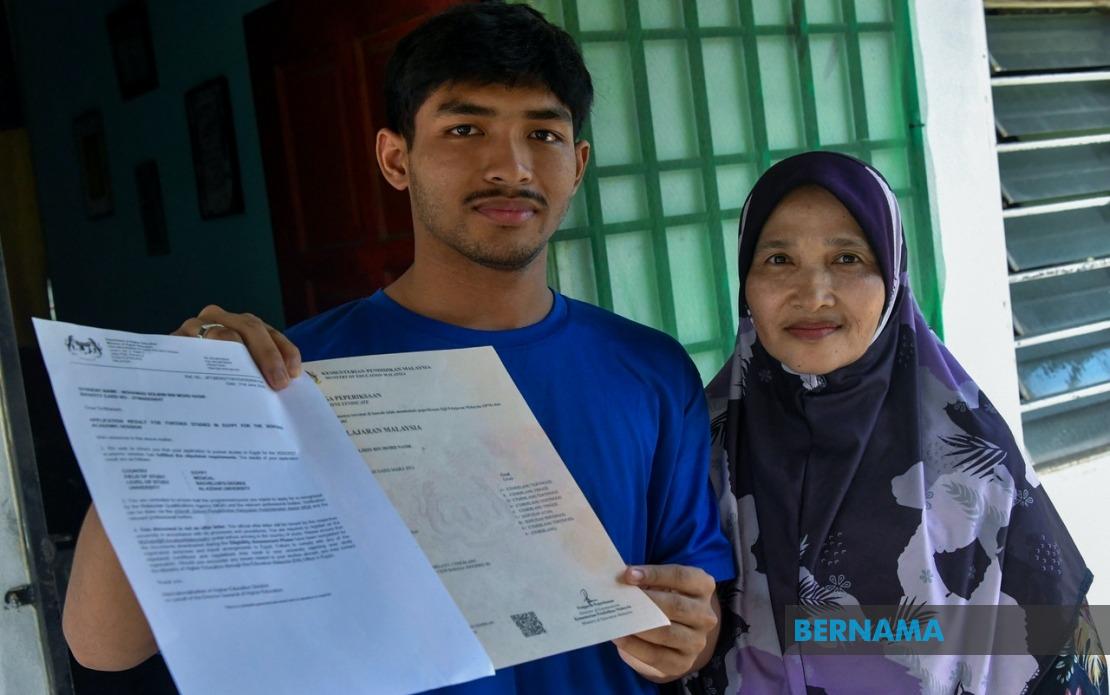
A 19-year-old student from Kelantan who had seriously contemplated rejecting an offer to study medicine at Egypt's prestigious Al-Azhar University may now realise his childhood ambition after the Majlis Amanah Rakyat stepped forward with financial backing. Mohamad Solihin Mohd Nasir, a former student at MARA Junior Science College Jeli, faced an impossible choice when the estimated RM100,000 cost of tuition and living expenses for the five-year programme proved beyond his family's reach. The intervention by MARA, announced during a video call with the agency's chairman Datuk Dr Asyraf Wajdi Dusuki, represents a significant lifeline for a young man whose circumstances exemplify the barriers faced by talented students from disadvantaged backgrounds seeking higher education overseas.
Mohamad Solihin's path to this crossroads reflects personal tragedy intertwined with academic achievement. His father, Mohd Nasir Abdul Rahman, died of a heart attack in 2014 when the boy was in Standard One, an event that crystallised his determination to pursue cardiothoracic surgery. The loss of his father became the emotional anchor for his medical ambitions, transforming grief into purpose. His mother, Faridah Mohamad, now 60 years old and managing thyroid disease, has relied on her other children for support, making it impossible for the family to fund overseas tertiary education. As the youngest of five siblings, Mohamad Solihin faced the prospect of watching his dream slip away despite his exceptional academic record—a cumulative grade point average of 3.96 from Kelantan Matriculation College, which had secured him the Al-Azhar offer on June 15.
The financial barrier to accepting the prestigious Egyptian placement underscores a persistent challenge in Malaysia's education system. While talented students from modest backgrounds gain admission to world-class institutions, the gap between academic qualification and financial capacity remains formidable. For many families in rural Kelantan, even the prospect of seeking external assistance requires navigating unfamiliar bureaucratic channels and uncertain outcomes. Mohamad Solihin's mother articulated this helplessness plainly, acknowledging that the family possessed neither the means nor the knowledge to fund his studies but held hope that other parties would intervene. This scenario plays out repeatedly across Malaysia, where family circumstances rather than ability often determine whether promising students can pursue advanced qualifications abroad.
Mara's response to Mohamad Solihin's situation aligns with the agency's stated mandate to prioritise high-achieving students from underprivileged backgrounds, particularly those who have experienced parental loss. According to Asyraf Wajdi, such students represent the core focus of MARA's scholarship and sponsorship programmes. The chairman emphasised that Mohamad Solihin's profile—combining academic excellence with genuine financial hardship and the specific vulnerability of orphanhood—placed him squarely within MARA's priority cohort. This positioning reflects a strategic understanding that financial intervention at critical junctures can unlock human potential that might otherwise remain untapped. The agency's willingness to act decisively in this case, rather than leaving the matter to lengthy applications and uncertain outcomes, demonstrates how institutional support can redirect an individual's trajectory.
Crucially, MARA has offered Mohamad Solihin two pathways forward, acknowledging different considerations and preferences. The first option involves full support for studies at Al-Azhar University, including funding for an intensive Arabic language preparatory course before formal enrolment. This option respects the student's stated preference for studying in Egypt at a world-renowned Islamic institution, while addressing a practical obstacle—the language barrier that many Malaysian students encounter when beginning tertiary education in Arab countries. The second alternative places medical studies at Universiti Sains Malaysia Health Campus under MARA sponsorship, offering a domestically based option that would eliminate relocation costs and language challenges while maintaining access to high-quality medical training. This flexibility allows Mohamad Solihin to weigh his personal preferences against practical considerations rather than having financial constraints dictate his choice unilaterally.
The support mobilised for Mohamad Solihin extended beyond MARA's institutional response. Teachers at MRSM Jeli had already launched fundraising efforts on his behalf, while applications for assistance had been submitted to multiple Kelantan-based organisations including the Kelantan Islamic Religious and Malay Customs Council, Kelantan Islamic Foundation, and Kelantan Darulnaim Foundation. This multi-pronged approach reflects a community-based understanding that financial barriers to education should be addressed through collective effort. Such coordinated support demonstrates how educational institutions can catalyse broader engagement when students face critical obstacles. The fundraising initiatives undertaken by Mohamad Solihin's educators signal recognition that institutional support and community assistance, combined, can mobilise resources sufficient to overcome even substantial financial barriers.
The timeline for Mohamad Solihin's departure represents another dimension of the urgency surrounding this situation. He was scheduled to depart for Egypt between August 21 and 29 if funding could be secured, leaving a narrow window for administrative processes and confirmation of support. This compressed timeframe elevated the importance of MARA's rapid intervention, preventing bureaucratic delays from derailing his admission. Many students in similar circumstances lose opportunities because the interval between receiving an offer and confirming financial support stretches beyond practical limits. The speed of MARA's response—moving from awareness of the situation to direct engagement and concrete options within what appears to have been a brief period—exemplifies how agency leadership can prioritise deserving cases when systemic procedures might otherwise consume precious time.
Mohamad Solihin's aspiration to become a cardiothoracic surgeon carries particular significance given that this specialisation emerged from his father's death. His journey from personal loss to professional ambition illustrates how trauma can be transmuted into meaningful purpose. A cardiothoracic surgeon working in Malaysia or elsewhere could dedicate his career to preventing or treating the exact condition that claimed his father's life. This narrative dimension—of a young person seeking to transform private grief into professional contribution—resonates beyond the immediate financial question. It speaks to the human potential that remains unrealised when financial barriers prevent talented individuals from pursuing vocations aligned with their deepest motivations.
The case also highlights broader implications for Malaysia's approach to funding tertiary education abroad. Many Southeast Asian countries grapple with questions about whether government agencies should prioritise sponsoring students domestically or supporting those admitted to international institutions. MARA's willingness to facilitate studies at Al-Azhar—a non-Malaysian university—reflects confidence that international education represents valuable investment in human capital. This approach recognises that prestige institutions in other countries may offer specialised programmes or approaches unavailable domestically. By enabling students like Mohamad Solihin to access such institutions, Malaysia potentially gains graduates with international credentials and experience, individuals who may eventually contribute to national development through their expertise.
The financial burden facing students from modest backgrounds seeking medical education deserves particular attention. Medicine programmes globally demand substantial investment, whether through direct tuition costs or opportunity costs associated with lengthy study periods. In Malaysia, domestic medical places through public universities remain highly competitive, with admission determined by examination performance and quota systems. Students who gain offers from international institutions like Al-Azhar have cleared exceptionally high hurdles. When financial constraints threaten to eliminate such students from pursuing medicine, the loss extends beyond the individual to society broadly. Particularly in contexts like cardiology or cardiothoracic surgery, where specialised expertise remains limited, enabling talented individuals to reach advanced qualifications strengthens healthcare capacity. MARA's investment in Mohamad Solihin's medical education therefore carries implications beyond individual social mobility.
The public component of MARA's assistance—opening a Bank Islam Malaysia Bhd account for contributions from members of the public—introduces another dimension to this situation. By facilitating public donations, the agency transforms Mohamad Solihin's personal struggle into a narrative that can mobilise community generosity. This mechanism acknowledges that institutional resources, while substantial, do not exhaust the available funding. Malaysians from across the country reading about this case can contribute directly, extending assistance beyond what MARA alone can provide. This fundraising approach has historical precedent in Malaysia, where communities have traditionally supported promising individuals through collective contribution. Mohamad Solihin's situation taps into this tradition, converting a potential tragedy—the abandonment of a gifted student—into an opportunity for manifold individuals to participate in supporting educational ambition.
Moving forward, Mohamad Solihin faces a choice between two substantially different futures, both now rendered financially viable through MARA's intervention. His preference for Al-Azhar, articulated despite financial anxiety, suggests the international credential and Islamic institutional context hold genuine meaning for him beyond mere convenience. Yet the domestic alternative through USMKK offers its own advantages—avoiding language barriers, maintaining proximity to family who depend on him, and completing studies within Malaysia's healthcare system. This decision, now freed from financial desperation, allows him to prioritise genuine preference rather than mere feasibility. The transformation from near-rejection of his offer to confident contemplation of two viable pathways represents the difference institutional intervention makes when applied at critical junctures.
Mohamad Solihin's experience encapsulates both the fragility and the resilience of talent in Malaysia. His exceptional academic record, emotional maturity in pursuing medicine despite personal trauma, and willingness to persist despite financial obstacles all mark him as precisely the type of individual institutional support should reach. Yet without MARA's intervention, these qualities would have counted for nothing against his family's inability to finance overseas education. His story, now unfolding toward resolution rather than defeat, illustrates why agencies like MARA retain vital importance in ensuring that Malaysia's most talented individuals from underprivileged backgrounds can realise their potential. The coming years will reveal whether Mohamad Solihin's path through either Al-Azhar or USMKK leads toward the cardiothoracic achievements he envisages. What remains certain is that a critical barrier to his aspiration has been removed, transforming a near-certainty of abandoned dreams into genuine possibility.

