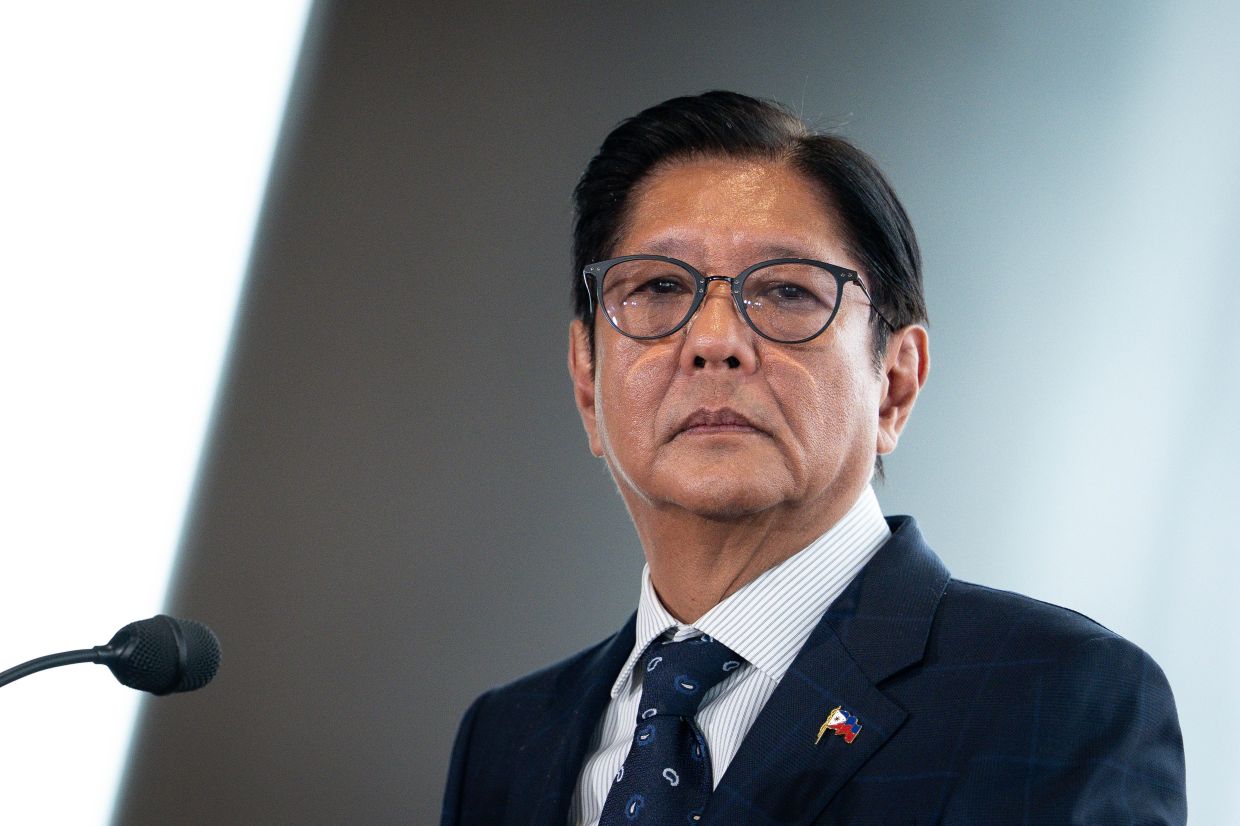
Philippine President Ferdinand Marcos Jr stands at a critical juncture as he prepares to deliver his State of the Nation address, tasked with convincing a deeply sceptical public and wary investors that his administration can reverse an economic downturn triggered by a massive corruption scandal. Twelve months after his last address shocked the nation by exposing billions of dollars siphoned through flood-control schemes, the 68-year-old leader must now demonstrate tangible progress on both graft accountability and economic recovery at a moment when his presidency appears increasingly embattled by internal divisions and public distrust.
The backdrop to Monday's speech reveals a government struggling on multiple fronts. The revelations of systematic corruption in infrastructure spending last year created an immediate chilling effect on project execution and private sector confidence. Consumers and businesses alike curtailed spending in response to the scandal, contributing to a sharp deceleration in economic momentum that has left the Philippines trailing its Southeast Asian neighbours. Growth forecasts have been slashed dramatically, with the 2026 outlook cut to a mere 3.5 to 4.5 percent from earlier projections of six percent or higher, a collapse that reflects investor anxiety about governance and implementation capacity.
The irony of Marcos's predicament runs deep. As the son of a dictator infamous for accumulating vast ill-gotten wealth, the current president positioned himself as a reformer committed to rooting out corruption. Yet a year of rhetoric has yielded minimal visible progress in terms of accountability or systemic change. Political analysts note that the administration's failure to deliver swift, decisive action against the officials implicated in the flood-control scam has eroded public confidence at a record low. Hansley Juliano, a political science instructor at Ateneo de Manila University, observes that the president requires far more explicit leadership and visibility on anti-corruption efforts to restore credibility with voters who feel betrayed by the gap between campaign promises and governing performance.
Marcos's political position has been further weakened by escalating tensions within his own government. His feud with Vice President Sara Duterte, who faces Senate impeachment proceedings on graft allegations and other charges she denies, has fractured the ruling coalition. Senator Imee Marcos, the president's own sister, has begun distancing herself publicly from administration policies, a signal of deeper dysfunction at the highest levels of government. These internal contradictions undermine efforts to project a united front on economic policy or corruption reform, according to legal scholars who view the administration as currently mired in overlapping political battles that consume energy and attention better devoted to recovery.
On the ground, the human cost of delayed infrastructure spending is becoming increasingly visible and politically consequential. In Calumpit, a village 50 kilometres from Manila vulnerable to seasonal flooding, a broken dike remains unfixed and sheet-pile work has barely commenced. Local officials express bitter frustration at the glacial pace, suggesting that communities most at risk from typhoons and floods will see little relief regardless of policy announcements. This disconnect between high-level pledges and on-the-ground execution feeds public anger and cynicism, particularly among voters in flood-prone regions who view the graft scandal as evidence that their representatives have betrayed their trust and left them materially worse off.
The economic deterioration extends well beyond domestic sentiment. Capital markets have reacted harshly to the combination of governance concerns and external economic shocks. The benchmark stock index has fallen 1.5 percent since last year's controversial address, while the Philippine peso has depreciated nearly eight percent against the US dollar, a significant move that threatens to import inflation and complicate monetary policy for the central bank. Quarterly growth collapsed from 5.5 percent in the quarter preceding the last State of the Nation address to just 2.8 percent in the first three months of 2026, a performance that lags Malaysia, Singapore, and other regional peers by meaningful margins.
Crucially, the Philippines faces structural headwinds that extend beyond domestic political dysfunction. As a nation sourcing over ninety percent of its oil requirements from the Middle East, the country remains vulnerable to energy price shocks that directly affect inflation and transportation costs for businesses and consumers alike. This external dependency means that even exemplary domestic policymaking cannot fully insulate the economy from regional geopolitical turbulence. Investors and economists, however, stress that the Philippines can only control what it can control, and that means demonstrating concrete capacity to execute major infrastructure projects, streamline bureaucracy, and attract foreign direct investment into productive sectors beyond real estate and services.
Senior economists at regional financial institutions emphasise that the Philippines has lost competitive ground in Southeast Asian investment flows, capturing less than five percent of the region's total foreign direct investment in 2025 despite having one of the region's largest populations and labour forces. This underperformance reflects investor perception that governance risks and project execution challenges outweigh the structural attractions of the Philippine market. Analysts stress that addressing these concerns requires not just rhetoric about reform but visible, measurable changes to how the government operates, how quickly it can move infrastructure from conception to completion, and how credibly it can signal that corruption will have consequences for those responsible.
The investment community's appetite for clarity on economic stimulus and fiscal policy direction remains acute. Markets want specific detail on how the administration will deploy resources to boost growth, address inflationary pressures on living costs, and create conditions for private sector expansion. Equity strategists note heightened sensitivity to how policymakers prioritise spending decisions, with the implicit message that ad hoc announcements or recycled platitudes will no longer satisfy market participants seeking concrete evidence of reform and competence. The Management Association of the Philippines has sent a pointed message that while corruption must be fought decisively, the anti-corruption campaign cannot become an excuse for economic stagnation.
The symbolic dimensions of Monday's address carry weight beyond the speech itself. The day coincides with the founding anniversary of Iglesia ni Cristo, the religious group whose recent anti-Marcos protests disrupted Manila, and hundreds of thousands of church members are expected to gather just kilometres from Congress. Government security has mobilized over 21,000 police personnel, signalling anxiety about potential disruptions and reflecting the volatile political atmosphere surrounding the presidency. Beyond the church presence, opposition groups representing marginalised communities, workers, and farmers plan their own demonstrations, promising vocal criticism of administration policies they view as deepening inequality and economic insecurity.
For Marcos, the speech represents a last major opportunity in his remaining two years of office to reset the narrative around his presidency before attention inevitably shifts to 2028 succession politics. Vice President Duterte, despite her legal troubles, could emerge as a frontrunner for the presidency if her Senate trial results in acquittal, potentially offering voters a clear alternative to Marcos's leadership. This succession dynamic creates urgency around the current speech, as failure to demonstrate economic recovery and credible anti-corruption action could accelerate the political realignment already visible in the defections and distancing by members of his own coalition.
The central challenge facing Marcos is fundamentally one of credibility and execution. The public knows what the problems are: corruption consuming public resources, inflation eroding purchasing power, unemployment and underemployment affecting millions, and infrastructure spending stalled by scandal and bureaucratic dysfunction. What voters and investors need to see is evidence that the administration possesses both the will and the institutional capacity to address these challenges systematically rather than episodically. Monday's address will be scrutinised for specificity on timelines, accountability mechanisms, and resources dedicated to both anti-corruption enforcement and economic stimulus. The economic recovery of Southeast Asia's second-largest nation by population may depend substantially on whether Marcos can convert political peril into political opportunity.

