President Ferdinand Marcos Jr has reaffirmed his confidence in the Armed Forces of the Philippines, even as the National Bureau of Investigation identifies active-duty military officers among persons of interest in connection with an alleged assassination conspiracy targeting the nation's leader. The assertion comes amid growing scrutiny over security vulnerabilities at the highest levels of government and raises questions about the depths of institutional trust during a period marked by serious allegations of potential internal threats.
National Bureau of Investigation Director Melvin Matibag disclosed the existence of active uniformed personnel as suspects during Vice President Sara Duterte's impeachment trial on Wednesday, July 22. The investigation has also identified another person of interest connected to the Vice President's personal security apparatus. These revelations have injected a new dimension into the ongoing political tensions between the President and Vice President, suggesting that the dispute may have ramifications extending into the security establishment itself.
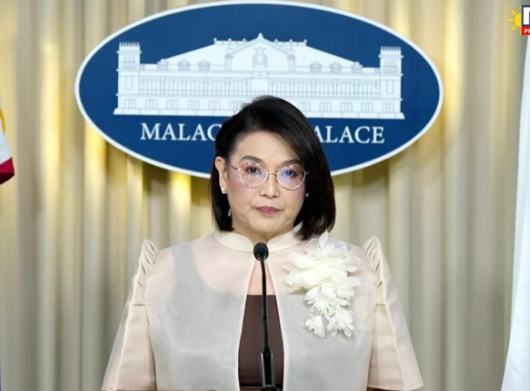
Speaking at a press briefing, Palace Press Officer Claire Castro articulated the administration's position that institutional confidence in the armed forces remains intact, whilst simultaneously acknowledging the necessity of internal accountability mechanisms. Castro's statement suggested a delicate balance: the President continues to maintain faith in the institution as a whole, yet recognises that individuals who deviate from their constitutional obligations must be identified and held accountable. This nuanced approach reflects the complex challenge facing the Marcos administration in managing national security whilst preserving institutional stability.
The Palace's response indicates that the President does not view the alleged conspiracy as evidence of systemic failure within the military establishment. Rather, the framing suggests that any individuals involved would represent aberrations within an otherwise trustworthy institution. Castro emphasised that personal grievances or ideological motivations that might lead officials to prioritise particular individuals or interests above constitutional duty constitute serious breaches that warrant investigation and appropriate consequences.
Castro clarified that the President's trust extends only to those whom he has determined merit such confidence, and that no broad loyalty audits or purges are contemplated at present. The statement effectively positioned security vetting as a matter for the armed forces leadership and relevant security agencies to manage through established protocols, rather than as a presidential prerogative. This delineation attempts to preserve civilian-military relations whilst addressing legitimate concerns about potential infiltration by conspirators.
The allegations took a more dramatic turn when Vice President Duterte herself made cryptic references during her impeachment testimony to having provided explicit instructions regarding security matters. Speaking in Filipino, Duterte indicated that she had instructed someone that if harm came to her, the same fate should befall President Marcos Jr, Liza Araneta, and Martin Romualdez. Whilst delivered in a tone that Duterte herself characterised as emphatic rather than joking, the statements underscore the profound tensions permeating the political relationship between the nation's top two officials.
Duterte's refusal to comply with a subsequent NBI subpoena has further complicated the investigative landscape, depriving authorities of direct testimony that might clarify the nature and scope of the alleged assassination plot. Her non-compliance raises questions about whether she views the investigation as partisan or whether other considerations inform her decision to resist the subpoena. The standoff highlights the limitations of law enforcement agencies in compelling cooperation from high-ranking officials protected by constitutional privileges and political considerations.
The alleged plot represents a serious rupture in governance at the apex of the Philippine state. That active military personnel feature among the suspects suggests either that security establishment insiders harbour deep grievances, or that political actors have attempted to mobilise military resources for factional purposes. Either scenario presents grave implications for institutional integrity and constitutional governance.
For Malaysia and Southeast Asian observers, the Philippine situation underscores the fragility of democratic institutions when political rivalries become personalised and when institutional safeguards prove inadequate to prevent the politicisation of security apparatus. The episode demonstrates how even established democracies can experience threats to constitutional order when checks and balances are insufficient or when political actors resort to extra-institutional means to advance their interests. The region's other democracies, including Malaysia, must contend with similar pressures and risks.
The administration's response strategy—maintaining institutional confidence whilst identifying individual wrongdoers—represents an attempt to compartmentalise a potentially systemic problem. Whether this approach proves adequate depends substantially on whether the alleged conspirators operated independently or whether broader networks within the military or security establishment harbour similar intentions. The investigation's trajectory will significantly influence both the credibility of Philippine institutions and the stability of the government itself.
The broader context involves escalating political tensions between Marcos and Duterte that have played out across multiple forums, from legislative proceedings to public statements and now into alleged security threats. These tensions have already strained traditional alliances and forced numerous officials to navigate complicated political terrain. The assassination plot allegation, whether substantiated or not, represents a qualitative escalation that forces the government to confront difficult questions about institutional loyalty and the adequacy of existing oversight mechanisms.

