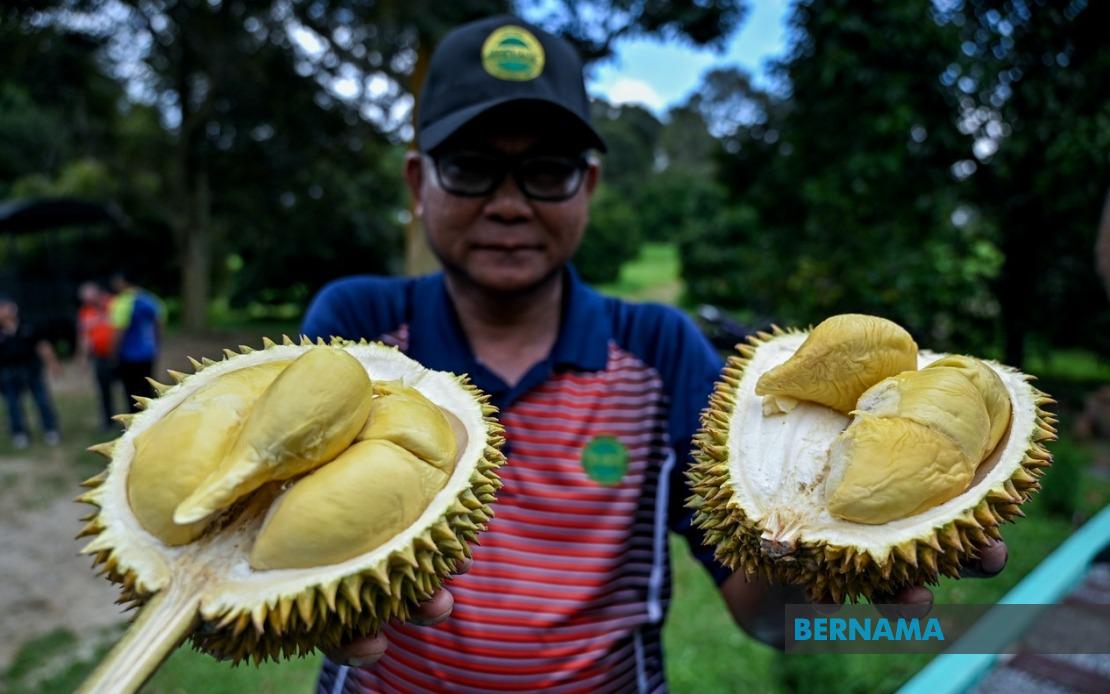
The Malaysian Agricultural Research and Development Institute (MARDI) has made significant progress in expanding its premium durian cultivation programme, having established roughly 25,000 trees of the MRDI Super 88 (MS88) hybrid variety across the nation. According to Datuk Dr Mohamad Zabawi Abdul Ghani, the institute's director-general, this substantial planting initiative encompasses approximately 242 hectares of agricultural land, with the majority of cultivation concentrated in Selangor and the states along the east coast of peninsular Malaysia.
The MS88 represents one of three distinguished durian hybrids that MARDI has developed and refined since the early 2000s, complementing the earlier-released MDUR78 and MDUR79 varieties. These three cultivars have established themselves within the premium segment of Malaysia's durian market, earning consistent favour among both domestic and international connoisseurs who seek distinctive flavour profiles and horticultural characteristics. The programme reflects MARDI's sustained commitment to advancing the nation's durian industry through scientific breeding and agricultural innovation, particularly as global demand for high-quality Malaysian durian continues to strengthen.
The expansion of MS88 cultivation aligns with Malaysia's broader strategy to position itself as a leader in premium fruit production within Southeast Asia. Durian exports represent a significant component of Malaysia's agricultural trade, with buyers across East Asia willing to pay premium prices for superior varieties. The concentration of planting in Selangor and east coast states reflects established infrastructure, suitable climate conditions, and proximity to both domestic markets and export facilities. These regions have developed expertise in durian cultivation over decades, making them natural locations for expanding commercial production of new hybrid varieties.
Beyond the established MS88 programme, MARDI is actively advancing the development pipeline by evaluating three additional hybrid durian varieties that demonstrate commercial potential. These experimental cultivars are currently undergoing rigorous assessment protocols that examine multiple critical factors, including organoleptic qualities such as flavour, texture, and aroma, as well as their acceptance among target consumer groups. Simultaneously, researchers are evaluating practical cultivation requirements, disease resistance, yield patterns, and overall economic viability for smallholder and commercial farmers considering adoption.
The selection process for new varieties reflects the institute's understanding that successful introduction demands alignment between horticultural performance and market preferences. The durian sector encompasses diverse consumer segments, from domestic buyers seeking affordable quality to export-oriented merchants targeting wealthy consumers in Singapore, China, and Hong Kong. Each new variety must demonstrate sufficient differentiation to carve out market space, whether through unique taste characteristics, extended harvest windows, superior shelf life, or other competitive advantages. This market-driven approach to agricultural research has become increasingly crucial as Malaysia faces competition from emerging durian producers in Thailand and other Southeast Asian nations.
MARDI has deliberately withheld public disclosure of the three prospective varieties' names and characteristics pending their formal commercial launch, which is strategically scheduled to coincide with the main durian fruiting season. This timing maximises public engagement by enabling consumers and agricultural professionals to view, sample, and evaluate fresh fruit directly rather than relying on descriptions and promotional materials. The seasonal launch approach also generates media attention and consumer interest that supports market introduction momentum. By controlling the revelation timeline, MARDI manages anticipation within the industry and ensures that initial plantings have reached sufficient maturity to supply demonstration quantities.
The progression from MS88 establishment to the development of next-generation hybrids demonstrates MARDI's sophisticated understanding of agricultural innovation timelines. A new fruit crop variety typically requires five to seven years from initial evaluation to commercial release, reflecting the extended period necessary for comprehensive testing under varying environmental conditions and farming systems. The current portfolio of new varieties under evaluation thus represents research initiated roughly five to ten years ago, while the MS88's substantial presence indicates its successful passage through earlier assessment phases and market validation. This pipeline approach ensures continuous renewal of MARDI's premium offerings and maintains Malaysia's competitive positioning within the global high-value durian market.
The initiative carries particular significance for Malaysian smallholder farmers, who constitute the majority of durian producers but often struggle to access new high-performing varieties or the technical expertise required for optimal cultivation. By developing hybrids suited to diverse farming circumstances and promoting their adoption through formal programmes, MARDI enables producers across different scales and regions to enhance productivity and income. Premium variety cultivation typically commands higher market prices, potentially doubling or tripling returns compared to traditional cultivars, thus representing a substantial economic opportunity for rural agricultural communities across Selangor, the east coast, and other suitable regions.
Domestically, MARDI's expansion programme responds to increasing Malaysian consumer demand for diverse durian experiences, driven by rising middle-class purchasing power and evolving taste sophistication. The durian market has transitioned beyond simple commodity trading toward experiential consumption, where consumers increasingly value variety selection, tasting notes, and variety provenance. This market evolution supports premium pricing for varieties with distinctive characteristics, creating economic incentives for both producers and research institutions to invest in new cultivar development. The MS88's successful establishment across 242 hectares suggests it has achieved sufficient acceptance to justify continued expansion and investment.
Regionally, Malaysia's durian programme positions the nation competitively against Thailand's aggressive expansion of durian cultivation and export capacity. Thailand has made substantial investments in durian breeding and production infrastructure, and has captured significant market share, particularly in Chinese markets. By maintaining MARDI's innovation pipeline and expanding acreage under premium varieties, Malaysia sustains its reputation for quality and supports the commanding prices that Malaysian durian commands relative to competing sources. The three prospective new varieties represent Malaysia's continuing commitment to staying ahead of regional competition through agricultural research and product development.

