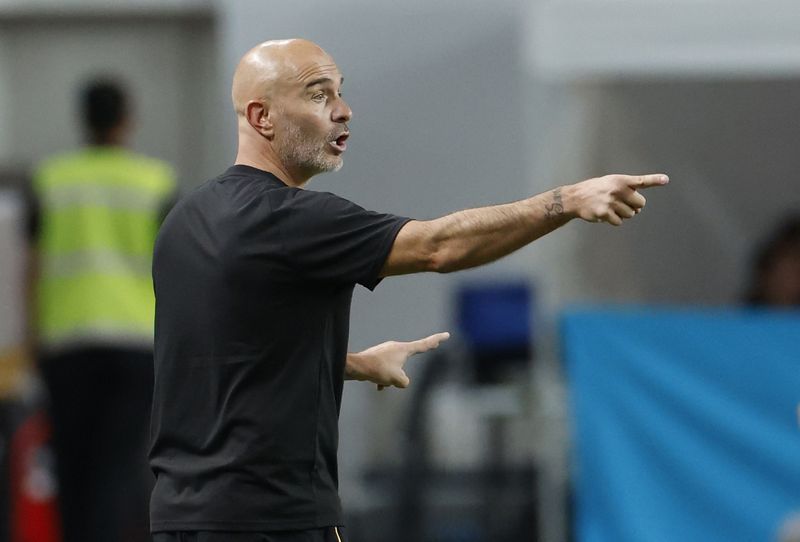
Manchester City embarks on an unfamiliar journey this season, stepping into an era without Pep Guardiola managing from the touchline for the first time in ten years. The Spanish tactician's exit marks the conclusion of the most glittering period in the club's modern history, a tenure that garnered six Premier League titles, a Champions League triumph, and cemented City as English football's preeminent powerhouse. His successor, Enzo Maresca, now shoulders the responsibility of maintaining that trajectory whilst introducing his own footballing signature to a squad accustomed to one authoritative voice.
Maresca arrives at the Etihad with credentials that attempt to bridge continuity with fresh perspective. The 46-year-old Italian was embedded within Guardiola's coaching infrastructure during the club's treble-winning campaign, providing him intimate familiarity with the systems, philosophy, and daily operations that underpinned Manchester City's continental dominance. Beyond his apprenticeship at City, Maresca has demonstrated managerial acumen elsewhere, orchestrating Leicester City's return to Premier League status and securing silverware at Chelsea—a trajectory that persuaded City's hierarchy he possessed the requisite experience for this demanding transition.
The philosophical approach to Maresca's appointment reveals City's strategic thinking. Rather than pursuing wholesale tactical revolution, the club consciously selected a manager steeped in the positional play, ball circulation patterns, and adaptive defensive schemes that characterised Guardiola's reign. This deliberate continuity signals confidence that the foundation remains sound, requiring stewardship rather than reconstruction. Yet this calculated decision simultaneously imposes a subtle constraint: Maresca must establish authentic managerial identity without dismantling the architecture that generated success.
The squad composition presents both considerable assets and notable vulnerabilities. Erling Haaland remains the focal point of City's attacking ambitions, having led the Premier League in scoring during three of the past four seasons—a testament to his predatory efficiency and the tactical framework constructed around him. Rodri, the Spanish midfielder who orchestrated his nation's recent World Cup victory whilst earning the tournament's Golden Ball, continues anchoring midfield operations through his distributional precision, positional intelligence, and defensive contributions. Manchester City has reinforced this foundation by acquiring Elliot Anderson from Nottingham Forest for £116 million, a young England international whose ball-winning capabilities and physical dynamism inject fresh vitality into central midfield areas.
Yet significant departures have depleted the squad's experiential ballast. The exit of long-serving figures Bernardo Silva and John Stones represents more than simple personnel turnover; it constitutes erosion of dressing room leadership and tactical flexibility that proved instrumental during sustained success. Emerging talents including Rayan Cherki and Nico O'Reilly provide developmental promise, offering creative alternatives and tactical elasticity for Maresca to deploy throughout the campaign. However, the transition from Guardiola's carefully constructed ecosystem to a refreshed ensemble presents organisational complications that extend beyond tactical consideration.
Guardiola's influence permeated Manchester City's institutional culture with an intensity few managers achieve. His impact transcended matchday selections and training ground methodologies, fundamentally shaping how the organisation approached preparation, decision-making, and competitive mentality. This embedded influence functioned as an invisible scaffolding supporting City's sustained excellence. For Maresca, the challenge lies not merely in replicating tactical templates but in assuming cultural guardianship—translating Guardiola's legacy into a framework reflecting his own personality and management philosophy without triggering institutional dissonance.
The previous campaign's outcome illuminates the performance expectations confronting Manchester City's new regime. Domestically, City secured the cup double, an accomplishment that would satisfy most elite institutions. Nevertheless, finishing second to Arsenal in the Premier League constituted genuine underperformance relative to the standards Guardiola systematically established. This reality underscores the magnitude of Maresca's remit: he operates within an expectational framework where domestic cup progression registers as acceptable but insufficient. Supporters and boardroom figures alike anticipate genuine title challenges rather than aesthetic excellence or developmental progress.
The psychological dimension of this managerial transition warrants careful consideration for Malaysian and Southeast Asian observers interested in competitive football dynamics. The distinction between occupying a trusted position within an established hierarchy and assuming ultimate responsibility carries profound implications. Maresca's prior experience as Guardiola's lieutenant provided valuable insight into City's operational mechanics, yet such familiarity does not guarantee seamless transition to autonomous decision-making. Historical football precedent demonstrates that capable assistant coaches frequently encounter unexpected difficulties when assuming primary responsibility, discovering that observational knowledge differs fundamentally from executive authority.
Adaptation timescale represents another critical variable influencing City's competitive trajectory throughout the forthcoming campaign. The accumulation of international commitments means numerous squad members return late to pre-season preparation, compressing the adjustment period available to Maresca for establishing preferred patterns and resolving tactical configurations. Additionally, the psychological readjustment required from players transitioning between managerial regimes—particularly following a decade of consistency—should not be underestimated. Habitual routines, communication styles, and tactical expectations require recalibration across the entire organisational structure.
Despite these transitional challenges, Manchester City retains status among the continental elite, possessing sufficient squad depth and individual quality to remain credible competitors across all competitions. The £116 million investment in Anderson signals serious intent regarding midfield reinforcement, whilst the retention of Haaland and Rodri preserves the creative and destructive capabilities that generated recent success. Maresca's primary task involves synthesising continuity with sufficient innovation to stimulate squad revitalisation without provoking institutional rupture.
For regional observers, Manchester City's managerial transition exemplifies the broader football industry challenge of succession planning at elite institutions. The question confronting Maresca extends beyond tactical competence or individual brilliance; it concerns whether carefully managed evolutionary change can sustain institutional dominance following transformational leadership. Should Maresca successfully navigate this balance—preserving established philosophical frameworks whilst injecting personal creativity and renewed vigour—Manchester City possesses the material foundation to reassert Premier League supremacy.
Manchester City opens their campaign against Bournemouth on August 23, providing the first practical examination of Maresca's stewardship and the squad's readiness for this unfamiliar era. The preceding weeks will determine whether this transition materialises as seamless evolution or turbulent recalibration. Either way, the football world watches intently as one of sport's most successful institutions attempts to sustain excellence under transformed leadership.

