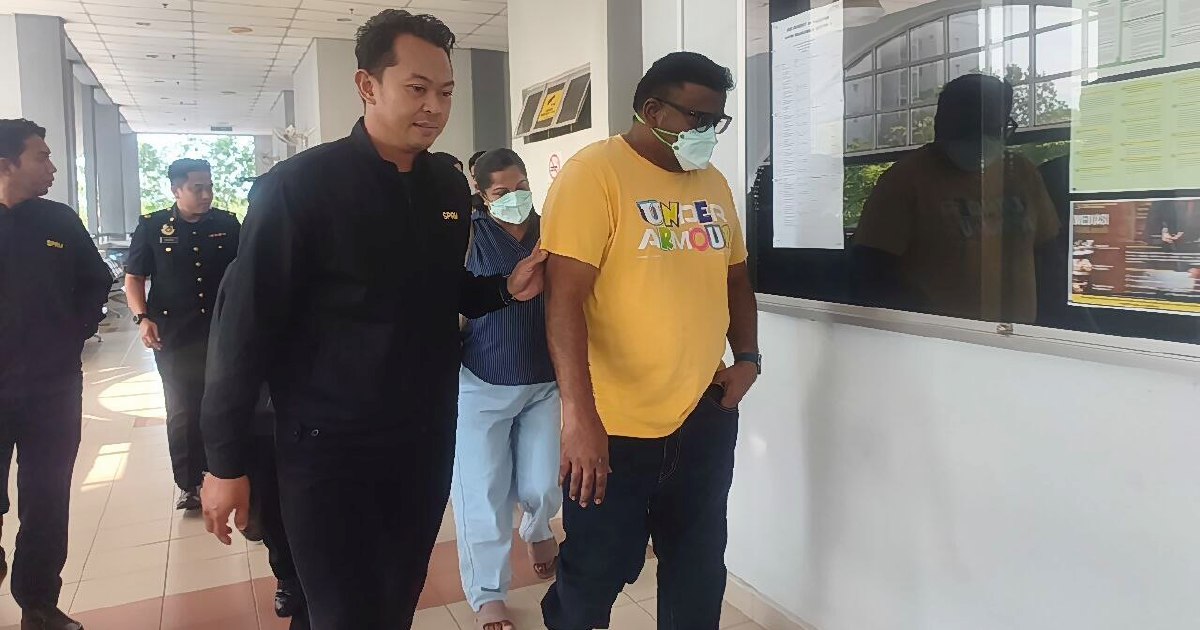
Three people, including a married couple, faced charges at the Seremban Sessions Court following accusations that they submitted false claims for Social Security Organisation (Perkeso) incentives and aided one another in perpetrating the alleged fraud. All three defendants maintained their not guilty pleas, setting the stage for what appears to be a closely scrutinised case involving misuse of Malaysia's social security apparatus.
The case highlights an ongoing concern within Malaysia's welfare and employment support systems, where fraudulent claims drain resources intended to assist genuine workers facing financial hardship. Perkeso, which administers crucial programmes such as employment insurance and occupational safety schemes, has become the focus of increased enforcement action as authorities tighten oversight of incentive distributions.
Couples collaborating to commit fraud present particular investigative challenges, as joint household finances and shared access to documentation can obscure individual culpability. This case underscores how intimate relationships may be exploited to disguise fraudulent activities, with one partner potentially serving as the nominal applicant while others assist in fabricating supporting materials or concealing the deception from authorities.
The specific nature of the incentive claims—whether related to training subsidies, hiring encouragements, or safety compliance rewards—determines the sophistication level required to execute such schemes. False claims of this nature typically involve misrepresenting worker employment status, earnings thresholds, job titles, or completion of qualifying activities. Each misrepresentation must be individually substantiated through false documentation, making successful prosecution depend heavily on documentary evidence and paper trails.
Perkeso has intensified its compliance monitoring mechanisms in recent years, deploying data analytics to identify suspicious patterns across claims databases. When cross-referencing reveals inconsistencies—such as workers claimed to be simultaneously employed elsewhere, earnings figures that contradict tax records, or incentives claimed for non-existent training programmes—investigations often expand to reveal organised schemes rather than isolated incidents.
For Malaysian workers and employers, such prosecutions serve as important reminders that Perkeso maintains active fraud investigation units with prosecutorial support from the Attorney-General's Chambers. The willingness to pursue couples jointly demonstrates that authorities consider these matters sufficiently serious to justify court time and investigative resources, signalling zero tolerance toward exploitation of the social safety net.
The legal proceedings in Seremban will likely establish precedent regarding evidentiary standards for Perkeso fraud cases. Prosecutors must prove beyond reasonable doubt that the defendants deliberately submitted false information with intent to obtain benefits they were not entitled to receive, and in the case of the third party, that they knowingly facilitated or encouraged such submission.
Employers and workers should note that participating in Perkeso incentive schemes requires scrupulous documentation and honest declarations. False claims carry criminal penalties including imprisonment and substantial fines, creating disproportionate consequences relative to amounts typically recovered through fraudulent applications. This asymmetry makes prosecution not merely about financial restitution but enforcement of systemic integrity.
The case also reflects broader regional patterns in social security fraud. Neighbouring countries including Singapore and Thailand have pursued similar enforcement strategies, recognising that welfare fraud undermines public confidence in assistance programmes and diverts limited government resources away from vulnerable populations genuinely requiring support. Malaysia's approach aligns with international best practices emphasising deterrence through criminal prosecution rather than civil remedies alone.
Moving forward, Perkeso may strengthen its preventative mechanisms by requiring more rigorous verification of employment status, conducting physical workplace inspections before approving incentive claims, and establishing cross-agency data-sharing agreements with the Inland Revenue Board and the Social Security and National Register. Such measures, while increasing administrative costs, could prevent fraud schemes from gaining traction.
The Seremban case will proceed through pre-trial management stages before substantive evidence hearing. The court's findings will establish whether the married couple and their associate deliberately orchestrated a scheme or whether one party acted independently while others bore secondary responsibility. Resolution of this distinction carries important implications for sentencing and for understanding how such frauds typically operate within household contexts.
For Southeast Asian economies dependent upon functional social protection systems to maintain workforce stability during economic transitions, cases like this underscore the critical importance of enforcement. As Malaysia continues developing its assistance infrastructure—particularly given demographic shifts and changing employment patterns in the digital economy—maintaining credibility and preventing systemic abuse remains fundamental to programme sustainability and public support.

