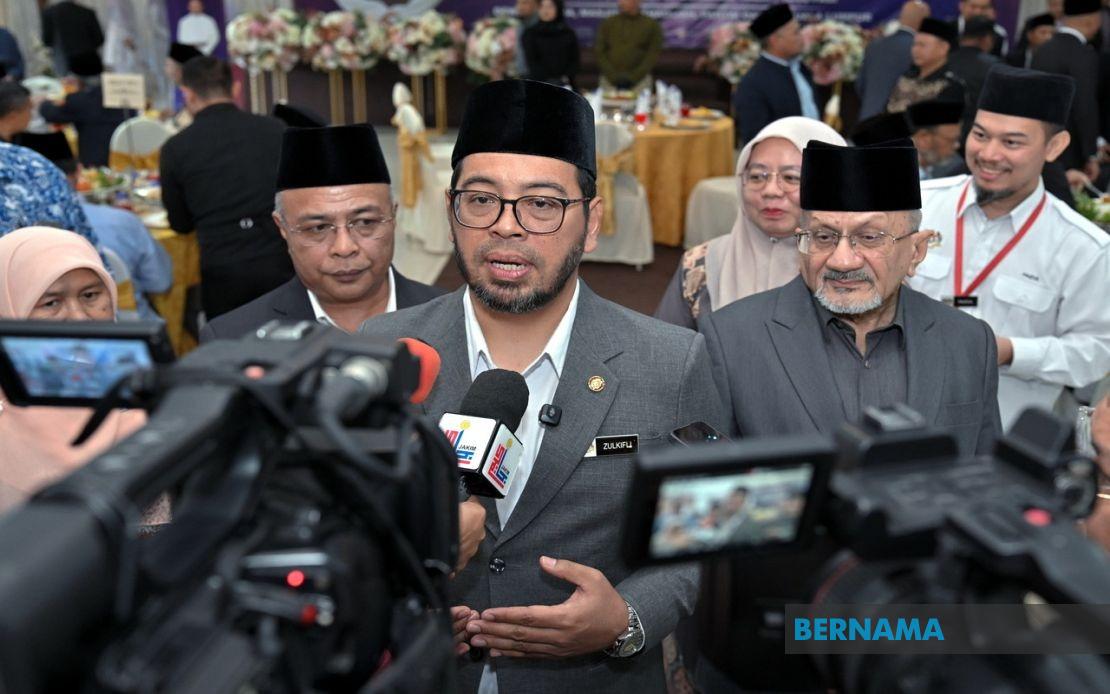
The construction of Masjid Warisan, situated in front of the Tun Razak Exchange (TRX) tower in Kuala Lumpur, will proceed according to schedule, Religious Affairs Minister Dr Zulkifli Hasan announced this week, signalling the federal government's commitment to advancing the long-planned initiative despite growing public discourse surrounding its implementation.
Speaking to reporters at an event in the capital, Dr Zulkifli emphasised that the mosque project represents a carefully considered component of Kuala Lumpur's urban development strategy, with roots tracing back several years. His statement came in the context of mounting pressure from certain quarters urging the government to reconsider or abandon the project altogether, with critics contending that the development could potentially generate social friction and public dissatisfaction within the metropolitan area.
The minister framed the mosque's construction within a broader philosophical perspective on religious infrastructure in contemporary cities. He highlighted that mosques function as more than places of worship, serving instead as anchors for social cohesion, community engagement, and spiritual welfare across diverse urban populations. This positioning reflects an evolving narrative within Malaysian governance circles regarding how religious facilities integrate into modern metropolitan planning and civic life.
Dr Zulkifli drew parallels with international precedent, noting that prominent cities worldwide feature mosques and Islamic call to prayer as integral elements of their urban fabric. The implicit argument suggests that the presence of such facilities contributes to cultural richness rather than discord, and that the Masjid Warisan project aligns with global best practices in inclusive city design. This comparison carries particular weight for Malaysian stakeholders, as it positions the country within an international context of cosmopolitan urban development.
For those harbouring reservations about the mosque's construction, the minister directed them toward the Federal Territories Islamic Religious Council (MAIWP) for detailed clarification and dialogue. This mechanism ostensibly offers an avenue for concerned parties to engage with responsible authorities and obtain comprehensive information about the project's scope, design considerations, and expected community impact. The directive suggests the government's openness to addressing legitimate questions through formal institutional channels rather than dismissing criticism outright.
The announcement occurs amid broader efforts to strengthen Islamic institutional frameworks within Federal Territories. On the same occasion, Dr Zulkifli distributed appointment letters to members of the Federal Territories Mosque and Friday Prayer Surau Committee for the 2026-2029 term during a ceremony at Masjid Al-Khadijah in Kampung Pantai Dalam. This ceremonial dimension underscores the systematic approach being adopted toward mosque governance and administration across the capital region.
The appointment process itself demonstrates significant administrative rigour. Officials reviewed 3,010 nominations across 91 mosques and 124 Friday prayer surau facilities throughout Federal Territories, ultimately selecting 2,914 candidates for committee positions following comprehensive integrity vetting. The selection mechanism involved multiple stakeholder agencies, namely the Royal Malaysia Police, Malaysian Anti-Corruption Commission, and the Insolvency Department, indicating the government's prioritisation of ethical standards and financial probity within religious institutional leadership.
For Malaysian readers and Southeast Asian observers, the Masjid Warisan controversy reflects broader tensions between urban modernisation and religious identity preservation. Kuala Lumpur's transformation into a gleaming financial hub, symbolised by landmarks like TRX, occasionally generates concerns about whether rapid development marginalises traditional cultural and spiritual dimensions of city life. The government's decision to integrate Masjid Warisan into this precinct signals an attempt to harmonise contemporary economic ambitions with religious heritage considerations.
The project also carries implications for Malaysia's positioning as a Muslim-majority nation committed to religious pluralism and inclusive governance. International perceptions of how the country manages the intersection between Islamic institutions and secular urban development carry weight, particularly as Malaysia competes for regional economic and cultural influence. Successfully executing the Masjid Warisan project while maintaining communal harmony could reinforce the nation's brand as a model for managing religious and secular interests within diverse societies.
At a practical level, the mosque's location opposite a major financial exchange presents unique architectural and operational challenges. Integrating religious infrastructure into high-density commercial districts requires sophisticated urban planning to ensure that worship activities proceed without disruption whilst maintaining accessibility for practitioners. The project's successful realisation could establish precedents for similar developments elsewhere in Southeast Asia, where rapid urbanisation increasingly demands creative solutions for preserving religious spaces within expanding metropolitan zones.
Looking ahead, implementation timelines and construction phasing will become critical variables. The minister's reaffirmation of commitment suggests the project will not face administrative delays or political reversals, though community engagement and communication strategies will likely prove essential to managing residual concerns. How authorities handle ongoing dialogue with stakeholders may ultimately determine whether Masjid Warisan becomes a celebrated symbol of integrated urban development or remains a source of periodic controversy.