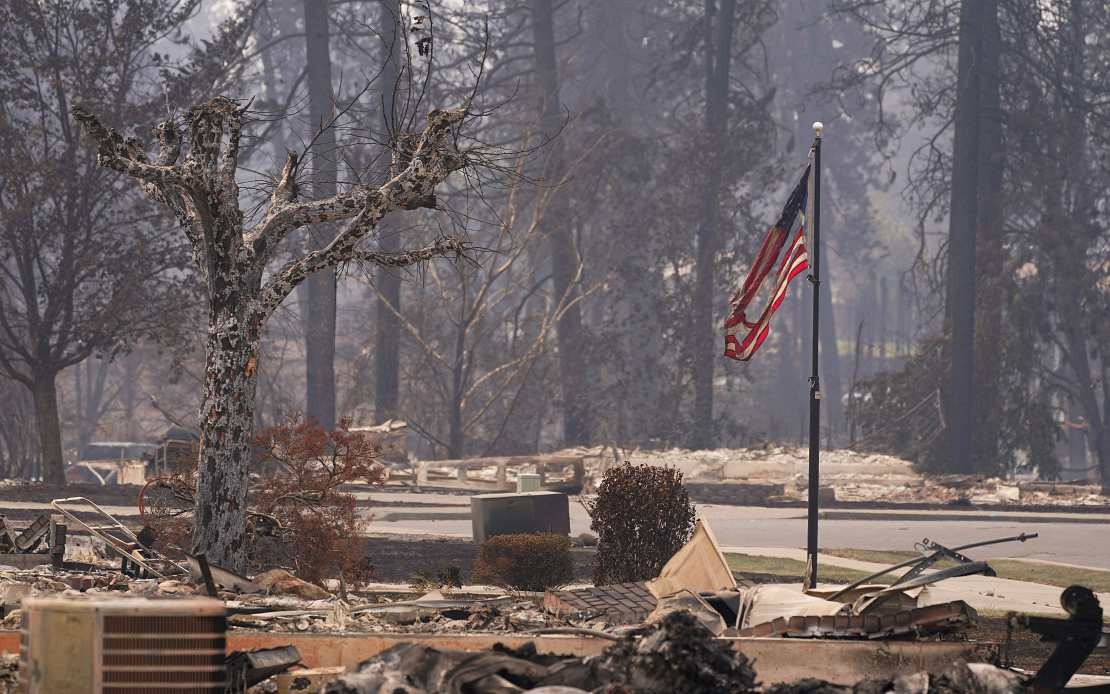
A humanitarian crisis is unfolding across Washington state as unprecedented wildfire activity has forced more than 65,000 residents to abandon their homes. The American Red Cross confirmed the scale of the evacuation on Monday, with preliminary damage assessments revealing that flames have already destroyed at least 700 structures, concentrated primarily in Spokane County. The rapid displacement of such a large population underscores the severity of the fire season engulfing the Pacific Northwest and highlights the region's vulnerability to climate-driven natural disasters.
Authorities have made a significant development in the investigation, with Spokane County Sheriff John Nowels announcing the arrest of a suspect on first-degree arson charges. The 37-year-old arrestee, Aaron F. Farinacci, was taken into custody on Monday afternoon and remains detained on a $1 million bond. Investigators have linked him to the Old Trails Fire, one of several blazes currently threatening the region. The identification of a potential human-caused fire represents a criminal dimension to what is largely being driven by natural causes, though lightning strikes remain responsible for the majority of the conflagrations ravaging the state.
The immediate fire situation around Spokane and Stevens counties presents a dire picture for emergency management teams. Since Saturday, the multiple fires in these counties have consumed 8,026 acres across the landscape, yet contain zero percent containment as of the latest reports from InciWeb, the interagency fire tracking system. The Spokane Complex Fire Incident Management Team has noted that shifting weather patterns are providing some relief, with more favorable conditions allowing firefighting crews to gain ground along the fire lines. However, this temporary advantage remains fragile, as any change in wind direction or temperature could rapidly reverse hard-won progress.
The scale of destruction extends far beyond the immediate Spokane area. The Sinlahekin fire has grown to a catastrophic 85,000 acres since it ignited from a lightning strike on July 26, representing one of the larger single fires threatening the region. More than 820 personnel are currently engaged in battling this particular blaze, yet it too remains completely uncontained. Northwest of Leavenworth, the Little Giant Fire has charred 51,298 acres within the Okanogan-Wenatchee National Forest, adding to the cumulative threat across the state's eastern regions. These three major incidents illustrate the compound nature of the crisis, with multiple fronts stretching firefighting resources increasingly thin.
Governor Bob Ferguson has taken a coordinated approach to the evacuation, confirming that authorities have made contact with nearly all individuals who initially reported needing assistance. However, 14 residents remain unaccounted for in terms of verification, though Ferguson clarified that these individuals are not technically classified as missing. Rather, officials seek confirmation of their safety to complete accountability procedures. The governor emphasized that no confirmed deaths have been reported to date, a significant outcome given the scale of evacuations and property destruction. This outcome reflects both the relatively orderly nature of evacuation procedures and the fortunate timing of alerts that allowed residents sufficient warning to depart threatened zones.
The situation in Washington carries particular resonance for readers across Southeast Asia and Malaysia, where wildfire activity has similarly devastated communities in recent years. The Indonesian and Malaysian haze crises have demonstrated how regional fire events can generate transnational air quality impacts, affecting millions across multiple nations. While Washington's fires remain contained to a single state, they underscore the increasing frequency and intensity of wildfire seasons in developed economies, suggesting that even wealthy nations with sophisticated emergency response systems face unprecedented challenges from climate-related disasters.
The coordination between local, state, and federal agencies in Washington demonstrates the infrastructure advantages that developed economies possess in disaster response, yet even these resources are proving inadequate to fully contain the crisis. The deployment of over 820 personnel to a single fire and the mobilization of thousands more across multiple blazes represents an extraordinary commitment of human resources. For developing nations and emerging economies in Southeast Asia facing similar fire threats with fewer resources, the Washington crisis illustrates both the scale of challenge and the urgent need for enhanced regional cooperation in fire prevention and management.
The property damage toll continues climbing as assessments proceed. With 700 homes confirmed destroyed and the fires remaining largely uncontained across multiple fronts, the total damage estimate will likely increase substantially in coming days. The American Red Cross and other relief organizations are coordinating support for displaced residents, though the unprecedented scale of evacuation presents logistical challenges in providing shelter, food, and essential services to such large numbers. The economic implications extend beyond immediate property losses to include potential disruptions to regional commerce, infrastructure, and agricultural sectors dependent on affected lands.
Looking forward, the dynamics that created this crisis—climate patterns supporting rapid fire spread, extended drought conditions, and the accumulation of dry vegetation—remain embedded in the regional environment. Fire season in Washington typically extends through September and even into October in some years, meaning the state faces weeks of continued vulnerability. The arrest of Aaron F. Farinacci on arson charges, while representing one documented human contribution to the fires, does not alter the fundamental environmental conditions driving the broader conflagration. Authorities and emergency managers must prepare for the possibility that current evacuation numbers could expand further if additional fires ignite or existing blazes spread beyond current containment perimeters.

