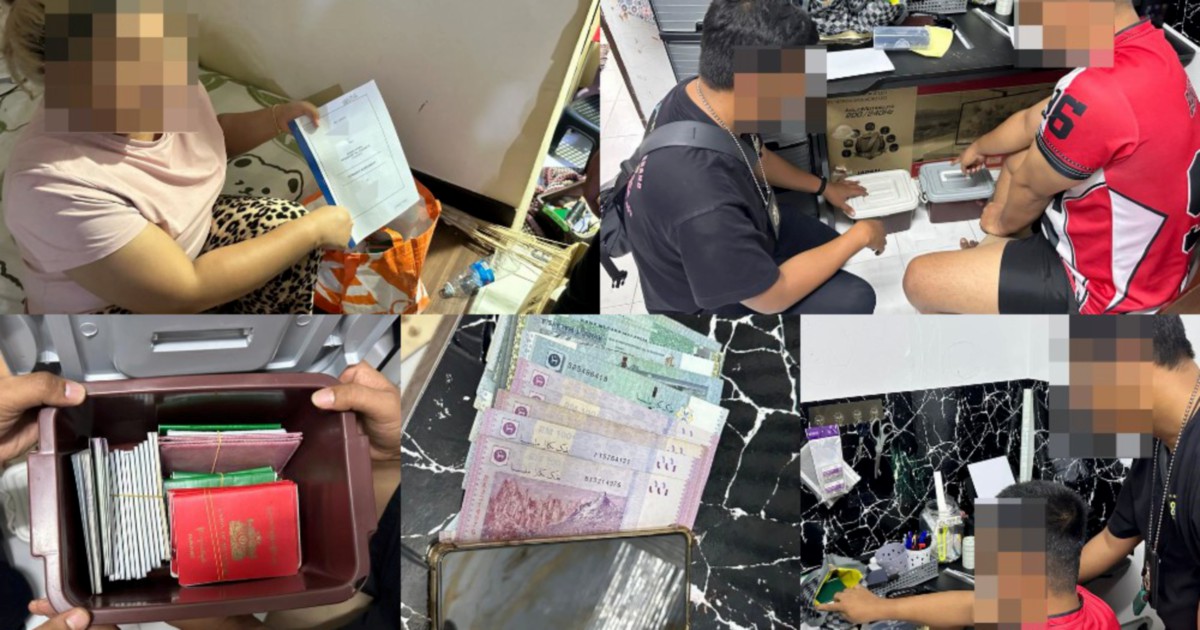
Malaysian immigration authorities have made substantial headway against organised document fraud after apprehending what officials describe as the principal figure orchestrating a sophisticated passport-forging operation in Kuala Lumpur. The Immigration Department's director-general Datuk Zakaria Shaaban confirmed that the three-person arrests represent a critical development in dismantling what investigators believe was an active and potentially extensive criminal network centred on the capital.
The arrest of the alleged syndicate mastermind underscores the persistent challenge Malaysia faces in combating identity fraud and document falsification schemes. Such operations pose significant risks not only to national security but also to border integrity and the movement of legitimate travellers. Forged passports have long represented a concern for authorities across the region, as they enable irregular migration, human trafficking networks, and international crime facilitation. The successful identification and detention of the ring's suspected leader therefore signals intensified law enforcement attention to such threats.
Document forgery syndicates typically involve elaborate networks of specialists, each handling discrete phases of the criminal operation. The detention of multiple individuals alongside the mastermind suggests investigators have moved beyond identifying a single operator to dismantling a more structured apparatus. This approach indicates growing sophistication in how authorities track and uncover the connections binding such criminal groups together, tracing connections from street-level distribution through middlemen to the command structures orchestrating the schemes.
The timing of this operation reflects broader regional pressures on governments to strengthen immigration controls and border security mechanisms. Neighbouring countries including Indonesia, Thailand, and Vietnam have similarly encountered persistent passport forgery challenges. The Malaysian Immigration Department's success in this instance may provide valuable intelligence about operational methods, supplier networks, and distribution channels that could assist coordinated enforcement efforts across Southeast Asia.
Passport fraud cases often reveal surprising connections between seemingly disparate criminal elements. Forgers frequently work with corrupt officials, money launderers, and networks facilitating document movement across borders. The arrests in Kuala Lumpur likely represent only the visible portion of a more extensive investigative effort, with authorities potentially gathering evidence against additional network members and identifying supply chain vulnerabilities exploited by criminals.
The financial dimensions of passport forgery operations remain largely invisible to public view, yet they constitute substantial criminal enterprises. Forged documents typically command premium prices in underground markets, with single fraudulent passports reaching considerable sums depending on quality and destination countries targeted. Understanding these economic incentives is critical for enforcement agencies seeking to disrupt such operations at their financial roots rather than merely addressing street-level activity.
For ordinary Malaysians, the risks associated with document forgery extend beyond abstract security concerns. Fraudulent passport schemes can indirectly affect legitimate travellers through increased border delays and heightened scrutiny. Enhanced authentication procedures and investigative protocols sometimes create friction for genuine travellers attempting to cross international boundaries, even as they remain necessary safeguards against exploitation.
The Immigration Department's capacity to identify and apprehend major syndicate figures reflects investment in investigative capabilities and intelligence gathering. However, the continued emergence of forgery networks suggests that demand for fraudulent documents remains high, particularly among criminal elements engaged in transnational activity. This ongoing cat-and-mouse dynamic means authorities must continuously adapt their methods and maintain forward-looking strategic approaches to anticipate emerging threats.
International cooperation represents an increasingly essential component of combating document fraud. Passports forged in Malaysia may be distributed across Southeast Asia or globally, while the materials and expertise fuelling such operations often span multiple jurisdictions. Intelligence sharing between ASEAN nations and engagement with international law enforcement bodies like Interpol can amplify the impact of individual country operations and disrupt multinational criminal networks more effectively than isolated domestic efforts alone.
The path forward for immigration authorities involves both reactive enforcement against existing networks and proactive measures to strengthen passport security features and issuance procedures. Digital verification systems, enhanced security printing technologies, and biometric integration represent technological approaches gaining traction regionally. Simultaneously, addressing underlying corruption within government agencies that forgers exploit remains essential for achieving sustained progress in this enforcement domain.
Investigators will likely examine financial records, equipment, materials, and communications associated with the arrested individuals to determine the scale and sophistication of their operation. Such evidence gathering supports not only prosecution of the immediate suspects but also identification of downstream recipients and other network participants. The full extent of the syndicate's activities may only become apparent as the investigation progresses and authorities develop a comprehensive understanding of how the forging apparatus functioned.

