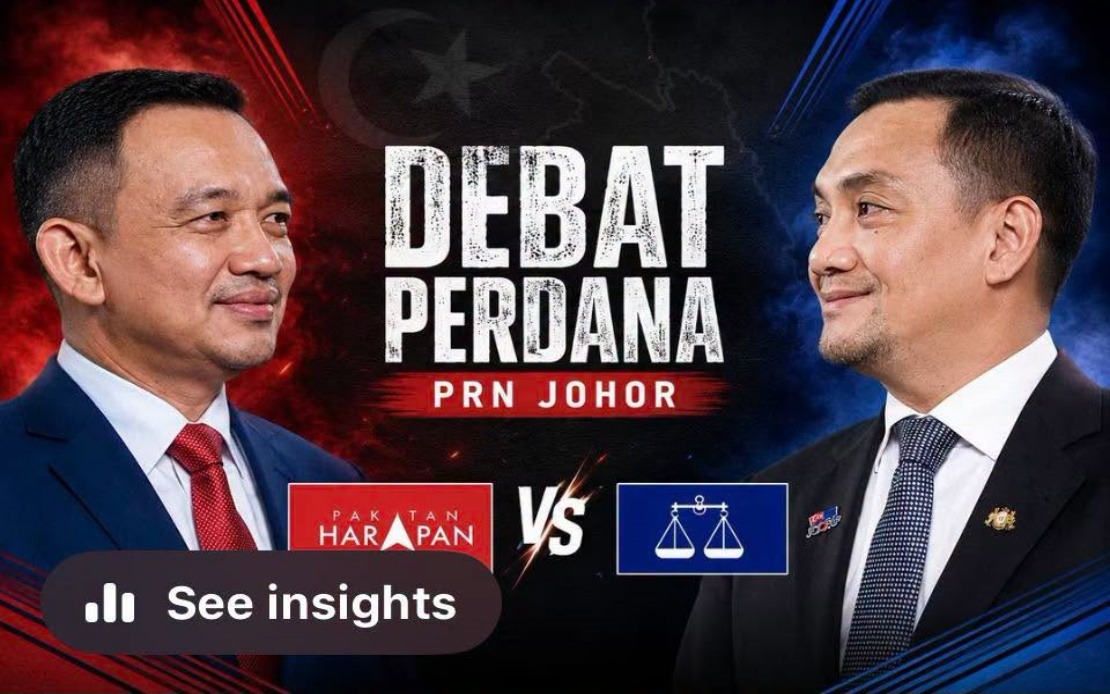
Former Education Minister Maszlee Malik has confirmed his willingness to participate in a public debate with Johor Menteri Besar Onn Hafiz Ghazi in the lead-up to the state election, throwing his weight behind what organisers hope will become a centrepiece of the campaign.
Maszlee, who will contest the Puteri Wangsa seat as Pakatan Harapan's nominee, made his announcement through a Facebook post in which he framed his acceptance as an affirmation of democratic engagement and his commitment to elevating political discourse. The former minister emphasised that debates represent valuable opportunities for voters to witness substantive exchanges and for political culture to mature beyond confrontational soundbites.
The impetus for the debate originated from social media influencer Muhamad Harris Nasril, who proposed organising a "Johor State Election Grand Debate" and promoted the concept through the Redaksi.com Facebook page. The timing of the initiative came shortly after PH chairman Anwar Ibrahim unveiled all 56 of the coalition's candidates for the election, generating momentum around campaign activities in the state.
Maszlee's acceptance carries particular significance given his profile as a former member of the cabinet and prominent figure within the PKR faction of Pakatan Harapan. His decision to publicly embrace the debate challenge, rather than demur or impose conditions, signals confidence in his ability to articulate the coalition's vision for Johor and counters any perception that the opposition seeks to avoid direct confrontation with the ruling administration.
The proposed debate format and venue remain to be finalised, though the considerable public interest that Maszlee noted—with multiple parties reaching out to confirm his participation—suggests that organisers have tapped into genuine appetite for substantive electoral engagement. In Malaysian politics, such public debates remain relatively uncommon at the state level, making the prospect noteworthy for voters seeking direct comparison of competing visions.
Pakatan Harapan has structured its Johor campaign around a coalition of three parties: PKR will field 20 candidates, Amanah 19, and DAP 17, across the 56 contested seats. This distribution reflects ongoing negotiations within the coalition and attempts to balance representation and electoral viability across different constituencies. The alignment of coalition partners in Johor has proven contentious in the past, with tensions occasionally surfacing over seat allocation and campaign messaging.
The Election Commission has set the electoral timeline with nomination day already completed, early voting scheduled for July 7, and polling day fixed for July 11. This compressed schedule leaves relatively narrow windows for candidates to conduct their campaigns and means that high-profile events such as the proposed debate take on outsized importance in shaping voter impressions and media coverage.
Onn Hafiz's administration has governed Johor since the previous state election, managing the state's economic development, infrastructure projects, and governance amid the broader political dynamics of Malaysia's federal-state relations. His willingness to engage in a formal debate, should he accept the invitation, would represent an interesting break from the typical campaign approach in Malaysian politics, where political leaders sometimes prefer controlled environments and friendly media.
For Maszlee, the debate provides a platform to reconnect with voters following his exit from the education ministry, where his tenure had generated both strong support and significant controversy. His emphasis on democratic values and political maturity in accepting the challenge attempts to position him as a candidate concerned with process and institutional health rather than merely partisan advantage.
The broader context of Malaysian electoral politics has increasingly seen calls for more transparent, substantive public engagement between candidates and voters. Civil society organisations and media watchers have frequently lamented the reliance on personality-driven politics and sound-bite exchanges, viewing structured debates as potential correctives to these trends. The Johor initiative, if it materialises, could set a precedent for how future state and federal campaigns incorporate such formats.
Should the debate proceed, it would likely draw media attention well beyond Johor, as observers assess how national political figures perform under pressure and whether their stump-speech rhetoric translates into coherent policy positions when directly challenged. The outcome could influence voter behaviour in Johor while also sending signals to national coalition partners about the viability of their respective candidates and strategies.
The unfolding campaign season in Johor thus incorporates both traditional coalition politics—negotiating seat distributions and managing party interests—and emergent forms of electoral engagement that reflect changing voter expectations. Maszlee's acceptance of the debate invitation reflects this duality, demonstrating responsiveness to public demand for direct engagement while simultaneously serving broader strategic interests within Pakatan Harapan's campaign efforts in the state.