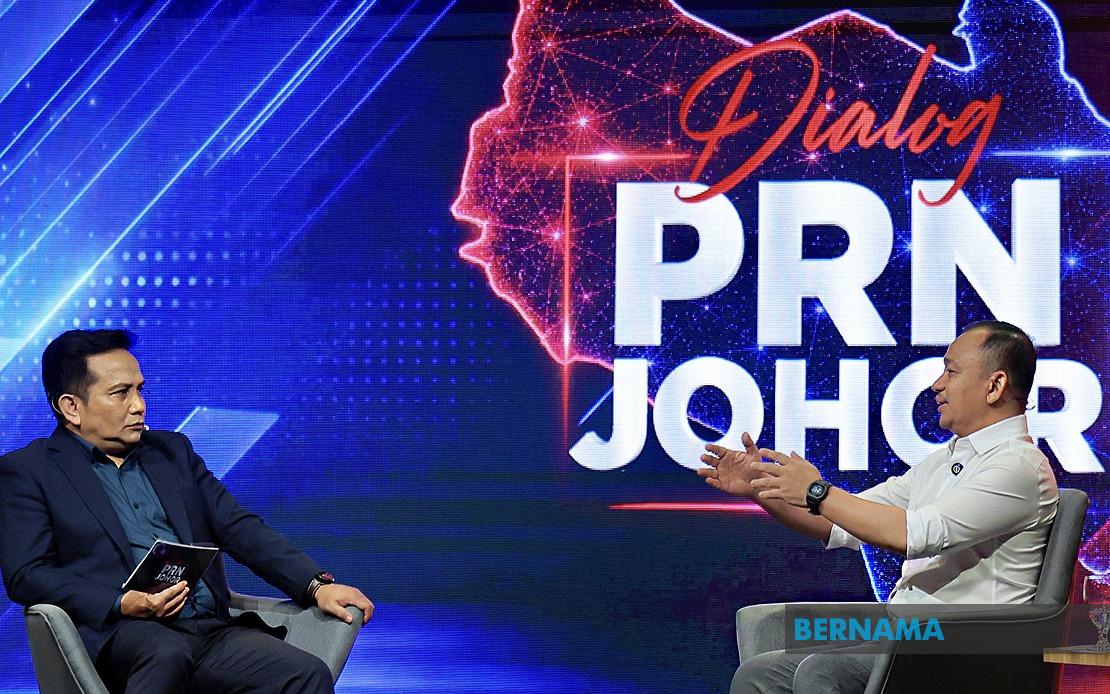
In a push to elevate political discourse ahead of the Johor state election, Pakatan Harapan candidate for Puteri Wangsa Dr Maszlee Malik has expressed optimism that structured dialogue platforms can drive meaningful change in how Malaysians engage with politics. Participating in a state-level election dialogue in Johor Bahru on July 7, the former education minister conveyed enthusiasm about the potential for such forums to reshape voter behaviour and foster a political culture grounded in rational argument rather than tribal loyalty or emotional appeals.
The Johor State Election Dialogue, jointly organised by RTM, Astro AWANI and Sinar Harian at the Permata Sari Auditorium, provided a venue for candidates and observers to discuss campaign platforms and policy positions. Dr Maszlee's remarks underscore a broader concern within Malaysian political circles about the gap between informed, principle-driven electoral participation and voting decisions influenced primarily by sentiment or partisan instinct. His emphasis on creating dialogue opportunities reflects a recognition that voter sophistication remains an area where democratic institutions can strengthen their engagement strategies.
Central to Dr Maszlee's vision is the notion that voters should evaluate candidates and parties based on substantive arguments, factual records, and evidence-backed policy proposals rather than relying on charisma, rhetoric, or inherited support patterns. This perspective carries particular weight in Malaysia's evolving political landscape, where demographic changes, urbanisation, and greater access to information have created generational divisions in how citizens approach electoral choices. The former minister's call for merit-based decision-making suggests an acknowledgment that political maturity—understanding trade-offs, evaluating implementation capacity, and distinguishing between campaign promises and feasible outcomes—remains an ongoing project requiring sustained effort.
Communications Minister Datuk Fahmi Fadzil's attendance at the dialogue underscored the federal government's interest in elevating campaign standards during the state election cycle. The presence of cabinet-level figures at such forums signals institutional commitment to normalising evidence-based political discourse, though sceptics might question whether single dialogue sessions can meaningfully shift entrenched voting patterns or alter the broader media ecosystem in which campaigns operate. Nonetheless, platforms dedicated to substantive debate between competing visions offer voters an alternative to sensationalism and provide a rare space where policy details receive scrutiny.
As the campaign entered its final three days before the July 11 polling date, Dr Maszlee's team pivoted focus toward maximising voter participation. The emphasis on encouraging out-of-town voters to return for polling reflects a strategic calculation that higher turnout generally favours parties with stronger grassroots organisation and volunteer mobilisation capacity. From a governance perspective, increased voter participation also serves the broader democratic interest of ensuring that election outcomes reflect genuine public preferences rather than the preferences of those with the lowest barriers to voting. The principle that higher turnout strengthens a government's legitimacy remains relevant regardless of which coalition ultimately prevails.
The timing of early voting on July 7, with main polling scheduled five days later, created a compressed campaign window that tested all parties' organisational capabilities. For PH, the final sprint involved coordinating across multiple states and constituencies simultaneously, requiring sophisticated logistics and messaging discipline. Early voting opportunities, increasingly common in Malaysian elections, serve practical functions for working voters and those with mobility constraints, though debates persist about whether they adequately match voting participation opportunities against administrative capacity to manage security and transparency concerns.
Dr Maszlee's observations about voter education intersect with broader questions about media literacy and the quality of information available to Malaysian electorates. In an environment where social media enables rapid dissemination of unverified claims and targeted messaging can fragment shared understanding of policy records, traditional dialogue forums take on heightened importance as spaces where competing narratives can be tested against scrutiny. The involvement of established broadcast organisations like RTM and Astro AWANI in hosting such events legitimises the forum and potentially reaches demographic segments less engaged with digital platforms.
The framing of political maturity as something cultivable through exposure to structured debate implicitly acknowledges that voting behaviour remains partially educable and that institutions retain capacity to influence political culture. However, whether dialogue forums materially shift how voters make decisions remains an empirical question. Research on campaign effects suggests that persuasion tends to occur at margins, with most voters holding relatively stable preferences throughout campaigns. Yet even modest shifts in swing voter behaviour can determine close elections, particularly in constituencies with competitive races.
For Southeast Asian observers, Dr Maszlee's advocacy reflects trends visible across the region where rising middle classes and more diverse media environments create constituencies demanding higher-quality political engagement. Countries like Indonesia, Thailand, and the Philippines have each seen civil society and academic institutions increasingly organise candidate forums and policy discussions aimed at countering populism and encouraging substantive debate. Malaysia's iteration of this trend, channelled through mainstream broadcast media and featuring incumbent government participation, suggests official receptiveness to the concept that democratic health benefits from elevated discourse standards.
Looking beyond the immediate Johor election, the principles Dr Maszlee articulated carry implications for how Malaysian politics might evolve. If voters increasingly expect and reward candidates and parties demonstrating policy coherence, evidence-based reasoning, and willingness to engage substantive criticism, political competition could gradually reward different skillsets and favour candidates with deeper subject expertise over those relying primarily on charisma or patronage networks. Such shifts occur gradually and unevenly, but dialogue platforms serve as mechanisms through which such expectations can be reinforced and normalised.
The tension between ideal political discourse and the realities of campaign pressure, partisan tribalism, and resource disparities between parties cannot be resolved through dialogue forums alone. Yet platforms that create space for reasoned debate, regardless of their modest reach or variable impact on voter behaviour, contribute incrementally to establishing norms around how political disagreement should be conducted. In that sense, Dr Maszlee's optimism about the role such sessions can play reflects a realistic, if measured, hope that political institutions retain capacity to shape their own culture over time.

