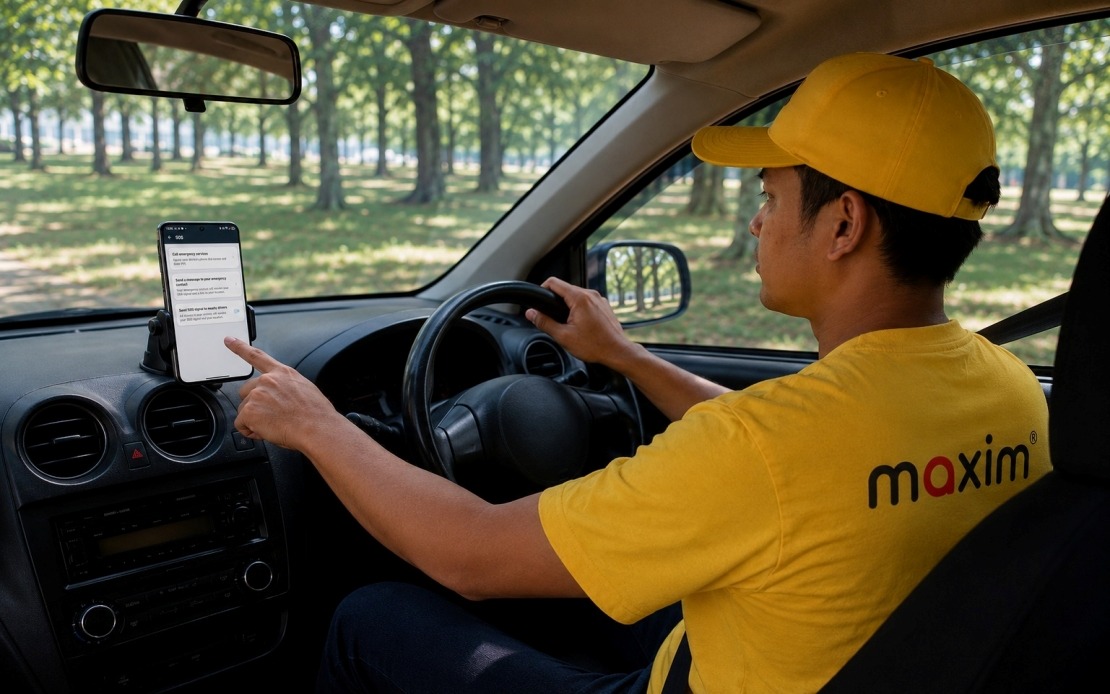
Ride-hailing platform Maxim Malaysia has taken a significant step forward in enhancing passenger and driver safety by introducing a comprehensive overhaul of its emergency response capabilities. The upgraded SOS system, unveiled on July 13, represents a deliberate effort to compress response times during critical situations where seconds can make a meaningful difference in outcomes. The enhancements reflect growing industry recognition that safety infrastructure must evolve alongside the expansion of rideshare services across Southeast Asia, where regulatory oversight and user protection remain key competitive differentiators.
The centrepiece of Maxim Malaysia's update is a redesigned SOS button that operates with improved speed and reliability, eliminating potential delays that could occur in the previous iteration. Users now have the flexibility to activate direct communication with the 999 emergency hotline or trigger simultaneous alerts to up to three pre-registered emergency contacts, depending on the nature and severity of the situation they face. This dual-pathway approach acknowledges that different emergencies warrant different responses—a medical crisis might require professional paramedics, while a vehicle breakdown or minor incident could benefit from immediate assistance by a trusted family member or friend.
For passengers specifically, the system sends alert recipients an SMS message containing precise GPS coordinates harvested from the user's smartphone in real time, along with a live tracking link that allows contacts to monitor the vehicle's location throughout the emergency. Critically, this SMS functionality operates independently of stable internet connectivity, ensuring that alerts transmit even in areas with weak or intermittent data coverage—a particular advantage across rural Malaysia and during transit through connectivity dead zones on highways and secondary routes.
Maxim's Director Mohd Hazwan Musli emphasised that the layered approach to emergency assistance provides users with genuine agency in determining how to mobilise help. Rather than a one-size-fits-all alert system, the upgraded platform empowers individuals to make split-second decisions about whether their situation requires family notification, professional emergency services, or peer assistance from nearby drivers. Hazwan underscored that the ability to execute these choices within seconds represents a material safety advantage, as the time differential between recognising an emergency and activating appropriate assistance can prove decisive in preserving safety and minimising harm.
A particularly innovative component of the system is the Driver Alert System, which broadcasts incident notifications to Maxim partner drivers operating within a three-kilometre radius of the emergency location. This neighbourhood-based alert network transforms fellow drivers into a rapid-response network capable of providing immediate assistance—whether mechanical support, witnessing documentation, or personal safety presence—while professional emergency responders navigate traffic to reach the scene. For driver-partners working in isolation, particularly during night hours or in less densely populated areas, this peer-support mechanism adds a critical layer of protection against delayed response times.
Data security and privacy receive prominent attention in Maxim's security architecture. All information transmitted through the SOS function, Driver Alert System, and Trip Sharing feature undergoes encryption conforming to contemporary industry standards, with decryption access restricted to authorised security personnel and relevant government authorities operating within established legal frameworks. This approach balances the imperative for rapid emergency response with legitimate privacy concerns, ensuring that sensitive location data and personal contact information remain protected from unauthorised access or exploitation.
The Trip Sharing feature available to passengers extends safety monitoring beyond emergencies into routine journeys. Upon boarding, users can immediately transmit a real-time tracking link to designated family members or friends, enabling those contacts to monitor vehicle movement and arrival times without requiring direct communication with the driver. Combined with internal trip monitoring that captures GPS tracking and essential journey metadata, this multi-layered visibility architecture creates accountability and situational awareness that discourage predatory behaviour while providing rapid intervention capacity should incidents occur.
For driver-partners, the upgraded system similarly integrates secure in-app messaging that incorporates fraud detection protocols, preventing malicious actors from exploiting the messaging function to solicit payment or personal information. Internal trip monitoring captures comprehensive journey data, creating a contemporaneous record that clarifies disputed incidents and provides evidentiary material should disputes between drivers and passengers require administrative or legal resolution.
Maxim's safety investment arrives amid intensifying competition in Southeast Asia's ride-hailing sector, where consumer confidence in driver and passenger protection directly influences market share and user loyalty. Malaysian consumers increasingly scrutinise safety credentials when selecting ride-hailing platforms, particularly following high-profile incidents across the region. By proactively enhancing emergency response infrastructure and communication transparency, Maxim positions itself as a platform prioritising user welfare over purely commercial considerations, potentially strengthening its competitive position among safety-conscious segments.
The timing of these enhancements also reflects evolving regulatory expectations across Malaysia and neighbouring jurisdictions. Transport authorities and consumer protection agencies increasingly expect ride-hailing operators to demonstrate measurable safety commitments through technological implementation rather than merely rhetorical commitments. Maxim's investments in standardised SOS functionality, real-time tracking, and peer-alert networks exemplify the concrete measures regulators expect platforms to deploy.
Implementation of these features across Maxim's Malaysian user base will likely require substantial backend infrastructure upgrades to manage simultaneous alerts, encrypt data streams, and process GPS coordinates with millisecond latency. The platform must also navigate coordination with Malaysia's 999 emergency services infrastructure to ensure seamless integration of app-based emergency signals into police, fire, and ambulance dispatch systems. Successful execution depends not merely on technology deployment but on sustained collaboration between the private ride-hailing sector and public emergency response institutions.

