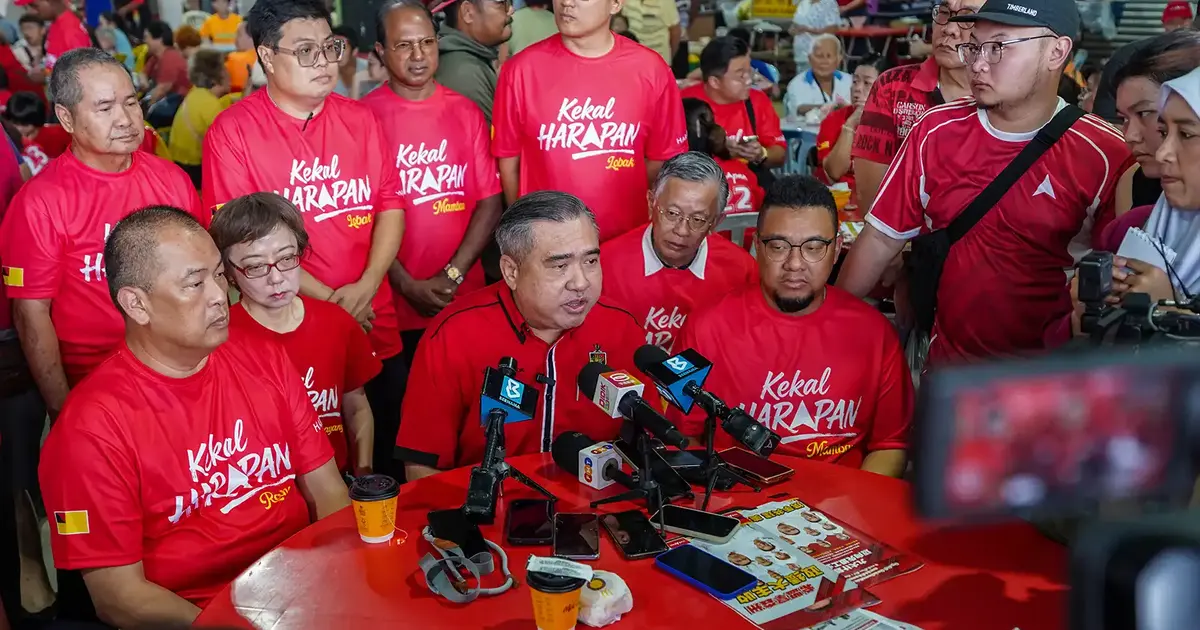
The Democratic Action Party's secretary-general Loke Siew Fook has accused the Malaysian Chinese Association of bearing the steepest cost under the recently forged electoral pact between Barisan Nasional and Perikatan Nasional in Negeri Sembilan, describing the party as the "biggest loser" in the agreement. Loke's assertion reflects growing tensions within the ruling coalition as it prepares for the state election, highlighting the delicate balance of power-sharing arrangements that have become essential to Malaysia's fragmented political landscape.
According to Loke's analysis, the MCA surrendered control of three constituencies that have historically remained party strongholds under the seat-sharing understanding brokered between BN and PN. The concession was intended to eliminate scenarios where multiple candidates from the same electoral bloc would fracture the anti-Opposition vote in constituencies across the state. This voluntary withdrawal from contested seats represented a significant strategic sacrifice for the MCA, which has long relied on its traditional bases of support among Malaysian Chinese voters in Negeri Sembilan.
However, the effectiveness of this compromise arrangement has been undermined by actions taken by Bersatu, the largest component of the PN coalition. Bersatu's decisions regarding candidate placement and contest strategies have essentially nullified the benefits that the MCA expected to derive from its territorial concessions. Rather than consolidating BN-PN strength in the regions where MCA stepped back, these moves have instead created the multi-cornered contests that the original pact was designed to prevent, leaving the MCA in a worse negotiating position than when the agreement was struck.
The Negeri Sembilan electoral arrangement represents one of the most complex power-sharing calculations undertaken by Malaysia's coalitions in recent state-level politics. Following the 2022 federal election, which produced a hung parliament and necessitated the BN-PN cooperation agreement at the national level, similar coordination mechanisms have been extended downward to state contests. The principle underlying these pacts is straightforward: by preventing BN and PN candidates from standing against each other, both coalitions can theoretically maximize their combined vote share against the combined Opposition forces of Pakatan Harapan.
For the MCA specifically, participation in such arrangements has become both an opportunity and a vulnerability. The party lacks the numerical strength of its partners—neither UMNO within BN nor Bersatu within PN—and therefore must negotiate from a position of relative weakness. When seat-sharing discussions commence, the MCA typically finds itself trading away contested constituencies in exchange for guaranteed representation elsewhere. The Negeri Sembilan deal followed this familiar pattern, but subsequent complications have exposed the inherent risks of such compromises for smaller coalition partners.
Loke's public criticism serves multiple strategic purposes within DAP and the broader Opposition strategy. By highlighting the MCA's predicament and the failure of the BN-PN arrangement to function as designed, the DAP secretary-general attempts to sow discord within the ruling coalition while simultaneously demonstrating to voters that factionalism and internal contradictions plague the government. For Chinese voters in particular, who represent a crucial demographic in Negeri Sembilan, Loke's remarks underscore the argument that supporting a fractious BN-PN alliance may prove less effective than backing a unified Opposition slate.
The episode also illuminates the structural difficulties inherent in coalition politics when partners possess vastly different organizational capacities and voter bases. Bersatu, despite being numerically smaller than UMNO, wields considerable political leverage due to its control of the Perikatan Nasional machinery and its appeal to Malay voters in certain regions. This asymmetry in soft power creates situations where nominal agreements on seat allocation become fluid once actual candidate selection and campaigning strategies are implemented. The MCA, lacking either UMNO's deep organizational roots or Bersatu's ideological coherence among core supporters, finds itself perpetually outmaneuvered in these negotiations.
From a Malaysian political economy perspective, the Negeri Sembilan arrangement reflects the broader instability that has characterized national politics since the 2018 federal election. The inability of any single coalition to command a clear majority without entering into complex power-sharing agreements with rival camps has become normalized. However, this normalization masks underlying tensions about which parties benefit and which parties lose from such arrangements. The MCA's experience in Negeri Sembilan serves as a cautionary tale for smaller coalition members across Malaysia's other states, many of which are preparing for their own electoral contests.
The timing of Loke's critique is also significant. By articulating the MCA's frustrations publicly, the DAP leader creates space for potential defections or deals whereby individual MCA representatives might seek alternative electoral arrangements, either by contesting as independents or by exploring closer alignment with components of the Opposition. While wholesale party realignment remains unlikely, localized shifts in particular constituencies could occur if rank-and-file MCA members feel that the party leadership has sacrificed too much for inadequate returns under the BN-PN framework.
Regionally, the Malaysian coalition politics model has attracted scrutiny from Southeast Asian observers as a cautionary example of the complications that arise when fragmented parliaments require power-sharing arrangements. Thailand, Indonesia, and the Philippines have all experienced iterations of coalition governance, and the Malaysian case demonstrates both the necessity of such arrangements in diverse democracies and their inherent vulnerabilities to internal contradiction and strategic maneuvering by stronger partners.
Looking ahead to the Negeri Sembilan state election, the MCA faces a critical moment in determining whether to reaffirm its commitment to the BN-PN pact or to pursue alternative strategies. If the party perceives the current arrangement as fundamentally disadvantageous and Loke's criticism gains traction among its membership, the coalition's carefully constructed electoral machinery could face unexpected disruptions. Conversely, if the MCA accepts Loke's assessment but remains locked into the agreement, internal morale within the party's campaign apparatus could suffer, potentially affecting vote mobilization efforts among its core constituencies.

