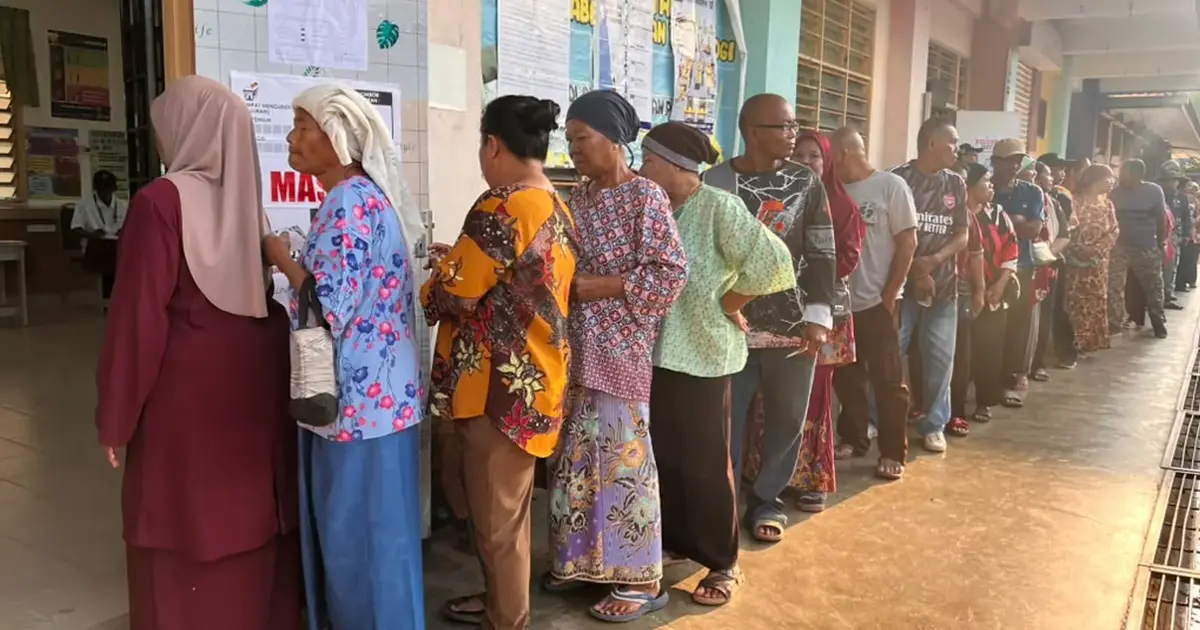
The MCA's success in wresting control of the Chennah state seat from long-serving DAP assemblyman Loke Siew Fook underscores a fundamental political reality in Malaysian coalition politics: the fortunes of the Chinese-majority party are closely tied to the organisational strength and electoral performance of its senior partner, Umno. Political analysts attribute the unexpected victory to substantial mobilisation of Malay voters who turned out in significant numbers to support the Barisan Nasional slate, suggesting that when Umno energises its traditional support base, the broader coalition benefits from demonstrable coattail effects.
The Chennah result carries particular significance for understanding the mechanics of Barisan's revival after its historic 2018 electoral collapse. The by-election showcased how the coalition's machinery functions when properly activated, with Umno's grassroots networks channelling support across ethnic and state-level boundaries. This pattern indicates that Barisan's component parties, notably MCA, operate within a hierarchical structure where the dominant Malay-Muslim party sets the momentum that enables partners to succeed in their respective constituencies.
For Malaysian observers tracking coalition politics, the victory raises questions about the sustainability of inter-communal cooperation within Barisan. The MCA's dependence on Umno's Malay voter mobilisation mirrors historical patterns dating back decades, when the coalition functioned as a quid pro quo arrangement: Umno would guarantee Malay-Muslim support for Barisan while MCA and other Chinese-based parties delivered the Chinese electorate in urban and mixed constituencies. However, the political landscape has fractured significantly since 2018, with urban Chinese voters increasingly fragmented between opposition parties and Barisan components.
Analysts point out that MCA's organisational muscle has atrophied considerably over the past five years, with the party losing ground to DAP in several urban strongholds and struggling to command loyalty among younger Chinese voters who view the party as ineffectual or out of touch. The Chennah win therefore represents a reversal of that trajectory, though observers caution against interpreting a single by-election as evidence of sustained recovery. By-elections typically attract heightened attention and voter participation that may not translate to general election scenarios where voter fatigue and broader national sentiment dominate electoral calculations.
The timing of the Chennah contest also matters contextually. Coming at a period when Umno and its allied partners are consolidating control following the Anwar Ibrahim government's tenure, the victory feeds into a narrative of Barisan resurgence and renewed coherence. Umno's ability to mobilise Malay support reflects its continued grip on traditional rural and semi-rural constituencies, where party infrastructure remains robust. This core strength allows senior party leaders to deliver resources and organisational support to junior coalition partners seeking to reclaim lost ground.
For MCA specifically, the Chennah success represents a crucial psychological boost and potential turning point in its efforts to remain relevant in Malaysian politics. The party has struggled with identity questions following repeated electoral defeats and internal leadership controversies. A visible victory against an entrenched opposition incumbent demonstrates that the party retains competitive capacity under favourable conditions, though sceptics note that favourable conditions fundamentally depend on Umno's willingness to invest political capital and resources in supporting MCA ambitions.
The broader implication for Barisan Nasional's long-term cohesion concerns whether the coalition can function as a genuinely integrated political force or whether it remains an alliance of convenience dependent on Umno's dominance. Senior MCA leaders have periodically called for greater party autonomy and more equitable power-sharing arrangements, yet the Chennah dynamics illustrate the practical constraints on such aspirations. Without Umno's organisational backing and Malay voter support, MCA struggles to compete effectively against opponents who have built stronger bases among urban Chinese communities.
Regional observers watching Malaysian politics note that Barisan's structure mirrors coalitional arrangements in other Southeast Asian democracies where dominant ethnic or religious blocs maintain senior partnerships with smaller component parties. This arrangement typically proves stable during periods of strong economic performance and low intercommunal tension, but becomes fragile when external pressures mount or when junior partners perceive sustained disadvantage. The Chennah outcome temporarily validates the coalition model, yet underlying vulnerabilities persist regarding the extent to which MCA can maintain its own voter base independently of Umno's interventions.
Looking ahead, the Chennah precedent may influence how Barisan strategises across forthcoming electoral contests. If Umno successfully mobilises similar enthusiasm for coalition candidates across multiple constituencies, particularly in states where the coalition maintains reasonable organisational presence, the party could substantially improve its parliamentary and state assembly positions. Conversely, if the Chennah victory proves anomalous rather than representative of broader trend shifts, the coalition will face renewed questions about whether it has genuinely recovered or merely benefited from temporary local circumstances.
For Malaysian voters and political participants, the Chennah by-election outcome demonstrates that electoral fortunes remain responsive to traditional coalition dynamics and ethnic voting patterns, despite nearly a decade of political disruption. The result reinforces the salience of Umno's organisational capacity and the continued relevance of ethnic voting blocs, particularly Malay voters responding to Barisan's messaging. Whether this translates into sustained coalition strength or represents a momentary recovery reflecting anomalous turnout patterns remains an open question that future electoral contests will help clarify.

