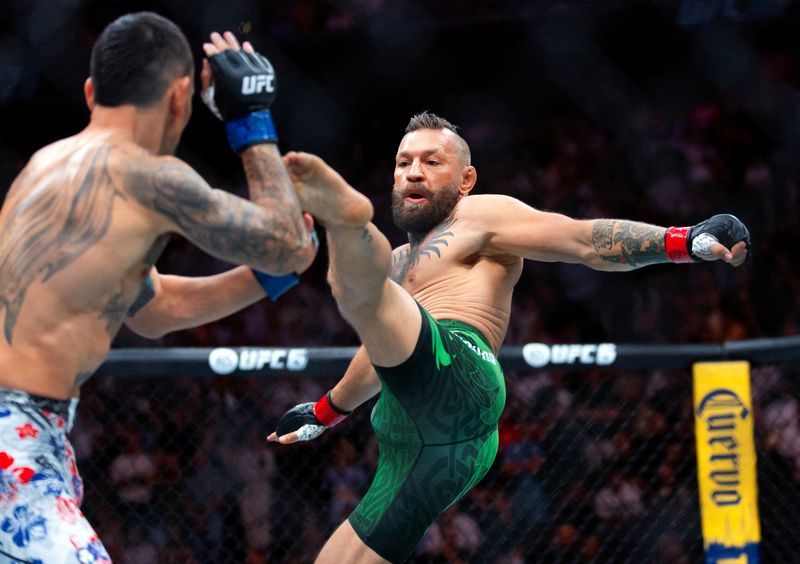
Conor McGregor's return to professional mixed martial arts lasted barely over a minute. The Irish fighter's comeback bout against Max Holloway at a Las Vegas venue on Saturday ended almost as soon as it began when McGregor sustained a severe knee injury after attempting a jump kick in the opening moments of their encounter. The injury forced him to signal to the referee that he could no longer compete, bringing an abrupt conclusion to what had been billed as a significant return to the octagon for the former champion. Now, McGregor has confirmed he will pursue surgical intervention to address the damage and remains determined to fight again.
The nature of the injury underscores the unpredictability of combat sports, where seemingly routine techniques can result in career-threatening consequences. McGregor's attempt at a jump kick went awry, causing him to land badly on his knee. Despite the immediate pain and severity of the damage, the fighter initially tried to continue but quickly realized the injury was too serious to allow further participation. Such injuries, occurring within the first minute of competition, raise questions about preparation protocols and medical assessments leading up to high-profile bouts.
McGregor's public response through Instagram reflected a defiant outlook characteristic of his personality. He emphasized his faith and determination, stating that he will proceed with surgery, undertake prehab work, and return to martial arts training before fighting again. Notably, he referenced one final fight remaining on his contract, suggesting he views this setback as a temporary obstacle rather than a conclusion to his career. His messaging focused on recovery and redemption rather than dwelling on the disappointment of such a brief appearance.
The 37-year-old fighter's career trajectory has been significantly complicated by factors both within and outside the competitive arena. A broken leg suffered against Dustin Poirier five years earlier already demonstrated how serious injuries could derail his momentum. More recently, McGregor was scheduled to face Michael Chandler in June 2024, only to have those plans collapse when he sustained a broken toe during training—a reminder that sometimes fighters are unable to reach the starting line due to unforeseen circumstances.
Beyond athletic setbacks, McGregor has faced considerable personal and legal turbulence. An Irish civil court found him liable for the rape of Nikita Hand in connection with an incident from 2018, a verdict that delivered a significant blow to his public reputation and business interests. For Southeast Asian audiences familiar with how such legal matters affect athletes' sponsorships and commercial opportunities, McGregor's continued struggles in this domain represent an additional dimension of challenge beyond purely physical recovery.
Additionally, McGregor accepted an 18-month ban from combat sports authorities in October 2025 related to anti-doping whereabouts failures. The fighter had missed three separate attempts by Combat Sports Anti-Doping officials to collect biological samples during 2024. Though this ban was backdated and technically expired in March, it represented yet another bureaucratic complication that undermined his ability to maintain an active competition schedule and public presence in the sport.
Combining these obstacles—serious injuries requiring surgical repair, legal liabilities in civil court, and regulatory suspensions from sporting authorities—paints a picture of an athlete battling multiple fronts simultaneously. Each incident individually would challenge any fighter's career viability; collectively, they create a scenario where returning to elite competition becomes exponentially more difficult. The financial implications alone, with canceled fights and extended time away from earning potential, compound the physical and psychological demands of recovery.
From a Malaysian and Southeast Asian perspective, McGregor's situation reflects broader trends in global combat sports regarding athlete welfare, anti-doping compliance, and the intersection of personal conduct with professional careers. The region has produced its own combat sports athletes who have navigated similar complexities, making McGregor's struggles relatable to local audiences who understand the pressures elite fighters face.
McGregor's stated commitment to surgery and rehabilitation will require him to work through an extended recovery period. Knee injuries, particularly those sustained from awkward landings, often demand months of careful physical therapy before athletes can safely return to sparring and competitive training. His experience and resources should facilitate access to world-class medical facilities, yet even with optimal care, the timeline for a meaningful return to competition remains uncertain. At 37 years old, the recovery window becomes increasingly precious.
The fighter's insistence on completing a final contractual bout suggests either confidence in his physical recovery or determination to exit his current deal on his own terms rather than being forced into retirement by circumstance. Whether McGregor can actually achieve another fight appearance will depend on the severity of the surgical repair required and his body's response to rehabilitation over the coming months. His public messaging appears designed to maintain fan engagement and market interest during this recovery phase, keeping himself relevant to the sports and betting audiences that have long sustained his profile.

