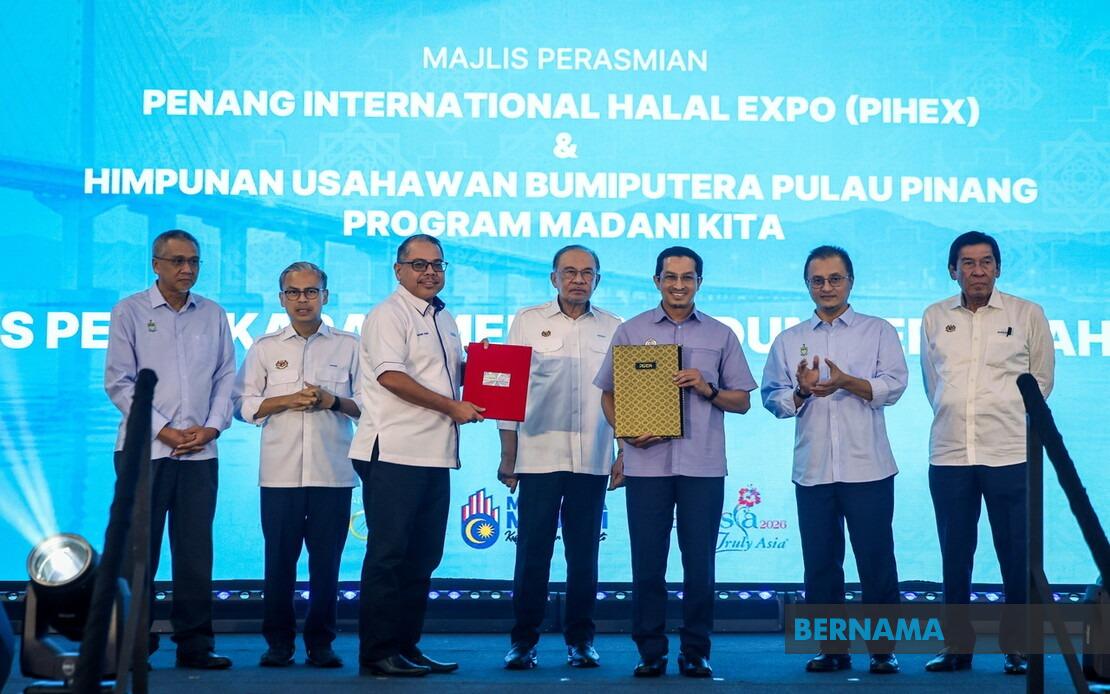
In a significant move to streamline public service delivery across Malaysia's northern region, the Malaysian Communications and Multimedia Commission (MCMC) has entered its first collaborative arrangement with Penang Halal International (PHI) to co-host the MADANI Kita Programme alongside the Penang International Halal Expo (PIHEX) 2026. The initiative represents an expanding commitment by federal authorities to make government services more accessible and efficient for citizens in key commercial and cultural hubs across the country.
The MADANI Kita Programme, coordinated by the Performance Acceleration Coordination Unit (PACU) operating under the Prime Minister's Department, embodies a consolidated government approach that consolidates resources from multiple federal ministries and agencies into unified service points. Rather than requiring Malaysians to navigate fragmented bureaucratic systems across different government offices, this model centralises information delivery and administrative support, reducing friction and improving user experience. The approach aligns with broader digital governance trends reshaping how developing economies interact with their citizens.
The collaboration was officially inaugurated on July 25 at Seberang Perai Polytechnic in Bukit Mertajam by Prime Minister Datuk Seri Anwar Ibrahim, with Communications Minister Datuk Seri Fahmi Fadzil and MCMC chairman Tan Sri Mohamad Salim Fateh Din in attendance. The dual-purpose event, which runs through late July, merges the halal industry's growing commercial importance with Malaysia's broader development agenda, creating synergies between sectoral promotion and government accessibility.
Through the MCMC's National Information Dissemination Centre (NADI), the programme extends a comprehensive range of services designed to serve both individuals and entrepreneurs. These include preventive health screenings, subsidised consumer goods through Rahmah Sales initiatives, agricultural product outlets branded as Agro MADANI Sales, dedicated government agency information counters, and community welfare support. The integration of recreational elements, notably the NADI E-Sports MADANI Legend competition, reflects efforts to engage younger demographics and normalise digital service platforms among emerging populations.
Complementing these core offerings, the programme delivers free wireless internet access via NADI On Wheels (NOW), mobile units that address persistent digital infrastructure gaps in suburban and semi-rural Penang districts. This component proves particularly valuable in regions where high-speed connectivity remains inconsistent, directly supporting the government's digital inclusion mandate and reducing the technology access disparities that constrain socioeconomic mobility for lower-income households.
MCMC's decision to partner with PHI reflects recognition that Malaysia's emerging halal economy—currently valued at over RM200 billion annually and encompassing food production, pharmaceuticals, cosmetics, and tourism—represents a critical growth engine requiring streamlined regulatory and information infrastructure. By embedding government service accessibility within a major halal industry exposition, authorities tap into concentrated gatherings of entrepreneurs, producers, retailers, and investors already engaged in formal economic participation. This strategic placement amplifies programme visibility while simultaneously lowering public engagement costs.
The MADANI Kita Programme itself extends beyond service delivery to embody Malaysia's broader development philosophy articulated in the Malaysia MADANI vision statement. This framework prioritises prosperity through inclusive growth, human capital advancement, environmental stewardship, and institutional integrity. By deploying integrated service models at regional showcases, the government operationalises these aspirational principles into tangible citizen experiences, potentially reshaping public perception of bureaucratic effectiveness.
For Malaysian business communities, particularly those concentrated in Penang's manufacturing and trade sectors, the consolidated service delivery model reduces administrative burden and accelerates access to government supports including financing schemes, regulatory guidance, and export promotion assistance. Entrepreneurs attending PIHEX 2026 gain immediate exposure to multiple agencies simultaneously, effectively condensing what would otherwise require numerous site visits across dispersed government offices into a single engagement opportunity.
The MCMC's emphasis on this collaboration's role in advancing public service delivery through strategic stakeholder partnerships signals recognition that government capacity increasingly depends on cultivating ecosystem relationships beyond traditional bureaucratic hierarchies. Private sector entities, industry associations, and quasi-governmental organisations increasingly serve as distribution channels for public goods, reflecting pragmatic acknowledgement that citizen-facing service quality depends on network coordination rather than purely state-managed delivery mechanisms.
For Southeast Asian observers, Malaysia's investment in integrated government service platforms during sectoral expos provides a replicable model for resource-constrained economies seeking to improve administrative efficiency without requiring substantial infrastructure overhaul. The approach leverages existing private sector events and established commercial gathering spaces to amplify government reach, addressing persistent citizen accessibility challenges through innovation in deployment strategy rather than necessarily through expanded public expenditure.
Expanding digital inclusion remains central to this initiative's calculus, with NADI On Wheels particularly targeting populations experiencing connectivity constraints. As Malaysian policy continues emphasising digital economy participation as a prerequisite for competitive economic positioning, closing infrastructure access gaps becomes strategically essential rather than merely welfare-oriented. Service delivery innovation that simultaneously addresses inclusion deficits while improving administrative efficiency creates compound value, justifying public investment and potentially establishing templates for similar initiatives across Malaysia's remaining states.
Looking forward, the MCMC-PHI collaboration may establish precedent for integrating MADANI Kita activations within other major sectoral expositions and trade events throughout Malaysia. Should the PIHEX 2026 deployment demonstrate measurable improvements in citizen service satisfaction or government agency efficiency metrics, expansion to automotive, technology, tourism, and agricultural sector showcases could substantially amplify programme reach while distributing engagement costs across diverse stakeholder communities.

