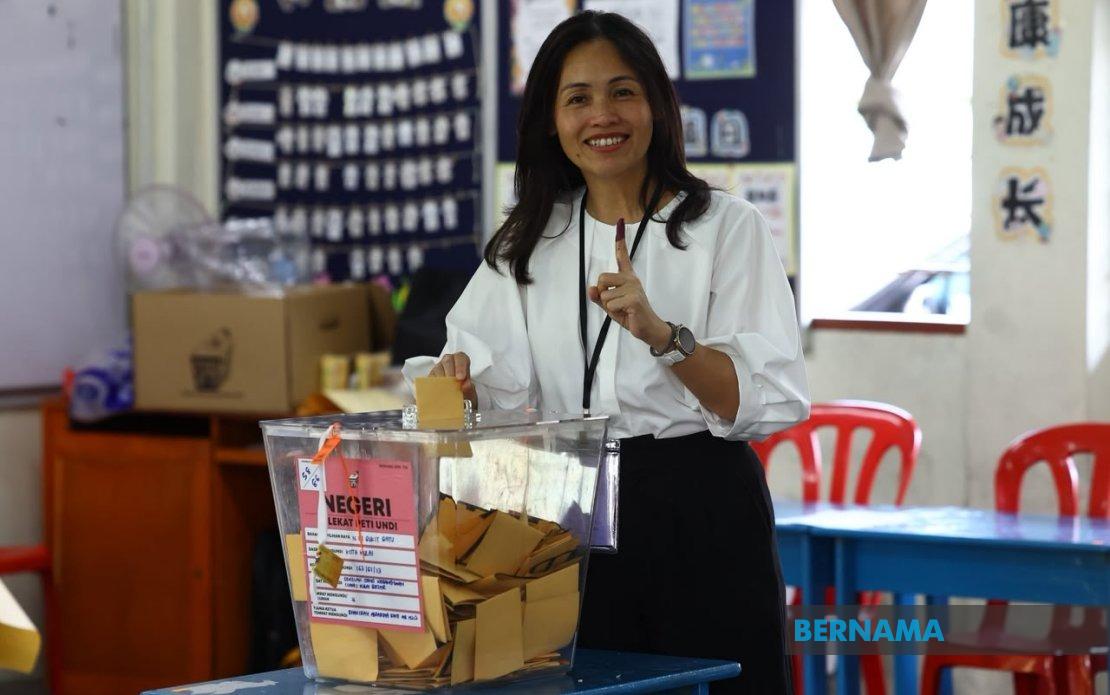
The Malaysian Communications and Multimedia Commission tracked 29 separate complaints centred on problematic online content as campaigning intensified ahead of the 16th Johor state election, according to Deputy Communications Minister Teo Nie Ching. The complaints encompassed a spectrum of violations ranging from deliberately fabricated narratives to inflammatory speech and fraudulent schemes designed to deceive voters during the electoral process.
The composition of these complaints reveals patterns typical of digital-era election interference. Fake news allegations constituted the largest category, accounting for 17 of the 29 cases reported to the MCMC. Hate speech generated the second most significant volume, with 11 distinct complaints lodged. A single case involved the creation of fraudulent accounts and impersonation tactics, indicating that while less frequent than misinformation campaigns, identity-based deception remains a recurring threat during periods of heightened political engagement.
Within the hate speech complaints, the nature of the offensive content followed a troubling trajectory along sensitive lines. Nine cases implicated racial divisions, reflecting longstanding tensions that periodically resurface during electoral competitions. Two additional hate speech incidents touched upon religion and the monarchy respectively, falling squarely within the framework of 3R—race, religion and royalty—content that Malaysian authorities consider particularly corrosive to social cohesion and therefore subject to regulatory action under existing legislation.
Teo, who serves dual roles as both deputy minister overseeing communications policy and Member of Parliament for Kulai, delivered her assessment while casting her vote at SJK (C) Kulai Besar on election day. Rather than simply reporting statistical findings, she elevated the conversation by directing attention toward voter accountability and individual digital responsibility. Her message emphasized that combating misinformation and divisive rhetoric requires active participation from citizens themselves, not merely regulatory intervention by authorities.
The deputy minister's appeal for heightened digital literacy reflects growing recognition across Southeast Asia that technological sophistication among the electorate constitutes a critical defence against coordinated disinformation campaigns. Malaysia, like neighbouring countries navigating rapid internet penetration, faces mounting challenges from actors who weaponize social platforms to pollute the information environment. Teo's framing positioned voters as stakeholders capable of independently evaluating claims rather than passive recipients of managed narratives.
Her specific injunction—that Malaysians become "digitally literate netizens and voters"—carries particular weight in a nation where social media adoption rates rank among Asia's highest, yet media literacy initiatives remain unevenly distributed across demographic groups. The exhortation to exercise voting rights wisely encapsulates a broader governance concern: that electoral legitimacy depends not simply on procedural regularity but on the quality of information available to those making choices at the ballot box.
The 16th Johor state election itself commanded substantial resources and attention. A total of 172 candidates competed across 56 State Legislative Assembly seats, representing a significant consolidation or reduction from some previous electoral cycles. The electorate comprised more than 2.6 million registered voters, each theoretically capable of influencing the composition of the state assembly based on choices made during polling day.
Teo extended formal recognition to election personnel tasked with administering the voting process, acknowledging the logistical complexity inherent in orchestrating simultaneous polling across numerous locations serving millions of voters. Her commendation of operational efficiency reflected a political culture that recognizes poll administration as a shared responsibility requiring coordination among multiple agencies and thousands of individual workers, many of whom serve temporarily during election periods.
The MCMC's complaint-monitoring function during electoral campaigns illuminates the expanding mandate of media regulators in the digital age. Traditionally focused on broadcast standards and telecommunications licensing, modern communications authorities increasingly find themselves functioning as quasi-arbiters of election integrity, tracking false claims and hate speech that circulate beyond traditional media oversight mechanisms. This evolution reflects the reality that campaign influence increasingly operates through decentralized digital channels rather than through centralized broadcast infrastructure.
Malaysia's approach—documenting violations and subsequently issuing public guidance—occupies a middle position between lighter regulatory touch models employed in some democracies and more restrictive approaches adopted elsewhere. The MCMC framework permits complaint-based intervention while relying substantially on individual judgment and self-regulation by platforms and users. Whether this equilibrium adequately protects electoral discourse while preserving digital freedom remains contested among policy experts and civil society observers.
The timing of Teo's disclosure—made on election day itself rather than preceding the campaign—raises questions about information flow and transparency. Releasing complaint data concurrent with voting potentially limits opportunity for public deliberation about identified threats or remedial measures. Future cycles may benefit from more contemporaneous reporting that permits voters to consider documented violations within their broader campaign assessment.
Looking forward, the relatively modest complaint volume—29 cases across a state election spanning millions of voters and countless online interactions—invites interpretation as either indicative of successful preventive measures or suggestive of underreporting. Digital surveillance of election-related speech remains technically demanding and resource-intensive, particularly across decentralized platforms where much conversation occurs beyond institutional view. The apparent complaints may represent only a fraction of actual violations circulating through private messaging, encrypted platforms, or community discussion forums.
The episode ultimately underscores Malaysia's evolving relationship with digital democracy, wherein traditional regulatory frameworks encounter unprecedented challenges from technologies enabling rapid, viral dissemination of false and divisive content. Official commitments to digital literacy and voter vigilance acknowledge that technological tools alone cannot guarantee information integrity; instead, sustained improvements demand parallel development of societal capacity for critical evaluation and factual verification alongside platform governance and regulatory oversight.

