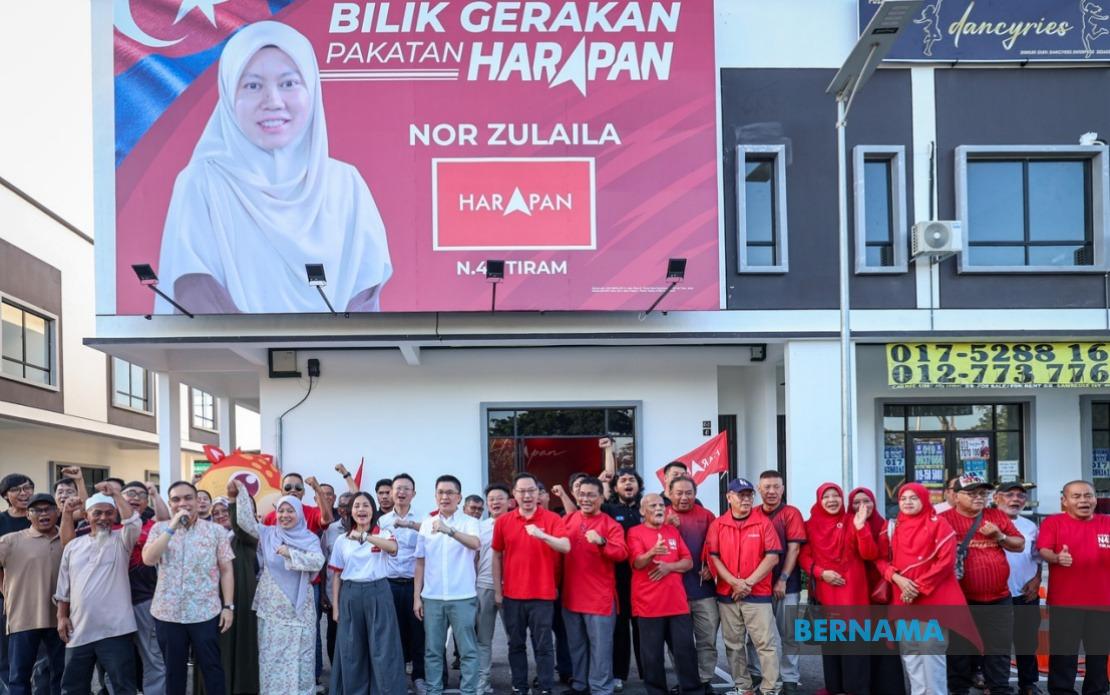
The Malaysian Communications and Multimedia Commission (MCMC) will maintain heightened oversight of internet infrastructure throughout Johor's ongoing state election campaign, with Deputy Communications Minister Teo Nie Ching announcing the initiative at a Pakatan Harapan operations centre launch in Pasir Gudang. The commitment reflects growing recognition among political stakeholders that reliable digital connectivity has become essential to modern electioneering, enabling parties to coordinate rallies, disseminate campaign messaging, and keep voters informed in real time across a geographically dispersed electorate.
Teo stressed that the regulator has received explicit instructions to conduct continuous surveillance of network performance, particularly in areas anticipated to draw substantial crowds during campaign events. The emphasis on crowd-prone locations signals awareness that concentrated gatherings can strain bandwidth and create connectivity bottlenecks that undermine campaign logistics. By directing resources to these flashpoints, the government seeks to prevent technical failures that could disrupt political messaging or frustrate voters attempting to access campaign information online.
In the Malaysian context, where internet penetration has reached significant levels but remains unevenly distributed across urban and rural constituencies, such assurances carry practical weight. Previous elections in the region have highlighted how connectivity gaps can inadvertently disadvantage campaigns operating in less densely serviced areas. For Johor specifically, which encompasses both metropolitan zones around Johor Bahru and more remote constituencies, equitable digital infrastructure becomes a legitimate governance concern extending beyond partisan advantage.
Teo, who doubles as Johor DAP chief, noted that preliminary ground operations have yielded encouraging responses from voters across the state. Campaign teams report observable enthusiasm among constituents to exercise their franchise, including notable commitment from voters based outside their home constituencies who indicate willingness to return for polling day. These indicators, drawn from direct voter contact during the pre-nomination phase, suggest elevated engagement levels that could translate to higher turnout on election day.
The party's strategic posture reflects lessons absorbed from previous electoral cycles. Rather than allocating resources proportionally to seats deemed competitive or vulnerable, DAP has adopted a disciplined approach of treating all 17 contested seats with equivalent priority and campaign intensity. Teo articulated this philosophy explicitly, warning against complacency that might arise from classifying any seat as secured, a trap that has historically weakened opposition efforts when resource-starved constituencies experience reduced organisational presence.
This uniform investment strategy acknowledges that contemporary electoral dynamics have become more unpredictable, particularly in Malaysian state contests where swing voting and anti-establishment sentiment can rapidly shift previously stable seat calculations. By maintaining consistent pressure across the entire seat slate, the party minimises exposure to surprise upsets while maximising potential gains in marginal contests. For observers tracking opposition fortunes in Johor, where Pakatan Harapan's performance will carry implications for federal-level political calculations, this methodical approach signals serious ambitions.
The election timeline has now crystallised with nominations scheduled for June 27, early voting designated for July 7, and polling day set for July 11. This compressed calendar compresses the effective campaign period and amplifies the importance of efficient information distribution and voter coordination. Stable internet connectivity directly enables rapid dissemination of nomination details, early voting logistics, and polling station information to dispersed voter bases, particularly those utilising digital channels for civic participation.
Several senior figures from Pakatan Harapan participated in the Tiram operations centre launch, including Deputy Education Minister Wong Kah Woh, Bangi MP Syahredzan Johan, Tebrau MP Jimmy Puah Wee Tse, and party nominee for Tiram Nor Zulaila Abdul Ghani. The presence of federal-level ministers and serving MPs underscores the coalition's institutional commitment to the Johor contest and suggests coordination between national party machinery and state-level campaign structures.
The MCMC's operational role in maintaining election-critical infrastructure represents a broader trend across Southeast Asia toward recognising digital infrastructure as integral to democratic processes. While ostensibly technical and non-partisan, internet coverage decisions carry downstream political effects by either facilitating or impeding particular campaigns' communication strategies. Malaysia's approach of publicly assigning this responsibility to the regulator rather than leaving it to market forces reflects state engagement with election administration.
For Malaysian voters navigating an increasingly digital political environment, reliable internet access during campaigns enables independent information verification, direct access to candidate platforms, and participation in online political discourse. This systemic attention to connectivity during the Johor contest potentially establishes precedent for future state and federal elections across Malaysia, signalling that digital infrastructure now ranks alongside physical campaign venues as essential election infrastructure requiring proactive government management.

