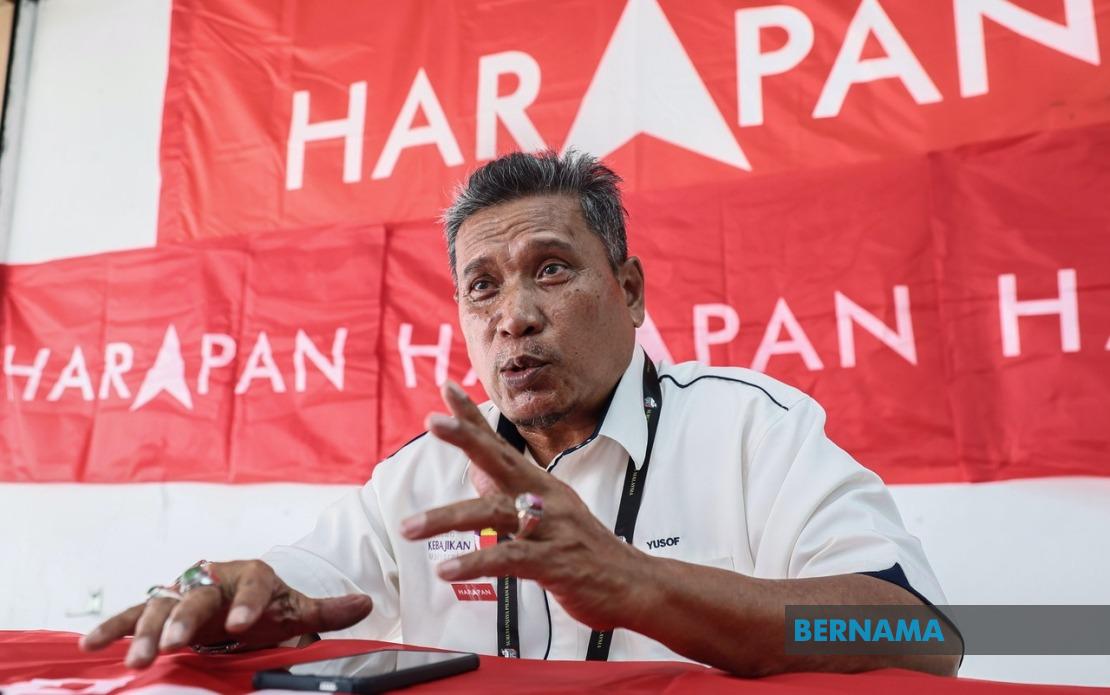
With the Johor state election campaign entering its final phase, Pakatan Harapan candidate Md Yusof Dawam has articulated an ambitious roadmap to arrest long-standing challenges in the Tenggaroh Felda scheme that have driven younger residents toward urban centres. The 64-year-old retired educator, who contested for the state assembly seat in Mersing, identified the chronic lack of housing solutions for settlers' offspring as a primary driver of demographic decline threatening the viability of the pioneering agricultural community.
The housing crisis within Felda settlements represents a structural problem that transcends mere shelter provision. Md Yusof stressed that without deliberate intervention, the second generation of settler families faces a stark choice: abandon family assets and seek livelihoods elsewhere, or remain indefinitely dependent on ageing parents in increasingly overcrowded compounds. This generational gridlock strikes at the heart of the original Felda model, which premised community sustainability on intergenerational continuity and asset stewardship. His proposal to develop dedicated residential plots across 10 to 20 acres of land responds directly to this systemic friction, acknowledging that piecemeal solutions have manifestly failed to retain young families.
Beyond immediate housing concerns, Md Yusof articulated a deeper economic rationale for organised second-generation settlement. Felda-managed land holdings, principally oil palm estates, require ongoing management and familial succession to prevent asset degradation or alienation to external investors. When young settlers cannot establish independent households near their inheritance, the incentive to remain engaged in agricultural stewardship diminishes substantially. A purposefully planned settlement zone could therefore serve dual functions: providing affordable homeownership pathways while simultaneously securing the productive capacity of family-operated plantations against neglect or speculative acquisition.
The candidate also diagnosed a second layer of economic stagnation affecting the retail and commercial landscape across Felda territories. Md Yusof contended that the commercial infrastructure within Tenggaroh, largely established during the 1980s, has calcified into an arrangement that no longer serves contemporary community needs. Small enterprises remain dispersed and disconnected, compelling residents to undertake lengthy journeys to distant towns for routine commerce—a reality particularly acute given Tenggaroh's 70-kilometre distance from Mersing proper. His vision involves issuing temporary land grants enabling merchants to consolidate operations into a modern, organised commercial precinct.
This retail-sector modernisation would address immediate convenience issues while engineering what Md Yusof termed an "economic cycle" contained within the settlement itself. By concentrating commercial activity within a purposefully designed locale featuring contemporary shop infrastructure, he argued, the community could retain spending and income flows that currently leak to external commercial centres. The implication carries significance beyond mere local commerce: a revitalised internal marketplace could stimulate entrepreneurial participation among younger residents, creating employment and investment opportunities that complement agricultural activities and provide economic diversification.
Tourism development emerged as a third pillar within his campaign platform, specifically focused on harnessing the untapped potential of Mersing's renowned island attractions. Pulau Besar, Pulau Tinggi, and Pulau Aur have repeatedly attracted international production companies seeking exotic filming locations, yet the economic returns have remained largely invisible to local youth. Md Yusof identified a critical gap: while foreign entities extract value from these geographic assets, indigenous enterprises and young entrepreneurs have failed to capture commercial opportunities arising from tourism activity. This represents a market failure amenable to policy correction.
His proposal centred on catalysing locally-operated tourism and maritime transport enterprises capable of capturing spending from visitors and film productions. The underlying logic acknowledges that natural resource advantages mean little without accompanying entrepreneurial capacity and institutional frameworks enabling local capture of economic rents. By fostering youth-led tourism ventures, Tenggaroh could transform its island geography from a mere backdrop for external profit into a genuine revenue source benefiting residents directly. This approach aligns with broader Southeast Asian development philosophy emphasizing inclusive growth and local stakeholder participation in resource extraction.
Md Yusof's campaign methodology reflected his background and values. Rather than mounting large rallies or employing mass media saturation, he pursued granular community engagement through small-group meetings designed to surface and comprehend local aspirations at intimate scale. This tactical choice acknowledged the limits of standardised messaging in diverse Felda communities where settlement-specific challenges demand particularised responses. His four decades of residence in Mersing and 16-year tenure as educator within Felda Nitar provided experiential foundation for this approach, lending credibility to his assertion that deep community knowledge would prove decisive in constituent representation.
The Tenggaroh contest unfolded within a broader Johor electoral landscape characterised by intense competition for rural constituencies. The 16th state election fielded 172 candidates vying for 56 seats, reflecting fierce political mobilisation. Scheduled polling on July 11, preceded by early voting for security personnel, indicated logistical complexity and broad participation expectations. Rural Felda constituencies such as Tenggaroh held particular significance within this contest, as settlement communities' collective vote share could substantially influence seat distribution and government formation.
Md Yusof's platform resonated with structural vulnerabilities visible across Malaysia's Felda scheme more broadly. First-generation settlers have aged considerably while second-generation participation in agricultural enterprise and settlement governance has waned. Simultaneously, urban migration has drained human capital and reduced internal market dynamism within settlements historically conceived as integrated agricultural-social communities. The housing, retail, and tourism initiatives outlined for Tenggaroh effectively distilled generic Felda challenges into concrete, localisable proposals amenable to state-level intervention, lending his candidacy apparent policy depth beyond generalist pledges.
The implications extended to broader Malaysian development concerns. Felda constituencies represented a crucial demographic and political battleground, with rural constituencies' electoral preferences significantly influencing national governance trajectories. Candidates addressing tangible material concerns—housing affordability, local commercial opportunity, tourism monetisation—advanced claims to constituent responsiveness that contrasted with abstract ideological posturing. In Tenggaroh specifically, Md Yusof presented himself as a problem-solver grounded in community experience, articulating practical remedies for challenges that had festered across multiple electoral cycles.
For Malaysian and Southeast Asian observers tracking rural economic revitalisation and inclusive development, the Tenggaroh contest illustrated broader tensions between urban-centric growth models and settlement-based alternatives. Md Yusof's platform implicitly rejected narratives framing rural decline as inevitable, instead suggesting that deliberate intervention addressing housing, commercial organisation, and tourism development could retain human capital and restore economic vibrancy. Whether such remedies could materialise at implementation scale remained contested, but the articulation of place-specific solutions suggested evolving political sophistication regarding rural constituency demands.

