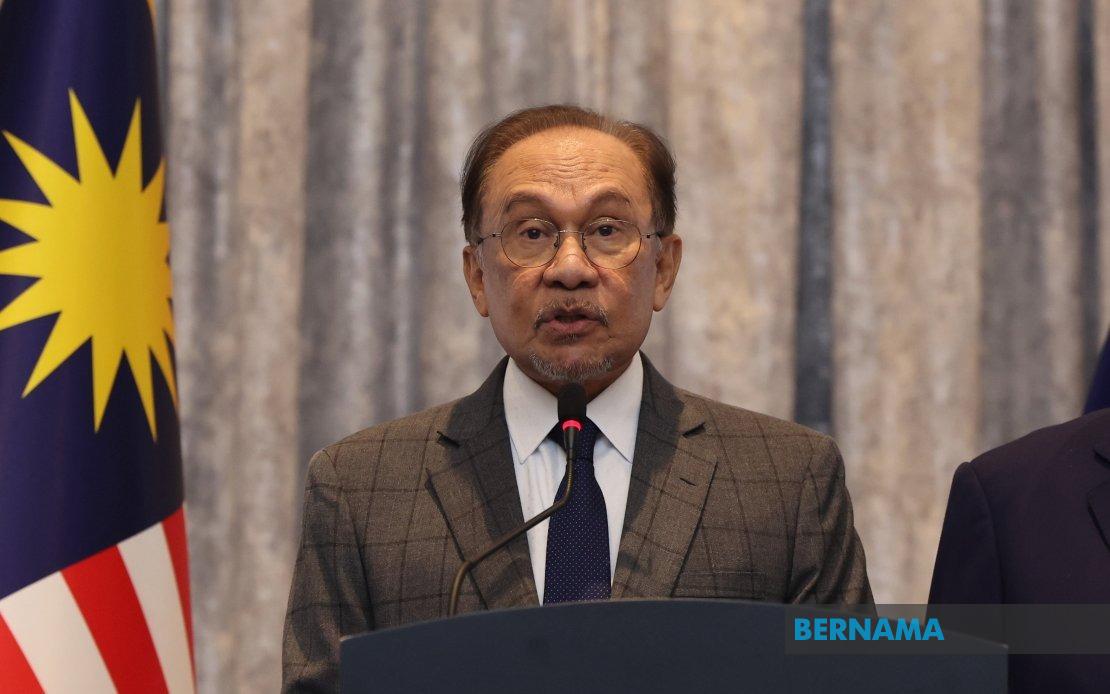
Prime Minister Datuk Seri Anwar Ibrahim has delivered a cautionary message to Malaysia's media sector, urging practitioners to harness the benefits of technological progress without abandoning the fundamental ethical principles and values that underpin responsible journalism. Speaking at the Malaysian Press Night 2025 and Malaysian Press Institute-PETRONAS Journalism Awards 2026 in Kuala Lumpur, Anwar stressed that the nation faces a delicate challenge in navigating rapid digital transformation whilst preserving its cultural and national identity.
The prime minister's warning reflects growing global concerns about the intersection of media independence, technological advancement, and ideological influence. Anwar highlighted that while Malaysia must embrace innovations in information technology, digital platforms, and artificial intelligence, these tools must be deployed within a framework of clearly defined values rather than adopted as ends in themselves. His comments suggest that the government views the media's approach to technology as integral to national resilience, particularly as external forces seek to leverage digital channels to promote narratives and ideologies that may conflict with local contexts and traditions.
Anwar drew a historical parallel to illustrate his concerns, pointing out that Western dominance of global media infrastructure has historically allowed powerful nations to shape international discourse according to their own strategic interests and worldviews. He contended that this pattern of influence has created distorted perceptions of events and realities, particularly in developing nations that lack equivalent media capacity. The prime minister's observation is particularly resonant for Southeast Asian countries like Malaysia, which have long grappled with balancing media openness against the influence of established global media powers with their own geopolitical agendas.
Moreover, Anwar identified an emerging dimension to this challenge, arguing that the contemporary threat extends beyond traditional Western media dominance to encompass technological control. He warned that new global powers are now leveraging technology as a mechanism to extend influence, using digital infrastructure and platforms to promote cultural and ideological values that may be misaligned with the needs and traditions of receiving societies. This technological form of influence represents what analysts increasingly term "digital colonialism," wherein control over platforms, algorithms, and data infrastructure translates into soft power and narrative control.
Central to Anwar's message was the concept of the "captive mind," a term historically applied to populations subjected to sustained political or colonial indoctrination. The prime minister argued that this phenomenon has evolved in the digital age, where sophisticated technologies and data-driven platforms can subtly shape public opinion and consciousness without overt coercion. As nations race to master emerging technologies and integrate them into their media ecosystems, they simultaneously become vulnerable to this new form of ideological capture unless they maintain robust ethical frameworks and values-based editorial practices.
The government has positioned itself as an active partner in addressing these challenges. Anwar acknowledged the collaborative role of Communications Minister Datuk Seri Fahmi Fadzil and the Malaysian Communications and Multimedia Commission (MCMC) in supporting media innovation whilst safeguarding national interests. This governmental engagement reflects recognition that media regulation and industry self-governance alone cannot adequately address the complex interplay between technology adoption, editorial independence, and national sovereignty. Rather, a whole-of-society approach involving government agencies, industry bodies, and media practitioners themselves is required.
Anwar also commended the Malaysian Press Institute, with backing from PETRONAS, and the Malaysian Media Council for their initiatives aimed at driving media innovation and reform. These organisations have undertaken responsibility for ensuring that Malaysia does not become ensnared in problematic narratives that serve external interests at the expense of local values and needs. Such institutional efforts represent attempts to develop specifically Malaysian approaches to digital-age journalism that do not simply replicate models developed in Western contexts but instead reflect local aspirations and ethical traditions.
The prime minister's remarks carried an implicit call for columnists and opinion leaders within the media to engage more deeply with these foundational questions about technology, values, and identity. By elevating the issue beyond technical discussions about digital infrastructure to philosophical debates about journalism's role in society, Anwar appealed to the intellectual leadership of the press to champion thoughtful, values-informed approaches to technological adoption. This suggests that Malaysian media leaders themselves must take ownership of these challenges rather than defaulting to technological solutions provided by international platforms and corporations.
Anwar's emphasis on maintaining an open dialogue between government and media, even amid disagreement, underscored his position that addressing these complex issues requires sustained conversation rather than top-down prescription. He explicitly stated the government's willingness to listen to alternative viewpoints and accept constructive criticism, framing this openness as essential to national cohesion. This formulation acknowledges that media-government relations in the context of technological change are inevitably fraught with tension between competing interests, and that such tension, properly managed, can strengthen both institutions.
For Malaysian media practitioners and the broader Southeast Asian journalism community, Anwar's address carries several practical implications. First, it signals that regulatory expectations around technology adoption are evolving, with authorities increasingly focused on how new tools are deployed rather than simply whether they are adopted. Second, it reinforces the importance of developing indigenous frameworks for thinking about journalism ethics in the digital era, rather than wholesale importation of Western models. Third, it suggests that media organisations demonstrating robust values-based approaches to technology may find more receptive governmental and regulatory environments than those appearing to prioritise innovation over ethics.
The address also reflects broader regional anxieties about technological sovereignty and cultural preservation. Across Southeast Asia, governments and civil society organisations are grappling with similar questions about how to harness digital innovation whilst protecting national interests and local values from external manipulation. Malaysia's explicit framing of these concerns through the lens of press responsibility positions journalism as a critical institution in the struggle to maintain authentic national narratives against external forces seeking ideological influence through technological means.

