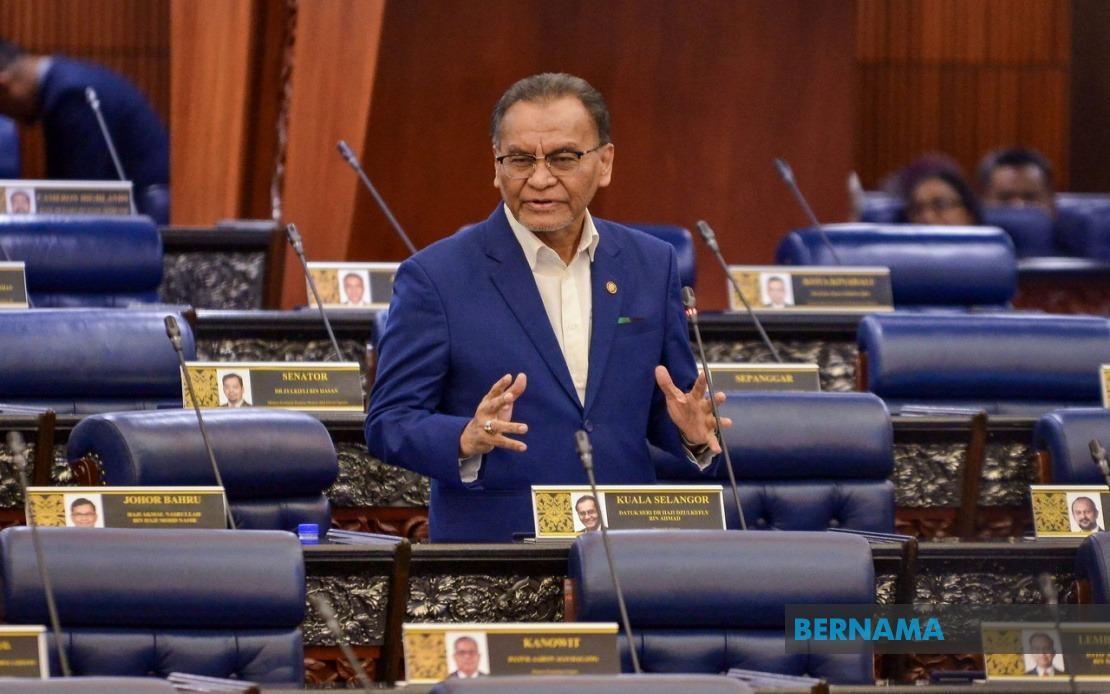
The Malaysian government is broadening its healthcare safety net through a coordinated set of programmes designed to shield both middle and lower-income households from escalating medical expenses. Health Minister Datuk Seri Dr Dzulkefly Ahmad announced that MediAsas, a new medical insurance and takaful product, will form a cornerstone of these efforts alongside existing initiatives such as the Healthcare Scheme for the B40 Group (PeKa B40), the MADANI Healthcare Scheme, and MySalam, collectively ensuring that vulnerable populations retain meaningful access to health protection as private sector costs continue climbing.
The MediAsas Plan represents a strategic response to a persistent policy challenge: how to support the M40 group—households earning between RM4,850 and RM10,970 monthly—without creating dependency or burdening the public system. By offering insurance and takaful products at competitive premium rates, the scheme aims to make private healthcare financially feasible for Malaysians who fall outside the B40 poverty assistance remit yet struggle with full-price medical services. This segment has historically occupied a difficult middle ground, earning too much to qualify for subsidy programmes but not enough to comfortably afford private care.
A defining characteristic of MediAsas is its gradual incorporation of Diagnosis Related Group (DRG)-based payment mechanisms at participating private hospitals. This approach ties insurance payouts to standardised clinical diagnoses rather than itemised billing, potentially controlling costs and reducing opportunities for unnecessary procedures. By aligning private sector payment models with evidence-based costing, the government aims to inject greater transparency and efficiency into Malaysia's private healthcare marketplace, where billing practices have historically been opaque and subject to wide regional variation.
Minister Dzulkefly emphasised that MediAsas complements rather than replaces public healthcare, underscoring the government's commitment to maintaining Universal Health Coverage funded through general taxation. This framing matters because it addresses longstanding concerns that privatisation creep could undermine the public system's equity foundations. Public healthcare in Malaysia, while strained by demographic ageing and rising non-communicable disease burdens, remains a core pillar of social protection, and the Ministry's position reflects awareness that even targeted private schemes must not erode the legitimacy or adequacy of public provision.
The rollout strategy reflects cautious pragmatism. MediAsas will debut as a pilot programme in the Klang Valley region at month's end, involving six insurance and takaful companies, before scaling nationally from January 2027. This phased approach permits testing and refinement of claims processing, provider networks, and customer communication before nationwide expansion. The Klang Valley, as the country's most densely populated urban centre with complex healthcare infrastructure and diverse income distributions, serves as an appropriate testing ground.
The broader RESET framework within which MediAsas sits addresses multiple pressure points in Malaysia's healthcare ecosystem. Interoperability of electronic medical records across providers will reduce duplicative testing and imaging, lowering costs and improving clinical continuity. Restructuring private hospital billing through standardised payment models should dampen inflation-driven service sprawl. Together, these technical and structural reforms signal recognition that healthcare affordability cannot rest solely on demand-side subsidies or new insurance products; supply-side rationalisation is equally vital.
For the B40 population, existing protections remain extensive. The government operates 154 hospitals and more than 3,000 public healthcare facilities serving lower-income groups, a vast infrastructure representing decades of capital accumulation. Programmes like PeKa B40, MADANI Healthcare Scheme, and MySalam provide additional layered coverage, ensuring that Malaysia's poorest citizens—despite rising costs—retain structured pathways to essential services. This multi-programme approach, while administratively complex, reflects commitment to protecting vulnerable populations from healthcare-driven poverty.
The MediAsas focus on pre-existing conditions, non-communicable diseases, and mental health marks recognition of evolving healthcare demand patterns. Malaysia's population is ageing, and chronic conditions including hypertension, diabetes, and cardiovascular disease dominate disease burden. Mental health, long neglected in both public and private sectors, now features in policy design, reflecting international best-practice standards and growing domestic advocacy. By incorporating these dimensions from inception, MediAsas positions itself as responsive to contemporary epidemiological reality rather than traditional acute-care models.
For regional observers, Malaysia's MediAsas initiative exemplifies middle-income healthcare challenges across Southeast Asia. Countries like Thailand, Indonesia, and the Philippines face similar pressures: public systems stretched by population growth and ageing, private sectors becoming expensive, and middle-income groups squeezed between eligibility thresholds and affordability. Malaysia's coordinated approach—combining targeted insurance products, supply-side reforms, and strengthened public provision—offers a policy template worth studying. The scheme's success in controlling costs and expanding coverage could influence regional healthcare governance.
Implementation risks remain. Ensuring that six insurers and takaful operators maintain adequate provider networks while managing premiums requires careful regulation and negotiation. Claims denial rates must be monitored to prevent erosion of consumer trust. Public sector capacity to oversee private hospital billing practices and enforce DRG standardisation will be tested. And the scheme's uptake among target M40 households depends on effective communication and pricing calibration—too expensive and coverage remains thin; too subsidised and fiscal sustainability suffers.
The timing of MediAsas's nationwide expansion in January 2027, well into the government's term, suggests confidence that pilot results will justify full deployment. However, success ultimately hinges on achieving the delicate balance between expanding private-sector options and preserving public healthcare equity. If MediAsas develops into a genuine alternative for middle-income Malaysians, reducing their recourse to catastrophic out-of-pocket spending, the initiative will have accomplished its core objective. Should it instead fragment the middle market or inadvertently undermine public provider viability through cream-skimming effects, the long-term healthcare equity implications could prove problematic.

