Governments across the Mekong region are stepping up coordinated action to prevent a repeat of the transboundary haze crises that have periodically engulfed Southeast Asia, as the combination of soaring temperatures and the looming El Niño pattern creates heightened risk conditions for forest and peatland fires. The alarm bells are sounding from capitals ranging from Bangkok to Ho Chi Minh City, where urban centres are already experiencing unseasonable heat despite the onset of the monsoon season. At the heart of this regional mobilisation lies a stark recognition that the environmental and economic costs of inaction have become untenable, prompting policymakers to treat haze prevention as a matter of urgent national and collective interest.
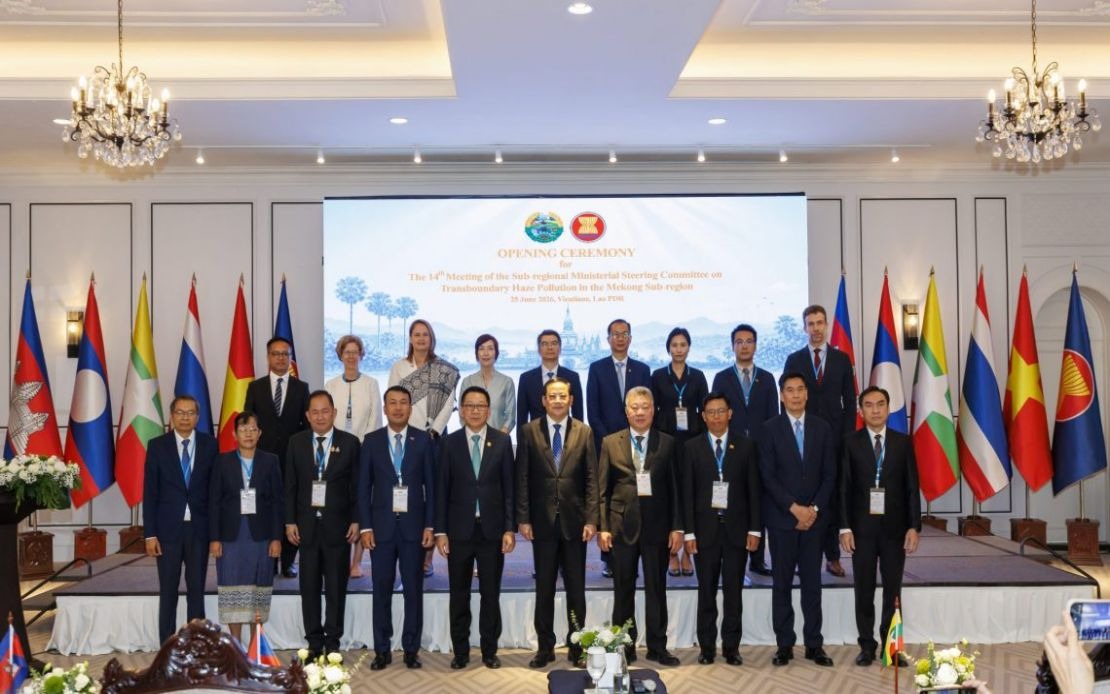
The warning came into sharp focus during the 14th Meeting of the Sub-Regional Ministerial Steering Committee on Transboundary Haze Pollution in the Mekong Sub-Region, convened in Vientiane on June 25. Lao Prime Minister Sonexay Siphandone articulated the stakes with sobering clarity, noting that forest fires and transboundary air pollution have become defining threats to the greater Mekong subregion, obliterating biodiversity, undermining public health systems, and draining resources from national economies across the area. His remarks underscore how what might appear as an environmental issue has cascading consequences for agriculture, healthcare spending, industrial productivity, and the livelihoods of hundreds of millions of people dependent on regional stability.
The statistical picture driving this sense of urgency is troubling. Between December 2025 and May 2026, the count of fire hotspots across the region climbed by approximately eight percent compared to the equivalent period the previous year, according to the ministerial committee's statement circulated via the ASEAN Secretariat website. While the percentage may seem modest in isolation, it signals a worsening trajectory at a moment when regional temperatures are already pushing dangerous boundaries. Several major metropolitan areas are simultaneously experiencing climate anomalies that defy normal seasonal patterns, with Ho Chi Minh City enduring intense heat during what should be the cool rainy season, while Bangkok remains locked in the grip of acute heat stress.
Weather scientists have attributed these anomalies to the compounding effects of climate change interacting with El Niño oscillation patterns, a phenomenon that fundamentally alters precipitation and temperature across the region. The Lao Ministry of Agriculture and Environment has issued specific warnings about what the El Niño cycle could produce during the rainy season itself, an unusual and destabilising scenario. Temperature projections in certain areas of the region could reach between 35 and 38 degrees Celsius, paired with erratic rainfall, extended dry periods interspersed within the monsoon months, and declining water levels in critical river systems. Such conditions create a perfect storm for cascade failures: drought conditions stress agricultural systems; water shortages threaten urban supplies and livestock operations; prolonged dry spells ignite forest biomass; and the combination erodes economic output across multiple sectors simultaneously.
Regional governments have moved beyond issuing warnings to committing concrete action. During the Vientiane gathering, ASEAN member states formally pledged to implement measures designed to reduce fire hotspots and suppress transboundary haze pollution specifically during the vulnerable dry seasons that punctuate the Mekong calendar. These commitments represent a recognition that the haze phenomenon is not merely a problem for individual nations to manage in isolation, but rather a regional challenge requiring harmonised policies, shared intelligence, and coordinated resource deployment. The pledge structure acknowledges that fire prevention in one nation inevitably affects air quality and public health outcomes in neighbouring territories, creating natural incentives for cooperation even among states that might otherwise maintain competitive or strained relationships.
The timing of this regional alert carries particular significance for Malaysia and broader Southeast Asia. The Mekong region's geography and ecological systems are intimately connected to Malaysian ecosystems through shared river systems, migratory patterns, atmospheric circulation, and trade relationships. When fires rage across Laos, Cambodia, or Thailand, the resulting haze can drift into Malaysian airspace, degrading air quality in major population centres and triggering respiratory health crises. Malaysian policymakers have historical experience with severe transboundary haze episodes, particularly the 2015 crisis when Indonesian forest fires created hazardous air quality across the region, imposing substantial economic costs through reduced visibility affecting transportation, cancelled outdoor activities, and increased healthcare burdens. Current efforts by Mekong governments to prevent similar scenarios offer both direct benefit and serve as a model for how Southeast Asian nations can establish effective cross-border environmental governance.
The potential emergence of a Super El Niño event this year, as cautioned by meteorological experts, elevates these concerns to a higher plane of urgency. A Super El Niño would represent an intensified version of the already-disruptive climate pattern, potentially extending dry seasons, raising temperatures further, and creating conditions where fire prevention becomes exponentially more difficult. Under such circumstances, even small policy lapses or insufficient resource allocation could cascade into regional environmental emergencies. The warning from weather scientists therefore carries implications extending beyond the Mekong proper into the broader Southeast Asian climatic system.
The economic dimensions of transboundary haze prevention merit particular attention, especially for Malaysia as a major regional economy with significant exposure to supply chain disruptions. Haze episodes impose costs through multiple channels: agricultural damage affects food security and export competitiveness; transportation bottlenecks reduce trade efficiency; tourism revenue declines; and healthcare systems face surging demand. The Greater Mekong Subregion generates substantial economic output in industries particularly vulnerable to air quality degradation, from rubber and rice production to manufacturing and tourism. By investing in fire prevention infrastructure, monitoring systems, and coordinated response protocols now, regional governments are effectively purchasing insurance against future economic shocks that could prove far more expensive to manage retroactively.
The institutional framework being employed through the Sub-Regional Ministerial Steering Committee represents an established mechanism for translating regional concerns into coordinated policy action. ASEAN's role in facilitating these discussions and disseminating commitments through its secretariat provides both visibility and accountability. Member states that pledge to reduce fire hotspots during dry seasons face reputational and diplomatic pressure to deliver on those commitments, creating incentives for domestic implementation of prevention strategies. The approach balances sovereignty concerns with the collective interest, allowing each nation to implement fire prevention according to its own circumstances while contributing to shared regional outcomes.
Looking forward, the success of these regional coordination efforts will depend substantially on whether governments translate ministerial pledges into sustained funding, personnel deployment, and enforcement capacity. Prevention requires year-round investment in forest management, firebreak maintenance, early warning systems, and ground-based monitoring to detect fires before they spread across borders. It also requires addressing underlying drivers of deforestation and land conversion that create fire-prone landscapes. The approaching months will test whether the alarm expressed in Vientiane translates into the institutional discipline and resource commitment necessary to prevent the haze crises that have periodically plagued the region, with consequences extending far beyond the Mekong into Malaysian and broader Southeast Asian territories.

