Barisan Nasional's Melaka chapter has thrown down a bold electoral gauntlet, declaring its intention to capture every one of the 21 state assembly seats it currently holds when voters go to the polls for the 16th state election. The announcement from party chairman Datuk Seri Dr Ahmad Zahid Hamidi underscores the coalition's confidence in its political standing within the southern state, even as Malaysia's electoral landscape continues to shift in unpredictable ways.
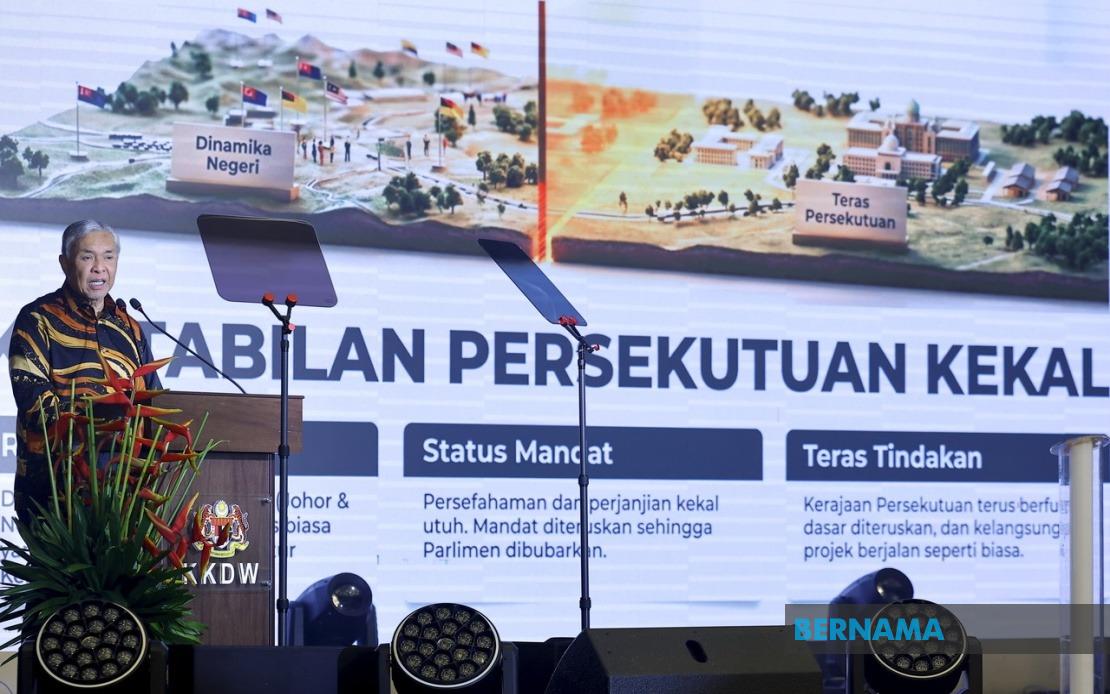
The ambitious mandate comes directly from Melaka Chief Minister Datuk Seri Ab Rauf Yusoh, who chairs the state chapter of Barisan Nasional and has publicly pledged his resolve to defend every seat the coalition currently occupies. Speaking to reporters at the Rural and Regional Development Ministry's monthly gathering in Putrajaya on August 6, Ahmad Zahid relayed the chief minister's determination with evident conviction, framing the push as a demonstration of BN's electoral strength in a state that remains a traditional stronghold.
Melaka represents significant political value within the broader Malaysian context. The state has been a reliable BN bastion for decades, and maintaining that dominance carries symbolic weight in national politics, particularly as the coalition works to rebuild its standing following its historic 2018 defeat. A complete retention of all 21 seats would send a powerful message about BN's organisational capacity and voter appeal, especially in a competitive era when opposition parties have demonstrated growing electoral appeal in various regions.
Yet beneath this display of confidence lies a more nuanced political reality. Ahmad Zahid explicitly acknowledged that Barisan Nasional remains receptive to exploring understanding with other political entities, a diplomatic formulation that suggests coalition discussions are actively ongoing or under consideration. This apparent contradiction between defending every seat and potential electoral pacts reflects the delicate calculus required in contemporary Malaysian politics, where coalition-building often yields superior outcomes compared to outright competition.
The chief minister's openness to dialogue signals recognition that electoral mathematics occasionally favour cooperation over confrontation. In Malaysian state politics, where single-digit seat differences frequently determine government formation, strategic alliances with smaller parties or independent candidates can prove decisive. Melaka's political composition means that even a coalition holding 21 seats faces the possibility of internal challenges or unexpected shifts in voter sentiment that make prior negotiations valuable insurance.
BN's hedging of its position becomes particularly important given Malaysia's recent electoral history. The 2022 general election demonstrated that traditional strongholds cannot be taken for granted, and state elections have produced outcomes that defied pre-election analyses. By leaving room for discussions while maintaining an aggressive target, the coalition creates flexibility in its campaign strategy and preserves options should ground realities diverge from initial expectations.
The central BN leadership's role in finalising any potential agreements underscores the hierarchical nature of decision-making within the coalition structure. Ahmad Zahid's statement that the party's top echelon would retain final approval authority reflects concerns about maintaining party discipline and ensuring that state-level arrangements align with national coalition interests. This requirement for central clearance prevents maverick negotiations and ensures coherence across BN's operations in different states.
For Malaysian political observers, particularly those monitoring the Melaka situation, the statement represents a standard opening move in pre-election positioning. The target of defending all 21 seats establishes an ambitious benchmark against which the coalition's performance will be measured, while simultaneous openness to talks keeps negotiating channels live. This dual approach reflects political pragmatism: setting high aspirations while maintaining strategic flexibility.
The timing of the announcement, made in early August, suggests the election calendar is becoming concrete, prompting parties to crystallise their electoral strategies and messaging. Melaka voters and stakeholders can expect intensifying political activity in coming months as BN, opposition coalitions, and independent candidates mobilise their respective campaigns and negotiate prospective arrangements.
For Southeast Asian democracies observing Malaysian electoral developments, Melaka's upcoming contest offers insights into how established political coalitions maintain regional dominance while adapting to changing voter preferences and volatile political conditions. The state election will also test whether BN's apparent recovery at the federal level translates into comparable gains at state level, where local issues and personalities often weigh more heavily than national narratives.
Ultimately, Melaka's electoral contest represents more than a routine state election. It functions as a barometer of BN's resurgence, a testing ground for potential coalition arrangements, and an indicator of how Malaysian voters perceive competing political offerings in an increasingly fragmented electoral environment. The coalition's confidence in defending all seats, paired with willingness to negotiate, reflects sophisticated political calculation about maximising outcomes while minimising unnecessary risks.

