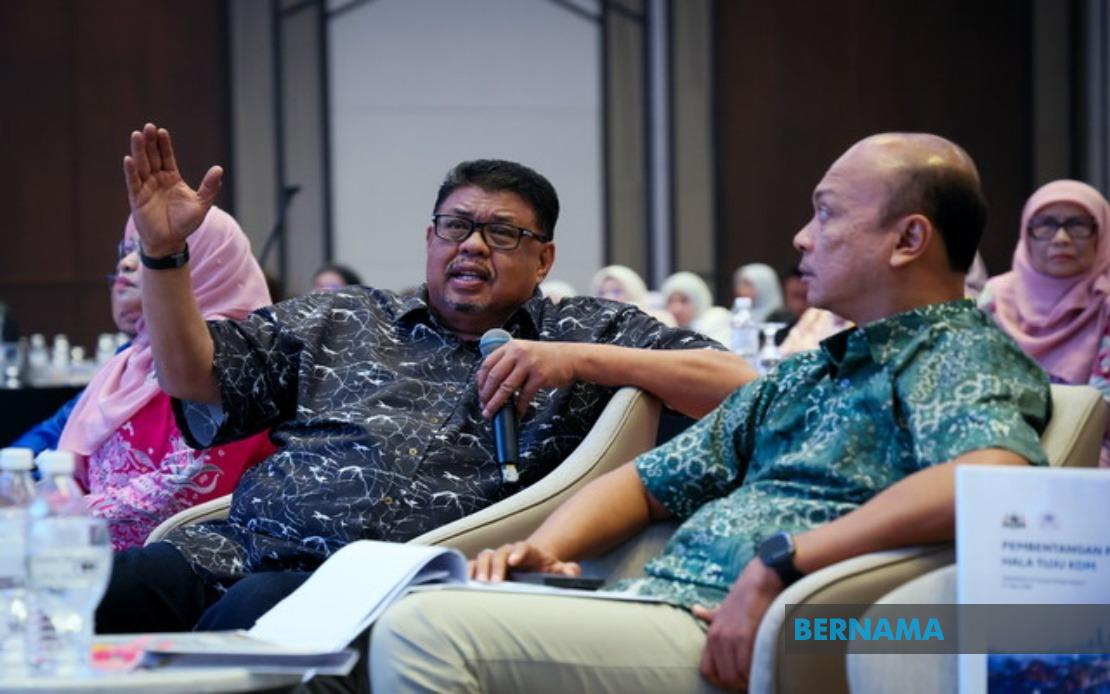
Melaka's Barisan Nasional coalition has drawn a clear line in the sand regarding the upcoming state election, with party leadership asserting an uncompromising stance on retaining all 21 state legislative assembly seats currently under its control. Datuk Seri Ab Rauf Yusoh, who serves simultaneously as Melaka BN chairman, UMNO liaison committee chairman for the state, and Chief Minister, articulated this position during comments made at the Melaka Digital Kampung Directional Alignment Workshop in Alor Gajah, framing the matter as non-negotiable and foundational to any potential coalition arrangements.
The emphasis placed on defending the full complement of 21 seats represents a significant marker of BN's political strategy as it prepares for what observers anticipate could be a competitive electoral battle. By establishing this as a baseline requirement rather than a discussion point, the coalition has effectively communicated to potential partners that negotiations will centre on other aspects of cooperation rather than seat allocation. This rigid positioning suggests BN leadership views the current distribution of legislative power as reflecting genuine voter preferences and organizational strength that warrant preservation in their entirety.
When addressing speculation about discussions involving three senior PAS leaders, Ab Rauf adopted a more open posture, indicating a willingness to receive delegations from interested parties. However, this apparent flexibility comes with substantial caveats. He emphasized that any negotiations must rest on what he characterized as a very reasonable rationale, and crucially, any decisions emerging from such talks would require approval from the coalition's Supreme Council, inserting an additional layer of institutional deliberation into the process. This approach suggests that while BN may be receptive to exploring partnerships, the parameters within which such exploration can occur are narrowly defined.
The political landscape in Melaka reflects a complex three-way division of power that emerged from the 15th state election. The 28-seat state assembly is currently divided between BN's commanding 21 seats, Pakatan Harapan's five seats, and Perikatan Nasional's two seats. This distribution gives BN substantial breathing room, though the combined opposition holds seven seats—a number that, while not immediately threatening, represents a meaningful presence. For BN, maintaining its current supermajority appears both a matter of political principle and strategic necessity.
The timing of any state election remains deliberately shrouded in uncertainty, with Ab Rauf declining to provide specifics about when the state assembly might be dissolved. He noted that while the election could occur at any time, he has not yet received what he described as inspiration regarding the precise date. This coy response reflects standard political practice in Malaysia, where chief ministers typically maintain discretion over dissolution timing to maximize electoral advantage. However, the constitutional reality looms: the term of the current Melaka state government expires on December 31, creating an outer boundary beyond which an election becomes mandatory.
For Malaysian political observers, the Melaka situation offers a microcosm of broader coalition dynamics playing out across the country. The apparent willingness of PAS to engage in discussions with BN represents a potential realignment in state-level politics, particularly given the complex relationship between these parties at federal level. PAS's interest in Melaka negotiations may reflect calculations about local political dynamics or broader strategic positioning within opposition blocs. The fact that BN feels compelled to establish firm parameters suggests awareness that any compromise on seat allocation could set problematic precedents for other state governments or embolden coalition partners to make additional demands.
The insistence on defending all 21 seats also carries implications for smaller BN component parties and independent-leaning politicians within the coalition. By refusing to cede any seats to negotiating partners, BN effectively signals that internal positions are settled and that alliance arrangements will not result in seat redistribution. This sends reassurance to UMNO cadres and other BN component party members that their electoral prospects remain secure, potentially bolstering internal party cohesion at a time when coalition unity remains a significant political concern nationally.
Southeast Asian context adds another layer to understanding Melaka's political dynamics. Regional stability often correlates with political predictability at the state level, and BN's firm positioning in Melaka contributes to a broader narrative of political consolidation. The coalition's performance in Melaka, one of Malaysia's most historic states with deep cultural and political significance, carries symbolic weight beyond its 21 seats. A strong electoral performance would reinforce BN's narrative of recovery and relevance, while any setback could embolden opposition forces and complicate coalition calculations at federal level.
The practical question of coalition governance also underpins BN's stance. Accommodating partners by yielding seats would require internal seat redistribution among component parties or displacement of sitting representatives. Such moves generate friction within coalition structures and create resentment that can fester during joint governance. By holding firm on the 21-seat baseline, BN avoids these complications while maintaining maximum internal flexibility regarding seat distribution among its own members.
Looking ahead, the approach Ab Rauf has outlined suggests that any election held in Melaka will likely feature BN defending its current position with renewed vigour, potentially with an expanded campaign machinery and messaging emphasizing stability and demonstrated governance. Opposition parties will need to craft strategies that challenge BN's narrative without access to significant additional alliance resources. The coming months will test whether PAS and other potential partners find sufficient common ground with BN to formalize arrangements, or whether electoral competition will proceed along three-way lines established in 2018.

