Melaka has positioned itself as a regional leader in sustainable urban greening by weaving together technological innovation, regulatory frameworks and community engagement into an integrated landscape management strategy. Chief Minister Datuk Seri Ab Rauf Yusoh unveiled the state's multifaceted approach during the National Landscape Day 2026 celebration, underscoring how environmental stewardship and economic development can advance together. The initiative gains particular significance for Southeast Asia, where rapid urbanisation often comes at the expense of green spaces and ecological heritage. Melaka's model offers a blueprint for other Malaysian states and regional peers grappling with similar pressures to modernise while preserving natural assets.
At the foundation of Melaka's effort lies the enforcement of the Tree Preservation Order operating under the Town and Country Planning Act 1976 (Act 172), a mechanism that shields high-value trees embedded within the state's physical and cultural identity. Yet regulation alone proves insufficient in the digital age. The state government recognised this gap and invested in the MyTrees@Melaka system, a homegrown technological solution that shifts tree management from paper-based processes into a dynamic, data-driven ecosystem. Launched in 2017, this platform has aggregated 70,753 individual tree records across Melaka's four local authorities in collaboration with the Melaka Forestry Department. Each record functions as a living file, continuously updated and monitored to ensure that trees receive appropriate care, are protected from harmful practices, and contribute meaningfully to the broader environmental strategy.
The introduction of the Melaka State Landscape Guidelines in 2022 provided the conceptual scaffolding necessary to translate vision into practice. Rather than treating landscape development as an afterthought to construction projects, the guidelines established a comprehensive framework encompassing implementing agencies, local authorities, private developers and community stakeholders. This collaborative architecture encourages all parties to approach landscape design with intention—ensuring developments are planned methodically, executed to high standards, rooted in local distinctiveness and engineered for long-term sustainability. For Malaysian policymakers observing from other states, the guidelines model demonstrates how soft policy tools can reshape professional and institutional behaviour without heavy-handed mandates.
Planting ambition has translated into measurable action. As of June last year, Melaka's government had successfully established 10,588 new trees across the state, reflecting genuine progress beyond rhetorical commitments. Critically, each tree planted enters the MyTrees@Melaka database, creating an auditable record that supports evidence-based maintenance schedules and long-term survival tracking. This data-centric approach addresses a persistent challenge in greening initiatives: newly planted trees often fail because their aftercare lacks systematic oversight. Melaka's methodology ensures that survival rates improve through organised monitoring and targeted intervention, maximising the return on environmental investment.
Beyond conventional tree-planting sits a more expansive vision: positioning Melaka as an Aspiring Geopark that integrates geological heritage, biodiversity conservation, cultural narratives and local identity. This initiative reflects growing international recognition that sustainable landscapes function as educational and economic assets simultaneously. When managed wisely, such spaces attract nature-based tourism, generating revenue that funds ongoing conservation while creating employment in hospitality and guiding services. For communities, the approach transforms environmental preservation from a constraint into an opportunity—villages and towns become custodians of ecological and cultural assets with tangible economic value, incentivising stewardship across generations.
Three major landscape projects launched last year exemplify this integrated thinking. The SDG Park @ Sungai Melaka advances sustainable development goals through urban waterfront transformation, while Kampung Felda Air Kangkung Recreation Park and Taman Kejiranan Pulai Indah bring enhanced leisure amenities to residential communities. These are not vanity projects imposed from above; they represent deliberate investments in public space that improve daily quality of life. Crucially, Ab Rauf characterised progress not simply as physical construction but as the state's capacity to balance ecosystem preservation with human wellbeing—a philosophical shift increasingly necessary as Malaysian cities confront climate pressures, heat stress and social fragmentation.
Three additional MADANI Recreational Park initiatives scheduled for the current year will extend this momentum. The upgrading of Dataran Sejarah Ayer Keroh capitalises on heritage value while enhancing visitor experience; similarly, the Ayer Keroh Art Lanai project marries cultural expression with accessible public space. The Bukit Beringin Masjid Tanah MADANI Recreational Park completes the portfolio, demonstrating how landscape interventions span diverse neighbourhoods and geographies rather than concentrating resources in affluent enclaves. Each project announces a fundamental principle: progress means little if communities cannot access and enjoy improved environments.
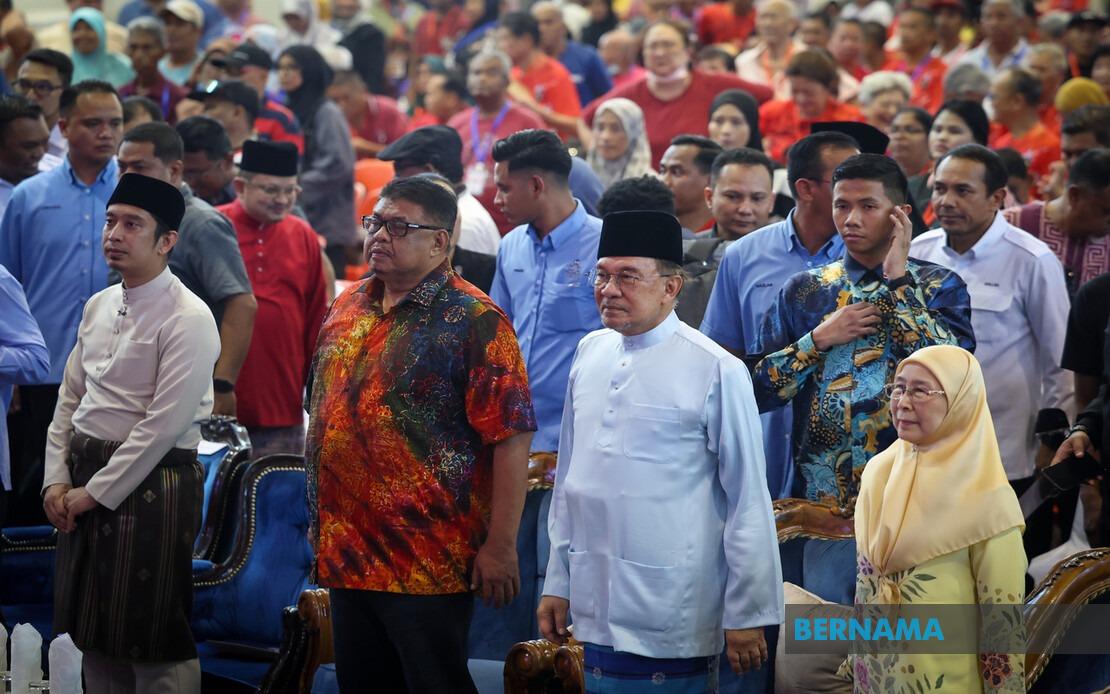
The National Landscape Day 2026 celebration itself functioned as a knowledge-sharing forum, drawing nearly 3,000 participants encompassing landscape architecture professionals, local authority officials, industry practitioners, academics and enthusiast communities. The event, officially inaugurated by Prime Minister Datuk Seri Anwar Ibrahim and attended by Housing and Local Government Minister Nga Kor Ming, elevated landscape management from technical niche to national policy concern. Twelve participating local authorities erected pavilions showcasing regional creativity and innovation in landscape design, signalling that sustainable greening need not follow uniform templates but can reflect distinctive local contexts and aspirations.
For Malaysia's broader regional role, Melaka's approach carries implications beyond state boundaries. As Southeast Asian neighbours—from Thailand to Indonesia to Vietnam—grapple with urbanisation and environmental degradation, Melaka's integration of digital tools, regulatory frameworks, community participation and economic logic offers a replicable model. The state demonstrates that technological innovation need not be imported wholesale; instead, locally-developed solutions like MyTrees@Melaka can address specific challenges while building institutional capacity and professional expertise domestically. This matters for regional competitiveness and self-reliance in an era when environmental technology often flows unidirectionally from developed to developing economies.
The philosophical underpinning throughout Melaka's initiative deserves emphasis: sustainable landscape development is not a luxury amenity but a foundational component of liveable, equitable cities. When officials invest in green space, tree canopy, recreational parks and heritage protection, they make tangible statements about whose needs matter and what constitutes genuine progress. Melaka's strategy suggests that such investments, properly sequenced and monitored through data-driven systems, generate returns across environmental, social and economic dimensions simultaneously—dispelling the false dichotomy that development and conservation operate in opposition.

