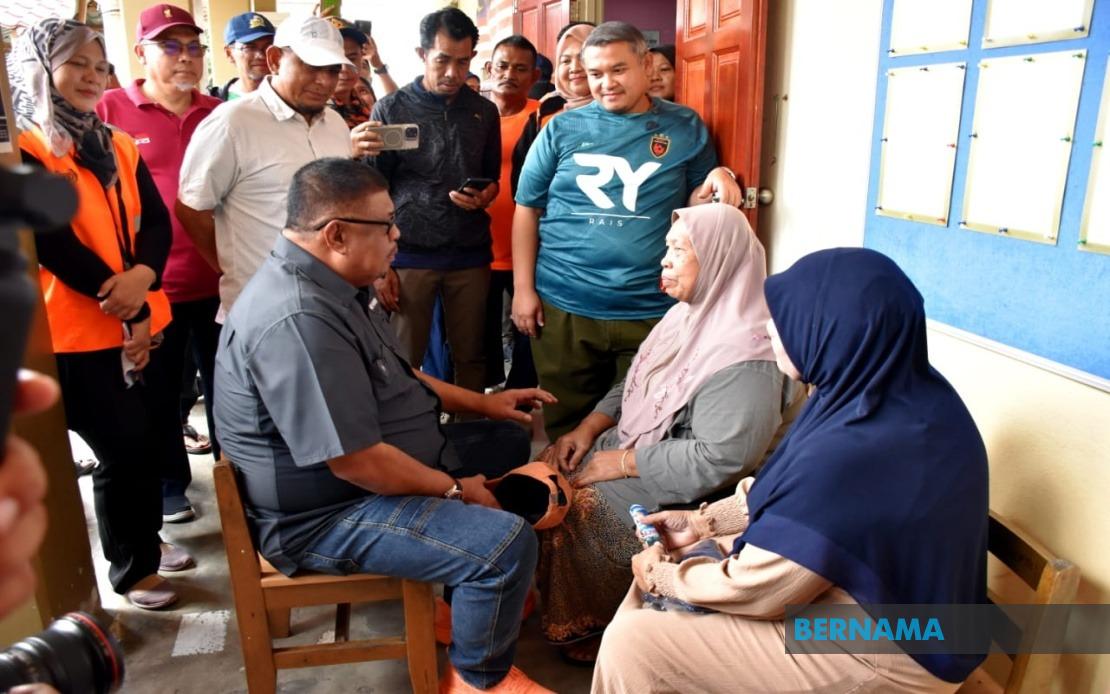
Melaka Chief Minister Datuk Seri Ab Rauf Yusoh has pledged decisive action to address the chronic flooding that has devastated Tanjung Minyak for more than 30 years, marking a significant commitment following the latest deluge that displaced hundreds of families from their homes. The announcement came after the senior state official visited relief centres housing evacuees, underscoring the urgency with which the state administration is treating what has become one of Melaka's most persistent infrastructure challenges. His intervention signals that the state government is elevating the matter beyond routine responses to individual flood events and towards identifying comprehensive, long-term remedial measures.
The flooding crisis has reached a critical point, with more than 900 people from approximately 300 families currently sheltering across multiple relief centres throughout the state. Among the facilities providing temporary accommodation is Sekolah Kebangsaan Tanjung Minyak 2, where Ab Rauf spent time understanding the situation firsthand by speaking with displaced residents and assessing their immediate needs. The scale of displacement illustrates how the area's drainage vulnerabilities continue to pose a significant threat to residents' safety and livelihoods, particularly during monsoon seasons and periods of heavy precipitation. The state government has emphasised that welfare support for these evacuees remains a priority until normalcy returns to affected communities.
A groundbreaking aspect of this latest flooding event is the unprecedented rainfall intensity that triggered it. According to the Melaka Irrigation and Drainage Department, the area experienced exceptionally heavy downpours that exceeded cumulative rainfall measurements recorded during Tropical Storm Senyar in late the previous year—itself a significant weather event. The highest rainfall readings, surpassing 100mm, were recorded in both Melaka Tengah and Alor Gajah districts at 2:30 pm, levels the department characterised as the highest in more than two decades. This severity overwhelmed the existing water retention and drainage systems, causing them to overflow directly into residential zones, leaving families with minimal warning or time to secure their properties.
The Chief Minister's statement acknowledges that temporary relief measures alone cannot address the underlying problem. Ab Rauf indicated that the state would systematically review all proposals and technical recommendations from relevant government agencies and engineering consultants to identify the most effective long-term solution. This commitment to a comprehensive review process suggests recognition that Tanjung Minyak's flooding is not a simple drainage issue but likely involves multiple contributing factors—from inadequate stormwater infrastructure to land-use patterns, topography, and climate resilience considerations. The promise to determine the optimal approach represents a shift towards evidence-based decision-making rather than ad-hoc interventions.
The involvement of senior state officials in the response demonstrates the gravity with which the government is treating the matter. Present during the Chief Minister's visit were Datuk Rais Yasin, chairman of the state Senior Housing, Local Government, Drainage, Climate Change and Disaster Management Committee, and Halyjah Muhamad, director of the Melaka Social Welfare Department. This multi-agency presence indicates that solutions will likely extend beyond simple drainage engineering and may encompass housing policy, disaster preparedness, and climate adaptation strategies. The coordination between these departments signals a whole-of-government approach that recognises flooding as a multifaceted problem requiring expertise from various sectors.
Coordination mechanisms have been strengthened to improve response times for future incidents. All relevant state agencies have been placed on heightened alert to ensure the fastest possible mobilisation of resources and assistance when floods occur. The District Office has been tasked with coordinating immediate aid distribution, with the state government itself channelling support to affected families. This formalised emergency response structure aims to minimise the lag between a flooding event and the delivery of practical assistance, though critics might note that such measures, while important for immediate relief, do not prevent the underlying problem from recurring.
The persistent nature of Tanjung Minyak's flooding problem reflects broader challenges facing Malaysian municipalities as climate patterns become increasingly unpredictable and rainfall intensities potentially increase. The fact that a 30-year problem has persisted through multiple political administrations suggests either insufficient technical solutions were available previously or that the cost of comprehensive remediation was considered prohibitive. Ab Rauf's intervention may indicate fresh political will to prioritise the issue or the availability of new engineering approaches and funding mechanisms that make solutions more feasible.
For residents of Tanjung Minyak, the Chief Minister's pledge offers hope after three decades of cyclical disruption to their lives. Repeated evacuations, property damage, and the psychological toll of living in a perpetually vulnerable area represent genuine hardships that extend beyond mere inconvenience. However, the translation of political commitment into actual infrastructure improvements requires sustained funding, technical expertise, and implementation capacity. The upcoming review process will be crucial in determining whether the state can identify solutions that are both effective and financially sustainable.
The flooding incident also highlights the interconnected nature of urban planning, climate resilience, and disaster management in Southeast Asian cities. As Malaysia's urbanised regions expand and climate variability increases, experiences like Tanjung Minyak's chronic flooding offer lessons for other communities facing similar challenges. The state's approach to finding long-term solutions—involving multiple agencies, reviewing comprehensive proposals, and maintaining high-level political engagement—provides a model that other flood-prone areas in Malaysia and the region might study and adapt. Success in Melaka could provide valuable precedent and technical insights for broader regional flood mitigation efforts.
The coming months will be pivotal in determining whether Ab Rauf's commitment translates into concrete action. The state government's credibility on this issue will depend on the speed and substance of the review process, the quality of solutions identified, and most importantly, the actual implementation of chosen remedial measures. Tanjung Minyak residents, having endured three decades of flooding, will understandably demand evidence of genuine progress rather than another cycle of promises and temporary relief measures.

