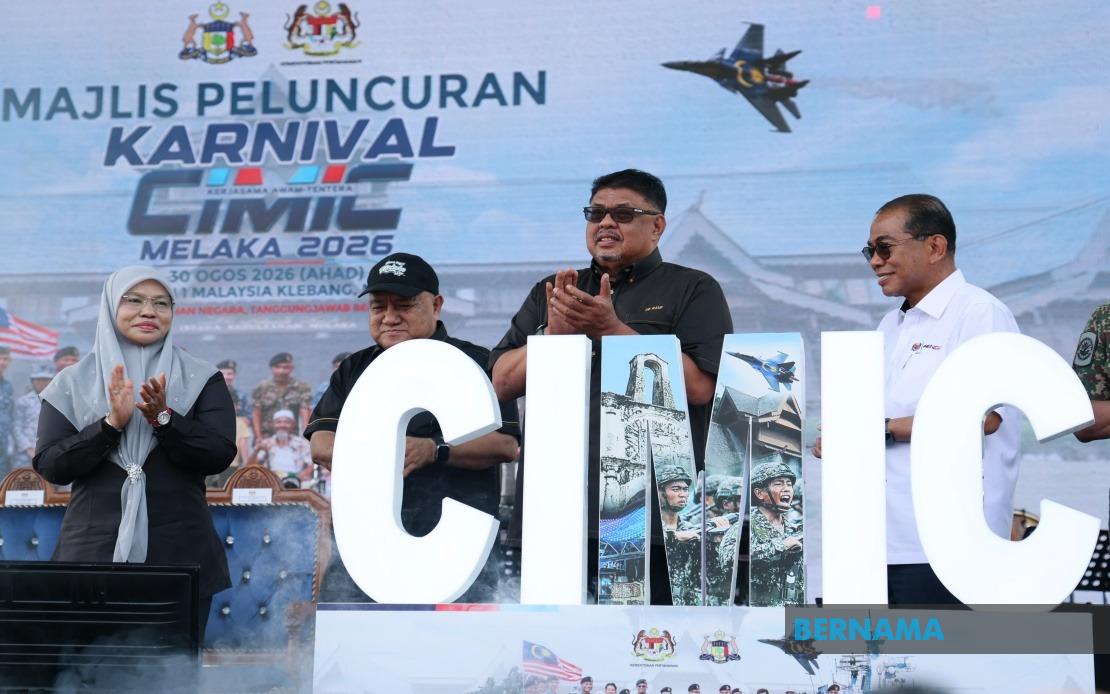
Malaysia is actively considering Melaka as a potential alternative venue for the Langkawi International Maritime and Aerospace Exhibition (LIMA), one of Asia's premier defence and aerospace showcases, if circumstances warrant a shift from its traditional northern location. Defence Minister Datuk Seri Mohamed Khaled Nordin revealed this strategic examination during his remarks at the Civil-Military Cooperation Carnival in Klebang, signalling the government's openness to repositioning the biennial event to improve national accessibility and boost regional economic benefits.
The minister outlined a compelling rationale for the proposed relocation, emphasising that Melaka's geographical position offers distinct logistical advantages over Langkawi. He specifically highlighted the Klebang waterfront area's proximity to Batu Berendam airport, combined with natural harbour capabilities that would accommodate both maritime vessels and aerospace demonstrations. This convergence of transportation infrastructure—air, sea, and land routes—creates operational synergies that the current venue cannot match as effectively, particularly for international delegations arriving from beyond the peninsula's northern tier.
Crucially, Mohamed Khaled acknowledged that such an ambitious undertaking demands substantial capital investment to realise Melaka's potential as an exhibition hub. The government recognises that hosting a world-class international exhibition requires far more than geographical positioning; it necessitates purpose-built facilities, enhanced accommodation capacity, improved connectivity, and dedicated exhibition grounds capable of handling the scale and complexity of modern aerospace and naval displays. Without this foundational infrastructure, the relocation would remain merely conceptual rather than operationally viable.
A key motivation underpinning this exploration stems from accessibility concerns surrounding LIMA's historical Langkawi positioning. Mohamed Khaled frankly noted that the northern location constrains attendance from Malaysia's populous southern and central regions, where road distances and transport costs create barriers to participation. By relocating to Melaka, the exhibition would become geographically central to the country's population distribution, theoretically enabling broader attendance from government officials, defence personnel, industry stakeholders, and educational institutions across the peninsula. This democratisation of access aligns with broader government objectives of enhancing public engagement with national defence capabilities.
The genesis of this proposal emerged partly from the successful deployment of six Royal Malaysian Navy vessels during Melaka's recent National Day celebrations, an event that demonstrated the state's capacity to accommodate significant maritime assets and coordinate complex naval operations. This practical experience evidently catalysed official thinking about Melaka's suitability for hosting larger-scale maritime and defence exhibitions. The visible presence of RMN ships in local waters provided tangible proof of concept regarding berthing infrastructure and operational feasibility that previously remained theoretical.
Melaka's Chief Minister Datuk Seri Ab Rauf Yusoh expressed measured enthusiasm for the proposal, carefully balancing ambition with fiscal realism. He confirmed the state government's willingness to serve as host, yet appropriately insisted on comprehensive capacity assessments before committing to the undertaking. His pragmatic stance reflects provincial responsibility to evaluate not merely the prestige associated with hosting an international event, but the genuine economic and social returns that would justify significant state investment. The chief minister indicated that formal discussions at federal level would precede any definitive decision, ensuring alignment between national defence ministry objectives and state-level resource availability.
The timeline for potential relocation remains undefined, with officials characterising the exploration as preliminary rather than imminent. Mohamed Khaled referenced the possibility of Melaka hosting LIMA "in the future" should Langkawi cease to represent an optimal venue, suggesting this constitutes contingency planning rather than an immediate policy shift. Current LIMA arrangements in Langkawi apparently continue as scheduled, with this examination serving as long-term strategic thinking rather than an urgent operational pivot. The measured pace reflects the complexity of relocating an established international exhibition with decades of institutional history and stakeholder relationships concentrated in Langkawi.
From a regional strategic perspective, this proposal carries implications for Malaysia's positioning within Southeast Asia's defence and aerospace sector. Melaka's historical significance as a maritime crossroads, combined with its renewed prominence as a federal territory with enhanced development resources, could reinforce Malaysia's claim as a credible hub for military technology dialogue and aerospace innovation. A centralised Melaka location might attract broader Asian and international participation compared to Langkawi's relatively peripheral northern positioning, potentially elevating LIMA's stature as a premier regional defence exhibition.
The proposal also reflects broader infrastructure development ambitions within Melaka's strategic masterplanning. Beyond the immediate exhibition hosting capacity, successful development of Klebang and surrounding areas would create lasting economic benefits through enhanced port facilities, improved transportation networks, and expanded commercial opportunities. These infrastructure investments would serve purposes extending far beyond the biennial LIMA event, contributing to Melaka's transformation into a more significant economic and logistics hub within the Klang Valley region.
Industry observers note that such relocation decisions carry complex considerations beyond venue logistics. Established suppliers, accommodation providers, and service vendors in Langkawi have built decades-long relationships with LIMA organisers. Any transition would necessarily involve consultation with exhibition stakeholders, international exhibitors, and government participants to ensure the relocation enhances rather than diminishes the event's attractiveness and operational effectiveness. The careful, exploratory tone of current statements suggests officials are conscious of these stakeholder dynamics and the importance of building consensus before implementation.
The Civil-Military Cooperation Carnival itself, running through August 31 at Dataran 1Malaysia, serves as a complementary initiative promoting public awareness of Malaysia's Armed Forces capabilities and civil-military cooperation frameworks. By hosting such events in Melaka and demonstrating the state's capacity to accommodate defence-related activities, officials are essentially building an experiential case for LIMA relocation. The carnival provides practical opportunity to assess Melaka's infrastructure readiness and public reception toward expanded defence sector engagement.
Moving forward, the government's exploration suggests a methodical evaluation process rather than hasty decision-making. Strategic communications from the Defence Ministry indicate that comprehensive feasibility studies, stakeholder consultations, and cost-benefit analyses will inform whether Melaka truly represents a superior long-term venue. Officials have appropriately framed this as exploring options rather than announcing policy changes, allowing space for evidence-based decision-making while signalling to Melaka stakeholders and international participants that Malaysia remains committed to maintaining LIMA's regional prominence regardless of its ultimate location.

