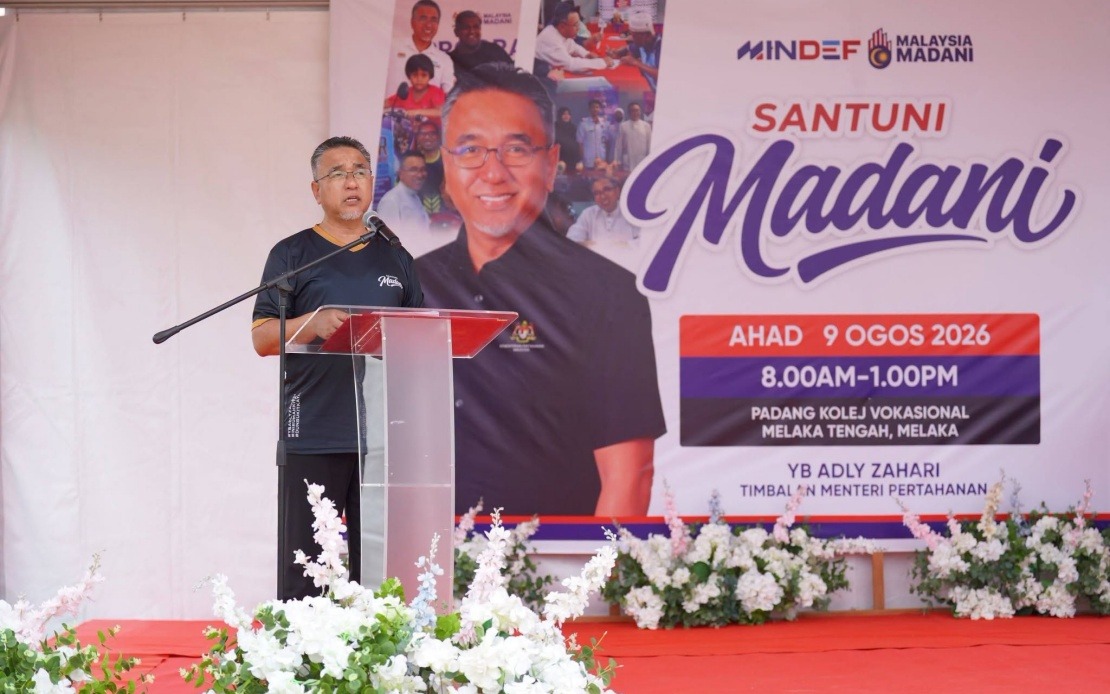
Melaka's ruling Pakatan Harapan coalition has signalled pragmatic flexibility regarding potential political alliances ahead of the state election, with party leadership declaring themselves willing to enter negotiations with interested parties despite having yet to crystallise any formal cooperation agreements. Speaking in Melaka on August 9, coalition chairman Adly Zahari underscored that discussions remain fluid at the PH level, with the form and scope of any partnership arrangement still under deliberation following preliminary strategic assessments.
The coalition's openness to dialogue reflects the realities of contemporary Malaysian politics, where the binary two-coalition framework has given way to more fluid arrangements tailored to regional contexts and electoral mathematics. Adly's statements suggest that PH recognises the complex terrain of Melaka's political landscape, where maximising representation often requires pragmatic collaboration beyond its core membership. The chairman emphasised that any future cooperation would need to align with the Malaysia MADANI agenda and its underlying values, establishing a philosophical boundary for partnership discussions.
Crucially, PH has not yet engaged in substantive talks with Barisan Nasional, the traditional opposition force in Melaka, though the coalition remains theoretically open to such dialogue. This measured stance balances the need to explore options whilst avoiding premature commitments that could undermine internal party cohesion or complicate the broader Unity Government framework at the federal level. The distinction between receptiveness and active negotiation allows PH negotiators considerable room to manoeuvre as the electoral landscape becomes clearer.
Regarding seat expansion, Melaka PH has set itself an ambitious but achievable target. The coalition currently holds five of the state assembly's 28 seats, a figure that reflects its status as a junior partner in the state administration. Adly expressed confidence that systematic assessments of PH's ground strength would translate into measurable gains, with particular focus on constituencies where the coalition demonstrated electoral success in recent parliamentary contests. The party has identified Alor Gajah, Kota Melaka, and Hang Tuah Jaya as core constituencies where PH demonstrated winning capacity, with secondary targets identified in Tangga Batu, Masjid Tanah, and Jasin.
This granular geographic approach reflects contemporary Malaysian campaign strategy, where seat-level analysis increasingly drives coalition calculations. Rather than pursuing wholesale alliance agreements, PH appears inclined to assess each potential seat based on local dynamics, existing support networks, and realistic victory prospects. This methodology has gained traction across multiple Malaysian state politics as parties seek to optimise their representation without overextending themselves into unwinnable contests.
Keeping wider perspective, Melaka's political situation presents distinct variables compared with other Malaysian states anchoring the Unity Government. The state's compact size, mixed demographic composition, and localised power structures create unique negotiating parameters. PKR's state leadership, represented by acting MPN chairman Adam Adli Abd Halim, acknowledged these distinctive dynamics whilst confirming ongoing informal communications with Barisan Nasional partners at various levels. The distinction between formal negotiations and exploratory dialogue has become increasingly important in Malaysian political language, allowing parties to maintain options without creating binding commitments.
Addam Adli's emphasis on PH assemblymen maintaining focus on public duties whilst avoiding excessive political messaging reflects broader Unity Government concerns about governance stability. The tension between electoral preparation and administrative continuity remains acute in Malaysian state politics, where ruling coalitions must simultaneously campaign for expanded mandates whilst delivering visible public benefits. This balancing act often determines whether voters perceive governments as either genuinely committed to serving communities or transparently consumed by electoral self-interest.
The timeline for Melaka's election remains fluid, though preparations are accelerating. PH's internal consolidation represents the foundational phase of any electoral campaign, with the coalition ensuring disciplined candidate selection and messaging consistency before broader alliance negotiations commence. This sequencing differs from previous approaches where coalition frameworks were often agreed at the outset, allowing constituent parties to negotiate seat allocations based on predetermined arrangements.
For Malaysian readers tracking Unity Government dynamics, Melaka developments carry subtle implications. The willingness of Melaka PH to engage in flexible negotiations whilst maintaining Malaysia MADANI principles suggests that the federal coalition's foundational values retain political salience at the state level. However, the deliberate pace of formal discussions also indicates that federal leadership wishes to avoid premature coalition commitments that might constrain electoral strategies or internal party autonomy.
The broader context involves recognising that Malaysian state politics increasingly operate according to their own logics, even within a federally-oriented Unity Government structure. Melaka's electoral calculations cannot simply replicate federal-level arrangements, requiring locally sensitive approaches to coalition design. Adly's careful phrasing throughout his public statements reflects this tension between adhering to broader government principles and maintaining the flexibility necessary to succeed in a specific electoral contest.
As Melaka PH formalises its strategy over coming weeks, the coalition will face escalating pressure to clarify its partnership intentions. Voters and potential allies alike require sufficient certainty to plan their own electoral responses, yet premature clarity risks constraining PH's negotiating position or inviting opportunistic defections from parties sensing vulnerability. Managing this tension represents the core challenge for Melaka's ruling coalition as it prepares for what will ultimately prove a critical test of the Unity Government's resilience at the state level.

