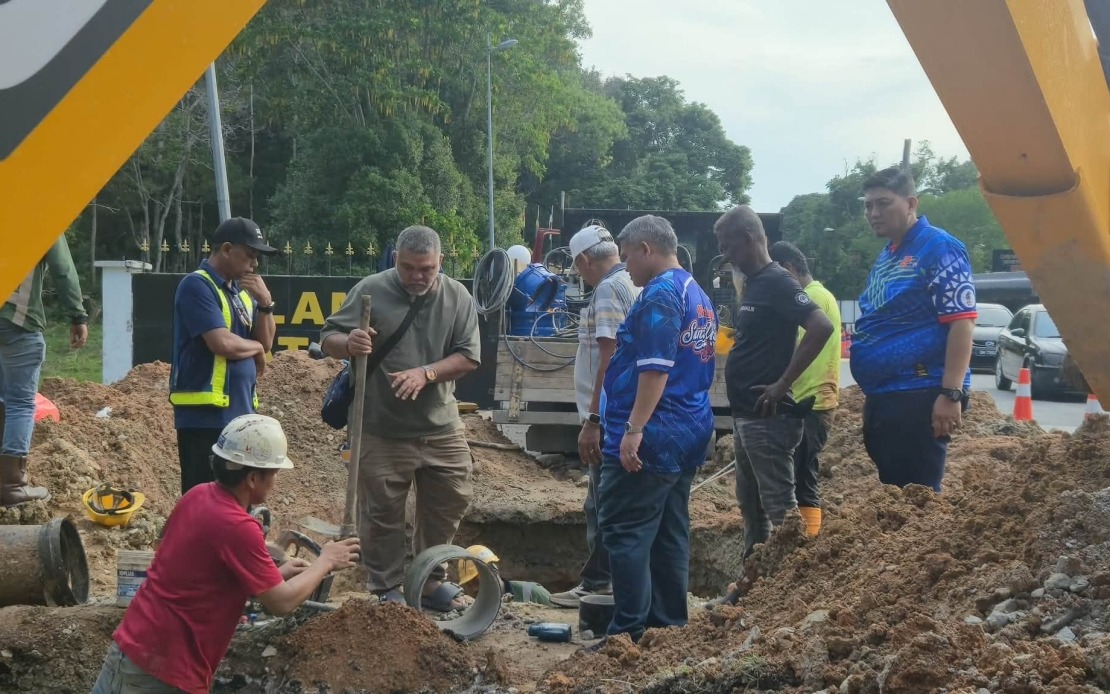
Melaka's state government is moving to tackle escalating water supply problems at Kem Terendak through a combination of immediate relief measures and longer-term infrastructure investment. Speaking after a water tank handover ceremony on July 20, Housing, Local Government, Drainage, Climate Change and Disaster Management senior exco Datuk Rais Yasin outlined plans to install a temporary water storage facility at the military camp in Sungai Udang, contingent on approval from the Ministry of Defence.
The proposed temporary tank represents a bridging solution while authorities await completion of a comprehensive water system overhaul scheduled to conclude in April 2028. That broader Development and Upgrade of the Water Reticulation System project is intended to permanently resolve the infrastructure vulnerabilities that have repeatedly disrupted service at the camp. However, Rais acknowledged that jurisdiction over military installations complicates Melaka's ability to act unilaterally, necessitating formal coordination with federal defence authorities before construction can commence.
The immediate crisis stems from a significant pipe rupture along Jalan Kampung Payasum in Sungai Udang, an incident that has cascaded into one of the most severe supply disruptions at the facility in recent memory. Approximately 2,000 military personnel and civilian households have been affected, along with five educational institutions within the camp perimeter, including a MARA Junior Science College. The scale of the outage underscores the fragility of water infrastructure serving this sizable population centre and raises questions about redundancy systems and maintenance protocols for critical military facilities.
To manage the immediate shortfall, Syarikat Air Melaka Berhad (SAMB) has deployed an intensive emergency response, mobilising 25 water tanker lorries to deliver approximately 25,000 gallons daily since the crisis erupted. Despite this substantial mobilisation of resources, the supply remains insufficient relative to actual demand from the affected community. Rais conceded that the scale of emergency delivery represents a temporary palliative rather than a sustainable interim solution, explaining that one to two additional days would be required for full restoration even after repairs to the primary breach are completed later that same day.
The water supply disruption carries particular operational implications given that military camps depend on consistent water access for personnel welfare, hygiene standards, and base functionality. Schools within the facility face their own challenges in maintaining normal curricula and student services under water constraints. SAMB has moved to distribute water containers to educational institutions to minimise disruption to classes, though such ad-hoc measures cannot substitute for reliable networked supply. The incident illustrates vulnerabilities in how federal and state authorities coordinate infrastructure management for facilities that fall within overlapping jurisdictional boundaries.
Rais, who represents Sungai Udang as a state assemblyman, framed the state government's intervention as a collaborative partnership with national defence authorities rather than a unilateral takeover of responsibility. His statement that the water problem technically falls under the purview of the Public Works Department and Mindef signals awareness that Melaka lacks direct control over the camp's utilities, requiring diplomatic engagement to advance solutions. By emphasising SAMB's commitment to assisting military personnel and their families, he positioned the state as a cooperative stakeholder despite the jurisdictional limitations.
The dual-track approach—deploying mobile water tankers while preparing a formal proposal for the temporary tank—reflects pragmatic crisis management. Mobile tanker delivery, while resource-intensive and logistically complex, provides immediate relief without awaiting bureaucratic approvals. The temporary tank proposal, once approved, would offer a semi-permanent intermediate solution with greater efficiency than daily tanker runs, reducing operational costs and human resource demands on SAMB staff over the months remaining until the 2028 infrastructure project completion.
The April 2028 completion timeline represents an extended waiting period for the military community, spanning several years of potential vulnerability to similar disruptions. This lag raises questions about project planning and whether accelerated schedules might be justified given the critical nature of military base operations. The broader upgrade project presumably addresses not only the immediate rupture point but systemic weaknesses throughout the camp's water reticulation network, suggesting that today's pipe burst reflects deeper structural issues requiring comprehensive remediation rather than simple patching.
For Malaysian readers following defence and infrastructure developments, this incident highlights how even essential facilities serving national security interests remain susceptible to preventable failures in utility management. The reliance on emergency tanker deliveries to a military installation, while the state and federal governments coordinate approvals for a temporary tank, underscores the sometimes laborious coordination required across Malaysia's federal structure. The episode also demonstrates how infrastructure deficiencies can cascade beyond their immediate location—a military camp's water crisis potentially affects families, educators, and students within the facility, not only serving personnel.
Moving forward, Rais's apology to affected residents and commitment to continued state support signals political acknowledgement of the disruption's severity. The formality of a handover ceremony for two 5,000-litre tanks delivered by SAMB, attended by the Terendak Garrison Headquarters commanding officer Lt Col Annuar Kaliman and SAMB chief executive officer Datuk Mohd Saleh Jusman, demonstrates the institutional visibility the state has accorded to the problem. Whether the temporary tank proposal receives timely approval from Mindef and whether the 2028 upgrade proceeds on schedule will determine whether Kem Terendak achieves reliable water security or continues experiencing periodic crises.

