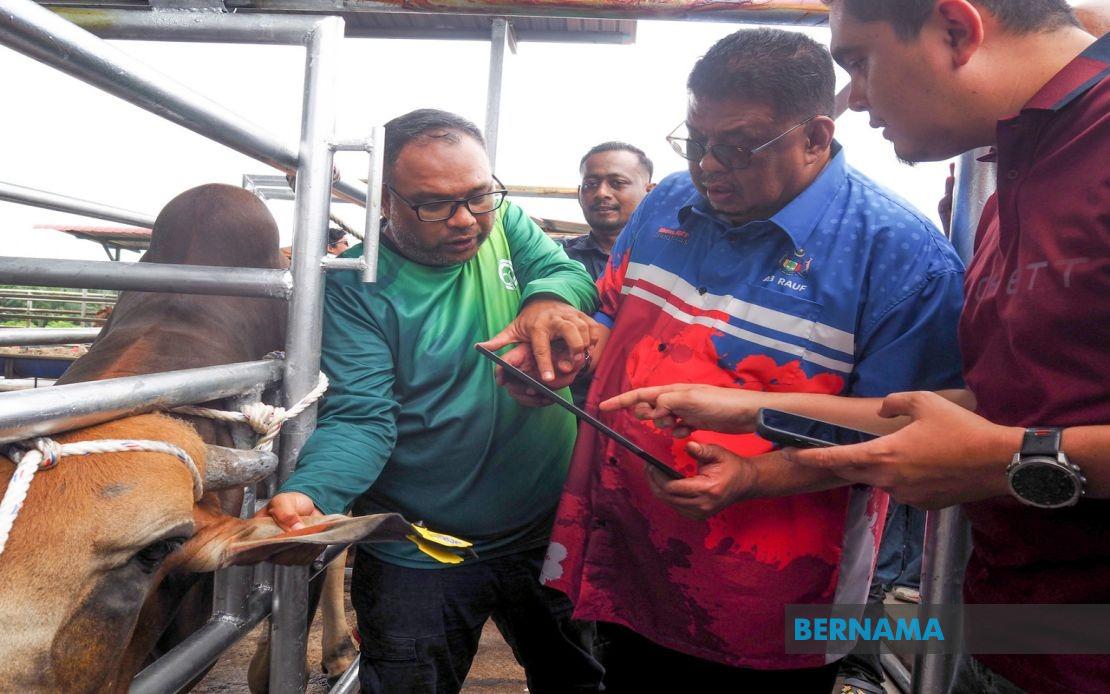
Melaka is embracing digital innovation in agricultural management by introducing a Livestock QR Tag system designed to transform how the state monitors farm animals and tracks ownership. The initiative, developed collaboratively between the Melaka Veterinary Services Department and the Chief Minister's office, represents a significant step in modernising livestock administration across the state. This technological solution addresses longstanding challenges in livestock management while aligning with Melaka's broader ambition to establish itself as a digitally advanced and liveable state.
The genesis of this system stems directly from Chief Minister Datuk Seri Ab Rauf Yusoh's vision for modernising state services. According to Mahathir Mustafa, chief assistant secretary of the Local Government Unit under the Chief Minister's Department, the system embodies a fundamental shift from traditional paper-based methods to immediate digital identification. Each tag contains a unique QR code linked to a comprehensive database, allowing law enforcement, veterinary officers, and local authorities to access critical information about livestock owners, farm locations, and premises identification simply by scanning the code with a smartphone. This instantaneous access eliminates bureaucratic delays that previously plagued efforts to contact owners during emergencies or incidents.
By early June this year, the programme had already fitted 2,000 livestock with the new tags, demonstrating both farmer acceptance and administrative capacity to roll out the system. The state government has set an ambitious target to gradually expand coverage across Melaka's entire registered cattle and buffalo population, estimated at more than 32,000 animals. The phased approach reflects pragmatic implementation strategy, allowing officials to refine processes, address technical challenges, and build farmer familiarity with the system before scaling to full population coverage. This measured pace also provides time to train enforcement personnel and integrate the system with existing veterinary databases.
The urgency driving this initiative becomes clear when examining recent incident statistics. Since 2023, Melaka has recorded 835 accidents involving livestock on its roads, alongside more than 50 formal complaints concerning stray animals wandering through communities. These figures underscore how uncontrolled livestock creates genuine threats to public safety, from vehicular collisions to property damage and livestock-related injuries. Before the QR system, identifying negligent owners proved time-consuming and often unsuccessful, leaving enforcement authorities frustrated and residents without recourse. The new system fundamentally changes this dynamic by enabling rapid owner identification, thereby supporting swift corrective action and accountability measures.
Beyond safety concerns, the system strengthens disease surveillance and movement tracking across the state's livestock population. The digital infrastructure enables authorities to monitor livestock movements more effectively, establish patterns that might indicate illegal trading, and rapidly identify animals exposed to disease outbreaks. This surveillance capacity proves particularly valuable in Southeast Asia, where livestock diseases can spread rapidly across borders and threaten regional food security. Melaka's investment in digital tracking creates a model that other Malaysian states could adopt, potentially creating an interconnected national system for livestock health monitoring and disease prevention.
The initiative also aims to reshape breeder behaviour and industry practices by enhancing accountability. The permanent nature of the QR tags—which remain fixed to individual animals throughout their lives—creates an enduring link between livestock and their registered owners. This permanence means that negligent management practices become traceable and attributable, creating incentives for breeders to maintain proper control over their animals. Industry feedback has been notably positive, with farmers recognising the system as protective of their own interests and reputational stakes. Breeders understand that the system simultaneously protects them from liability for animals they no longer own and establishes their commitment to responsible husbandry when properly maintaining their herds.
The technical architecture of the system relies on integration with the eVetPermit Malaysia platform, which manages veterinary licences and livestock registrations. When ownership transfers occur, only the database record changes; the physical tag remains with the animal, eliminating confusion about historical ownership. This elegant design acknowledges the commercial realities of livestock farming—where animals change hands regularly through sales and transfers—while maintaining a continuous identification trail. New owners simply update their information in the central system upon acquiring animals, ensuring records reflect current responsibility without requiring physical tag replacement or animal handling that might cause stress or injury.
Financial incentives have been built into the rollout to encourage rapid adoption. The state government is subsidising installation costs at RM6.50 per tag through the end of 2024, with the state absorbing the complete expense to remove barriers to farmer participation. This represents a deliberate investment in programme uptake, recognising that voluntary adoption rates depend partly on cost considerations. After the introductory period concludes, costs will transfer to breeders at a reduced rate of RM5 per head beginning in 2027, providing a grace period for farmers to budget for ongoing expenses while maintaining affordability.
The collaborative framework underpinning this initiative merits attention as a governance model. Coordination between the Local Government Unit, the Veterinary Services Department, and local authorities at municipal and district levels demonstrates integrated policy implementation. Rather than siloing livestock management within veterinary services alone, the state has recognised that enforcement, local governance, and animal health functions must operate in concert. This structural integration should improve response times to incidents and create accountability mechanisms that cut across traditional departmental boundaries. For Malaysian administrators observing from other states, the model illustrates how digitalisation succeeds when accompanied by institutional reorganisation.
The system's expansion represents a cautious but committed approach to technology adoption in agricultural governance. By beginning with 2,000 animals and aiming toward complete coverage of 32,000-plus cattle and buffalo, Melaka avoids the implementation failures that sometimes plague large-scale digital rollouts. Phased implementation allows staff training, system refinement, and farmer education to proceed in parallel with expansion. The state's commitment to covering all installation costs during the initial phase signals genuine investment in the programme's success rather than a mere pilot project with uncertain future. This approach contrasts with initiatives that launch with fanfare but falter when financial responsibility shifts to users without adequate preparation or demonstrated system reliability.
Looking forward, this system positions Melaka as a potential leader in agricultural digitalisation within Malaysia and Southeast Asia. The data infrastructure created by comprehensive livestock tagging could eventually support broader initiatives in food traceability, enabling consumers to verify livestock origins and farming practices. Such transparency increasingly influences purchasing decisions, particularly among urban consumers concerned about food safety and ethical farming. By establishing robust identification systems now, Melaka creates the foundation for premium market positioning of its livestock products based on verifiable quality and ethical production standards.
The Melaka initiative also carries implications for cross-border livestock management within ASEAN. As regional trade in livestock products increases, standardised identification systems become increasingly valuable for health certification and traceability. Should Malaysia's states eventually coordinate their livestock databases, the resulting regional system could significantly enhance disease surveillance and outbreak response capabilities. Melaka's QR system, by demonstrating technical and administrative feasibility, potentially catalyses broader regional adoption of similar approaches, strengthening food security across Southeast Asia while protecting local farmers' interests through enhanced credibility and quality assurance.

