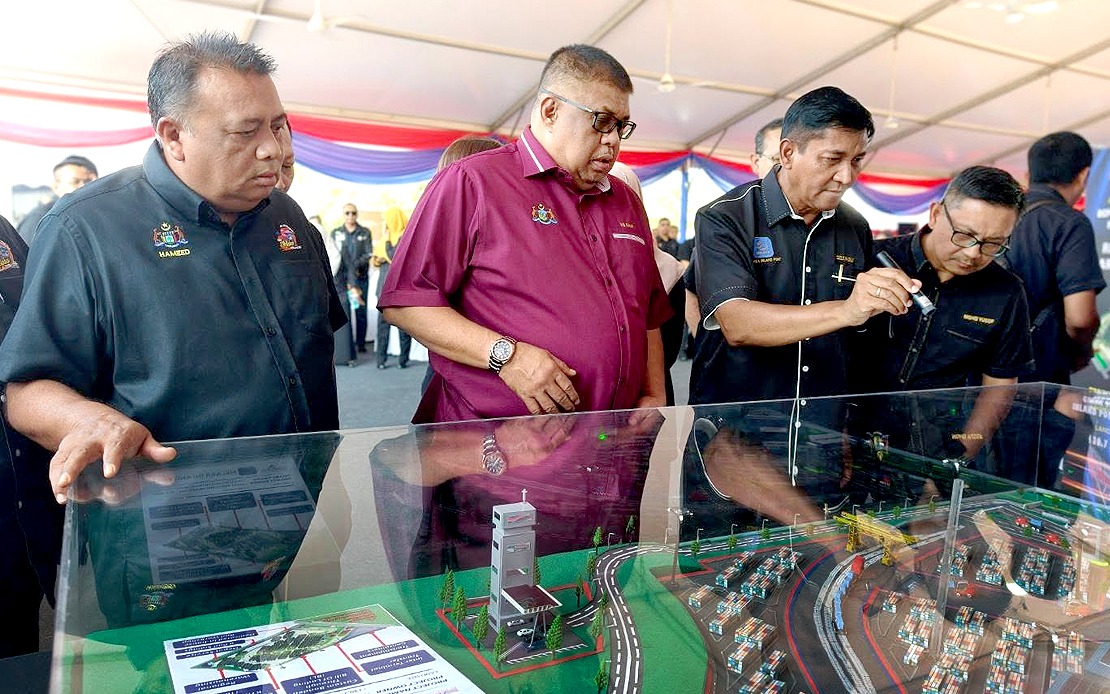
Melaka's state government has announced an ambitious infrastructure project designed to cement the state's role as a key logistics hub in Malaysia's southern corridor. The proposal centres on constructing a 12-kilometre thoroughfare that will directly connect Kuala Linggi International Port with Ayer Molek in Kuala Sungai Baru, with an estimated budget of RM129 million. According to Datuk Hameed Mytheen Kunju Basheer, chairman of the State Public Works, Infrastructure, Public Facilities and Transport Committee, this initiative represents a strategic effort to optimise connectivity across multiple port facilities operating within Melaka's industrial landscape.
The significance of this project lies in its potential to dramatically reduce logistics costs and delivery timeframes for businesses operating through the state's port infrastructure. Currently, the journey between Kuala Linggi International Port and Ayer Molek spans approximately 28 kilometres via existing routes. The proposed new road will compress this distance to just 12 kilometres, representing a 57 per cent reduction that translates into measurable efficiency gains for transport operators and warehousing facilities dependent on rapid port access. For the regional logistics sector—increasingly competitive in an era of just-in-time manufacturing and e-commerce growth—such improvements are not merely convenient but essential for maintaining operational margins.
Critically, the planned route has been designed to traverse the Melaka Inland Port area, deliberately engineered to maximise inter-modal connectivity between the state's harbour systems. This thoughtful spatial planning ensures that cargo moving through Kuala Linggi International Port can flow seamlessly toward inland distribution facilities without unnecessary detours through congested urban corridors or residential communities. The design reflects lessons learned from port development projects across Southeast Asia, where poorly integrated access roads have created bottlenecks that undermine the efficiency of modern terminal operations.
The project remains in preliminary design phases under the purview of the Works Ministry, with the state government anticipating progression through quotation, tender, and contractor appointment procedures during 2025. This timeline suggests realistic implementation rather than aspirational planning, though infrastructure projects of this scale frequently encounter unforeseen delays related to land acquisition, environmental assessments, or design refinements. The commitment to move forward with formal procurement processes within the next twelve months indicates genuine governmental momentum behind the initiative.
Beyond the primary corridor, Melaka's infrastructure ambitions extend to complementary road improvements that would create a more cohesive network serving multiple terminals. State authorities are simultaneously planning an upgrade to the existing road system connecting port areas with the Melaka Inland Port, specifically widening the route from Tangga Batu through Sungai Udang toward Tanjung Bruas Port. These supporting improvements recognise that a single new road, however well-designed, cannot function effectively within an outdated surrounding network characterised by narrow lanes and suboptimal geometry.
A second concurrent initiative involves constructing an additional six-kilometre road extending from Telok Gong to Kampung Pulau and onward to Paya Lebar, carrying an estimated cost of RM49 million. This secondary project would establish a direct connection between port facilities and the Melaka Inland Port while circumventing traditional residential villages, addressing longstanding community concerns about heavy truck traffic through populated areas. The route from Paya Lebar to Kampung Pulau is already advancing through quotation procedures, while the Kampung Pulau to Telok Gong section remains in design development, suggesting a staggered implementation schedule.
Melaka Chief Minister Datuk Seri Ab Rauf Yusoh formally inaugurated the Melaka Inland Port facility during the announcement, symbolically linking this infrastructure investment to broader port modernisation efforts. The state has positioned itself as an emerging logistics alternative to congested northern ports, marketing its geographic location and developing terminal capacity to regional and international operators seeking distributed supply chain solutions. These road improvements directly support that competitive positioning by removing a critical constraint—inadequate surface access—that currently limits the state's ability to attract high-volume cargo operations.
Completing both road projects would position Melaka to capture significant regional logistics traffic that currently bypasses the state or routes through Kuala Lumpur-Selangor facilities. The expected completion window of 2028 to 2029 aligns with broader Malaysian infrastructure development cycles and provides investors with reasonable visibility regarding when full network benefits will materialise. For businesses considering warehouse locations or distribution centre investments in Melaka, these commitments represent concrete assurance that port accessibility will improve materially within a three-to-five-year horizon.
The combined infrastructure investment of RM178 million across both road projects reflects substantial state government commitment, though Malaysian readers should contextualise this within broader national infrastructure spending trends. The projects demonstrate how systematic port and logistics development requires integrated surface transport networks rather than standalone terminal facilities. For Southeast Asian observers, Melaka's approach mirrors successful port development models implemented in Thailand, Vietnam, and Indonesia, where governments have recognised that modern cargo operations depend on multimodal connectivity rather than harbour infrastructure alone.
These initiatives position Melaka within Malaysia's emerging multipolar port system, challenging the traditional dominance of Port Klang and Tanjung Pelepas. As regional trade patterns continue evolving and businesses seek alternatives to congested northern corridors, investments in secondary port infrastructure and their supporting road networks become strategically significant. Melaka's willingness to commit substantial capital to these improvements signals confidence in the state's logistics future and recognition that infrastructure quality directly influences port competitiveness in an increasingly demanding regional market.

