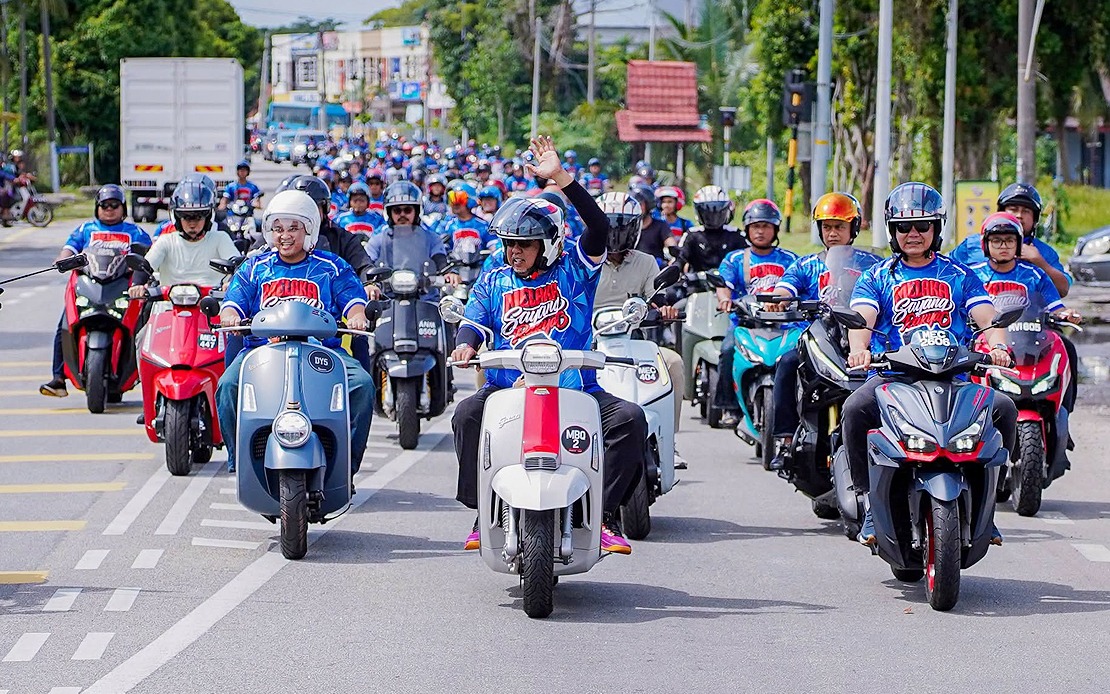
Melaka's leadership has intensified its commitment to ground-level community engagement with the launch of the Tangga Batu parliamentary WRUR programme, dubbed Kampung Kita, marking the latest phase of what officials characterise as an ongoing rather than seasonal effort to address constituent concerns. Chief Minister Datuk Seri Ab Rauf Yusoh outlined plans for a two-phase rollout targeting the Pantai Kundor and Paya Rumput state constituencies, with the initiative designed to tackle a comprehensive range of community priorities spanning welfare support, infrastructure development, educational advancement, youth engagement, and small business development.
The scope of this expansion underscores the state administration's approach to persistent locally-rooted governance challenges that require sustained intervention. The Chief Minister stressed that the WRUR initiative represents continuity from strategies implemented over the preceding two years rather than a temporary or election-driven gesture, lending credibility to the programme's institutional positioning within Melaka's administrative framework. This rhetorical emphasis on consistency appears designed to distinguish the effort from ad-hoc political outreach, positioning it instead as embedded infrastructure for citizen feedback and government responsiveness.
Quantifiable metrics reveal the scale of the programme's operations to date. Across 23 prior implementation series, the state government reports receiving more than 4,000 complaints, achieving resolution rates of approximately 70 per cent—a figure that illustrates both the programme's reach and the substantial backlog of unresolved grievances within the state. Within the Tangga Batu parliamentary constituency specifically, earlier implementations in Sungai Udang and Kelebang constituencies generated 359 formal complaints, of which 328 were successfully addressed while 31 remain under active review. These numbers provide insight into the volume of constituent dissatisfaction as well as the administrative capacity required to process and respond to such issues systematically.
Direct financial assistance formed a central component of the initiative's distribution phase. During the sixth implementation cycle, the state government distributed more than RM150,000 across multiple beneficiary categories, reflecting a targeted approach to social support. Fishermen received RM22,000 across 220 individuals, acknowledging the economic vulnerability of this traditionally marginalised constituency within Melaka's economy. Boat owners affected by maritime incidents received targeted relief of RM1,500 for five vessels, while small and medium enterprise entrepreneurs benefited from RM14,000 in distributed equipment. Beyond these primary beneficiaries, the government allocated contributions to religious and educational institutions, houses of worship, students in financial hardship, and homeowners requiring assistance—a diversified disbursement strategy reflecting the breadth of targeted constituencies.
Infrastructure remediation forms another critical dimension of the programme's ambitions, particularly given recent environmental challenges affecting the region. Following flash flooding that damaged 73 residences in Pantai Kundor, the Department of Irrigation and Drainage initiated a RM50,000 cleaning and maintenance intervention at Sungai Seberang Gajah, scheduled for completion within days of the announcement. This rapid response to localised flood damage represents the type of concrete government action that WRUR programmes are designed to facilitate and accelerate through direct community complaints and government feedback loops.
The infrastructure agenda extends beyond immediate flood mitigation into longer-term drainage and transportation system improvements. The Department of Irrigation and Drainage has initiated procurement processes for RM100,000 in enhancement works targeting Sungai Lereh, addressing chronic drainage vulnerabilities. More substantially, the Public Works Department has pursued federal-level approval for a RM16 million project to upgrade the culvert structure along Jalan Tangga Batu-Tanjung Minyak, a route critical to regional connectivity. The scale and cost of this proposed upgrade indicate that federal-state coordination on infrastructure development remains essential for major projects, even within the confines of state-level outreach programmes.
For Malaysian readers and particularly Melakans, this expanded initiative reflects broader patterns in state governance where political leaders increasingly operate through institutionalised feedback mechanisms designed to improve administrative responsiveness. The WRUR programme's track record—with thousands of complaints processed and nearly 70 per cent resolution rates—suggests that such initiatives can function as effective channels for citizen grievance redressal, even if absolute resolution remains incomplete. The mechanism transforms complaints into quantifiable data that feeds both political legitimacy and administrative prioritisation.
The programme's emphasis on multiple development domains—welfare, education, youth, entrepreneurship—reflects an implicit recognition that community concerns are multifaceted and that single-sector interventions prove insufficient for addressing constituent dissatisfaction. By bundling assistance across these areas within a unified framework, the state government presents a holistic developmental model rather than piecemeal responses to particular crises. This integrated approach potentially addresses underlying structural vulnerabilities affecting Melaka's economy and social fabric, from fishing community livelihoods to small business sustainability and educational accessibility.
Looking forward, the two-phase implementation in Pantai Kundor and Paya Rumput represents testing grounds for operational models that may subsequently inform state-wide practice. The 200-plus promised initiatives provide substantial content for meaningful community engagement, extending beyond symbolic gestures toward substantive interventions in education, income support, and infrastructure resilience. However, the persistent backlog of unresolved complaints—31 remaining cases from earlier Tangga Batu implementations alone—indicates that grievance processing remains a bottleneck requiring continued organisational development. The programme's success will ultimately depend less on its ambitions than on whether administrative capacity can sustain the promised delivery timeline across numerous simultaneous initiatives while maintaining quality in implementation.

