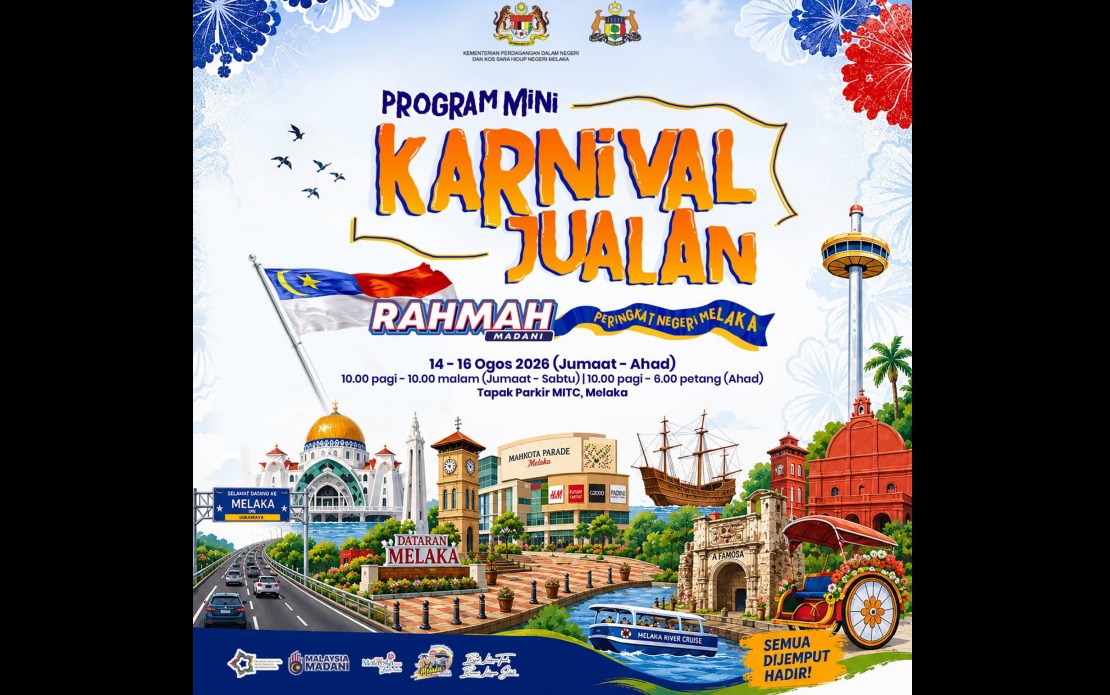
The Domestic Trade and Cost of Living Ministry (KPDN) will launch a three-day mini carnival in Melaka beginning tomorrow at the Melaka International Trade Centre, organisers announced on Tuesday. The event is projected to draw more than 10,000 visitors through its combination of government consumer initiatives, affordable pricing schemes, and recreational activities designed to appeal to families across the state.
KPDN Deputy Minister Senator Datuk Dr. Fuziah Salleh framed the carnival as a strategic effort to bridge the gap between government agencies and ordinary Malaysians. Rather than confining services and information to bureaucratic offices, the ministry is adopting what officials describe as a more relaxed, interactive, and community-oriented approach. This philosophy reflects a broader shift in how federal agencies engage with constituents—moving away from formal counter services toward experiential, public-facing events that demonstrate tangible benefits of government programmes.
The centrepiece of the carnival is the MADANI Rahmah Sales Programme (PJRM), a government initiative aimed at combating the rising cost of living through subsidised consumer goods. At the carnival, visitors will have direct access to daily necessities at reduced prices, a particularly timely offering given ongoing concerns about household affordability across Malaysia. By showcasing PJRM in an informal setting, the ministry hopes to educate more Malaysians about the scheme's availability and eligibility, potentially expanding participation beyond current uptake levels.
Dr. Fuziah emphasised that the carnival serves dual purposes: immediate consumer benefit and broader public education. Citizens can not only purchase discounted goods but also gather information about other KPDN programmes, ranging from price monitoring mechanisms to consumer protection standards. This educational component is crucial, as many Malaysians remain unaware of their rights regarding fair pricing, product safety, and dispute resolution—areas where KPDN maintains enforcement authority.
Beyond the PJRM focus, the carnival offers exhibition booths where vendors and ministry representatives provide advisory services and facilitate business matching sessions. This element suggests organisers are attempting to create networking opportunities, potentially connecting small traders and consumers while allowing KPDN to assess market dynamics and identify price anomalies across sectors. The business matching component could prove valuable for entrepreneurs seeking supply chain connections or consumers interested in bulk purchases at group rates.
Entertainment forms a substantial part of the carnival's appeal. An esports tournament conducted in collaboration with Todak will draw younger visitors, while Menu Rahmah food truck operations featuring affordable meals address food inflation concerns. A children's colouring competition, live performances by artists, and exhibitions of antique vehicles and classic motorcycles provide intergenerational appeal. These elements transform the event from a dry government information session into a genuine community gathering.
The scheduling reflects accessibility considerations. Tomorrow and Saturday the carnival operates from 10 am to 10 pm, accommodating working-hour visits and evening family outings, while Sunday's reduced hours (10 am to 6 pm) align with typical weekend schedules. This extended access period across three days maximises potential visitor attendance without overwhelming venue capacity.
For Malaysian and Southeast Asian observers, the carnival exemplifies how governments are responding to cost-of-living pressures through both direct price intervention and public engagement. The MADANI Rahmah programme represents official acknowledgment that market forces alone have not maintained affordability for essential goods, necessitating targeted government intervention. Events like the Melaka carnival publicise these interventions while attempting to normalise government involvement in consumer markets—a stance that appeals to voters facing economic pressures but remains contested among free-market advocates.
The carnival also positions KPDN as a consumer-facing ministry rather than a purely regulatory body. While the ministry's conventional roles—price monitoring, law enforcement, and consumer protection regulation—remain unchanged, carnivals reframe these functions as serving public welfare. This repositioning matters for institutional legitimacy, particularly if enforcement actions against traders become necessary; having invested in public goodwill through accessible events strengthens the ministry's credibility when it pursues unpopular but necessary market regulations.
Regionally, Melaka's carnival reflects broader Southeast Asian trends toward experiential government communication. Thailand, Indonesia, and the Philippines have similarly adopted carnival and festival formats to promote subsidy programmes and government initiatives. These events serve multiple functions simultaneously: delivering immediate consumer relief, providing government agencies direct feedback about constituent priorities, and generating positive media coverage that counters narratives of bureaucratic inefficiency or corruption.
The anticipated 10,000-visitor threshold, while modest compared to major cultural festivals, would represent significant turnout for a government ministry initiative. Achieving or exceeding this target would likely encourage KPDN to replicate the carnival format in other states, potentially establishing an annual or quarterly programme. Success in Melaka could also inspire similar ventures by other cost-of-living-focused agencies, creating a coordinated government presence in public spaces.
Ultimately, the KPDN Mini Carnival represents pragmatic politics responding to tangible economic grievances. By combining affordable goods access with entertainment and information, organisers are attempting to demonstrate that government intervention in consumer markets produces concrete benefits. Whether the carnival's goodwill translates into sustained voter confidence in KPDN's work—or becomes merely remembered as an enjoyable event distinct from day-to-day government services—will depend on whether affordable goods remain available beyond the carnival dates and whether KPDN's enforcement actions address genuine consumer problems.

