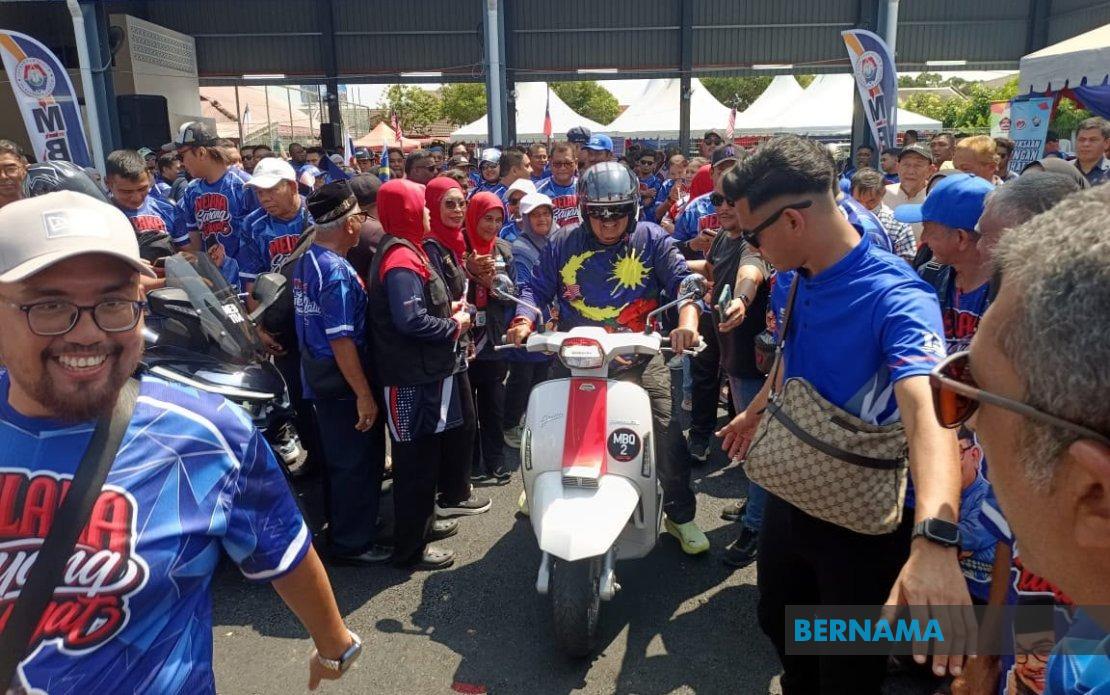
Melaka Chief Minister Datuk Seri Ab Rauf Yusoh has clarified that the state government's 'Jelajah Ketua Menteri Sayang Rakyat' tour represents a sustained effort to engage directly with constituents, rather than a temporary campaign activity. The initiative, he explained, builds upon the 'Wakil Rakyat Untuk Rakyat' (WRUR) framework established two years ago—well before election cycles—as a permanent policy mechanism for addressing community concerns and ensuring swift resolution of grievances that can be tackled immediately.
The approach adopted by the Melaka state administration reflects a broader philosophical shift in how elected representatives engage with their constituencies. Rather than episodic town halls or campaign-style gatherings, the government has embedded grassroots listening into its regular administrative calendar. This methodology enables state officials to identify systemic patterns in public complaints while simultaneously resolving individual cases, creating what officials describe as a direct feedback loop between the electorate and policymakers. The distinction between campaign activity and permanent governance structure is significant, particularly in Malaysian political culture where public scepticism about politician accountability remains high.
During the 10th series of the tour held in Pengkalan Batu state constituency at Taman Cempaka, state officials highlighted eight outstanding issues that had been resolved through the combined WRUR and 'Hari Exco Bersama Rakyat' (HEBAT) initiatives. The resolution of these matters demonstrates the programme's practical application: problems identified in earlier engagement sessions move through bureaucratic channels and receive concrete outcomes rather than remaining as unfulfilled promises. This follow-through mechanism addresses one of the most persistent grievances in Malaysian local governance—the perception that communities raise concerns in forums but see minimal action thereafter.
A particularly notable case involved the acquisition of land for a Muslim cemetery previously owned by a Chinese landowner in the constituency. The resolution carries significance beyond the individual transaction, illustrating intercommunal cooperation on sensitive matters. The landowner's decision to offer a 50 per cent discount from market value demonstrated community spirit that administrators argue validates the personal engagement model. For Melaka's multicultural population, such examples provide tangible evidence that government structures can facilitate constructive outcomes when different communities' needs intersect with land and religious requirements.
Beyond cemetery provisions, the state government reported completing repairs to five residential properties identified as dilapidated and providing a RM100,000 house under the 'Baiti Jannati' programme, a housing initiative supported by Tenaga Nasional Berhad (TNB). Additionally, the Melaka Historic City Council (MBMB) constructed an open community hall for the constituency. These infrastructure and housing interventions address fundamental welfare needs that shape daily quality of life, particularly for lower-income households for whom deteriorating housing conditions impose both economic and health burdens. The accumulation of such resolved matters across multiple constituencies builds a record of state government responsiveness.
Ab Rauf emphasised that hands-on engagement by elected representatives serves a critical governance function beyond public relations value. When state leaders directly encounter constituent needs, they develop deeper understanding of community realities that detached administrative review cannot replicate. This direct exposure presumably feeds into policy formulation, though the mechanism by which individual grievances influence broader state policy requires closer examination. The Chief Minister's framing suggests that accumulated feedback from multiple constituencies informs strategic policy direction, though without independent verification it remains difficult to assess how significantly constituent input shapes major policy decisions versus how much it influences minor administrative adjustments.
The WRUR programme has now progressed through 25 series of engagement, with only five state constituencies remaining to be covered, indicating systematic constituency-by-constituency progression. This comprehensive approach contrasts with less structured engagement models and suggests institutional commitment to ensuring all constituencies receive equivalent attention rather than selective focus on politically sensitive areas. The targeting of all state constituencies regardless of political composition or demographic profile could reinforce public perception that the government views service delivery as a universal obligation rather than a partisan transaction.
The integration of multiple complementary programmes—the core WRUR initiative, the HEBAT programme providing executive-level engagement, and the 'Sayang Rakyat' tours—creates overlapping feedback mechanisms designed to capture complaints through different entry points. Some constituents may be more comfortable raising issues with their local assemblyman, others at constituency-level town halls, and others through direct Chief Minister engagement. This layered approach potentially increases the likelihood that legitimate grievances reach responsive officials rather than disappearing into administrative channels. However, sustainability of such programmes depends on continued institutional commitment and adequate resource allocation, which may face pressures during budget constraints or administrative transitions.
For Malaysian constituencies across the country, Melaka's structured engagement model offers both a template and a benchmark. Increasingly, voters evaluate state governments partly on responsiveness to complaints and visible action on resolved grievances. The Melaka administration's emphasis on documenting completed resolutions creates comparative metrics against which other state governments can be measured. This benchmarking effect may incentivise similar engagement mechanisms elsewhere, though implementation quality varies significantly depending on local political will and administrative capacity.
The Chief Minister stated that the government would continue soliciting public input as material for refining state policies and administrative procedures. This commitment to treating constituent feedback as policy-relevant input suggests that engagement programmes serve dual functions: both addressing immediate grievances and generating information for system-wide improvements. The success of such feedback loops ultimately depends on demonstrable policy changes resulting from constituent input—a dimension requiring longitudinal assessment rather than cross-sectional observation of individual resolved cases.
Moving forward, the completion of constituency coverage across Melaka will present an important juncture. State officials must decide whether to conclude the touring cycle after full coverage or transition to iterative re-engagement in constituencies, potentially creating ongoing annual or biennial tours. The decision carries implications for constituent expectations about government responsiveness and for the administrative resources required for sustained engagement. Additionally, as the programme matures, evaluation frameworks assessing its actual impact on governance quality, constituent satisfaction, and policy improvement become increasingly important for justifying continued resource allocation and providing accountability for the programme itself.

