The government's flagship Menu RAHMAH initiative continues to gain traction across Malaysia, with Domestic Trade and Cost of Living Deputy Minister Datuk Dr Fuziah Salleh announcing that 3,210 food and beverage premises have now registered as participating operators as of July. This growing roster reflects what officials characterise as genuine industry willingness to collaborate with government efforts aimed at alleviating the financial pressures ordinary Malaysians face when purchasing meals and groceries.
The diversity of participating venues underscores the programme's broad appeal and accessibility. Food stalls and food court establishments lead the charge with 1,016 registrations, but the initiative has successfully attracted a wide spectrum of food service providers including traditional hawker operators, contemporary food trucks, established restaurants, and bazaar vendors. This cross-section participation suggests the scheme resonates across different consumer demographics and price points, from budget-conscious shoppers seeking affordable meals to those accustomed to more formal dining environments.
Crucially, officials have positioned Menu RAHMAH as a permanent rather than temporary fixture in Malaysia's social safety net architecture. Fuziah's statement makes clear this is not a short-term crisis response but rather an embedded component of government policy designed to sustain affordable food access indefinitely. This positioning matters for both operators, who can plan investments and menu adjustments with confidence, and consumers who can rely on consistent availability rather than cyclical uncertainty.
The programme's strategic geographic focus reveals sophisticated targeting. Beyond conventional commercial zones, the initiative prioritises Rest and Service Areas along Malaysia's highway network, recognising that travellers often face inflated pricing in these captive locations. This thoughtfulness about where affordability interventions matter most demonstrates policy-makers understand cost-of-living pressures extend beyond urban daily commutes.
Supporting Menu RAHMAH's expansion is an aggressive promotional campaign branded 'Jom Cari Menu RAHMAH', which translates colloquially to encouraging Malaysians to actively seek out participating establishments. The Ministry of Domestic Trade and Cost of Living continues outreach to traders' associations and industry bodies, leveraging existing networks to identify new participants and expand menu variety across more locations. This multi-stakeholder engagement approach contrasts with top-down mandates, instead framing affordability as a collaborative venture between government, commerce, and civil society.
The parallel MADANI RAHMAH Sales Programme demonstrates the government's multi-pronged approach to cost-of-living concerns. Rather than confining intervention to restaurant meals, this initiative brings discounted essential goods directly to consumers through temporary sales events. As of July 2026, these events have been implemented 19,322 times nationwide, surpassing the annual target of 17,500 implementations by approximately ten per cent. This overperformance suggests genuine demand exists for such interventions and that participating traders and government agencies have successfully scaled operations beyond initial expectations.
The transaction volume associated with MADANI RAHMAH illustrates substantial consumer engagement: 25.5 million transactions have been recorded nationally. These transactions involve staple items where price pressures most acutely affect household budgets—chicken, fish, eggs, cooking oil, flour, rice, vegetables, fruits and household necessities. The reported savings range of 10 to 30 per cent compared to prevailing market prices represents meaningful relief for price-sensitive households, particularly those containing dependents or fixed-income earners.
Geographic reach of the MADANI RAHMAH programme extends across all 600 state constituencies plus 40 Federal Territory zones, though implementation deliberately emphasises areas identified as having greatest need. This targeted universalism—providing nationwide coverage while concentrating intensity where demand is highest—reflects practical recognition that cost-of-living pressures are neither evenly distributed nor equally urgent everywhere.
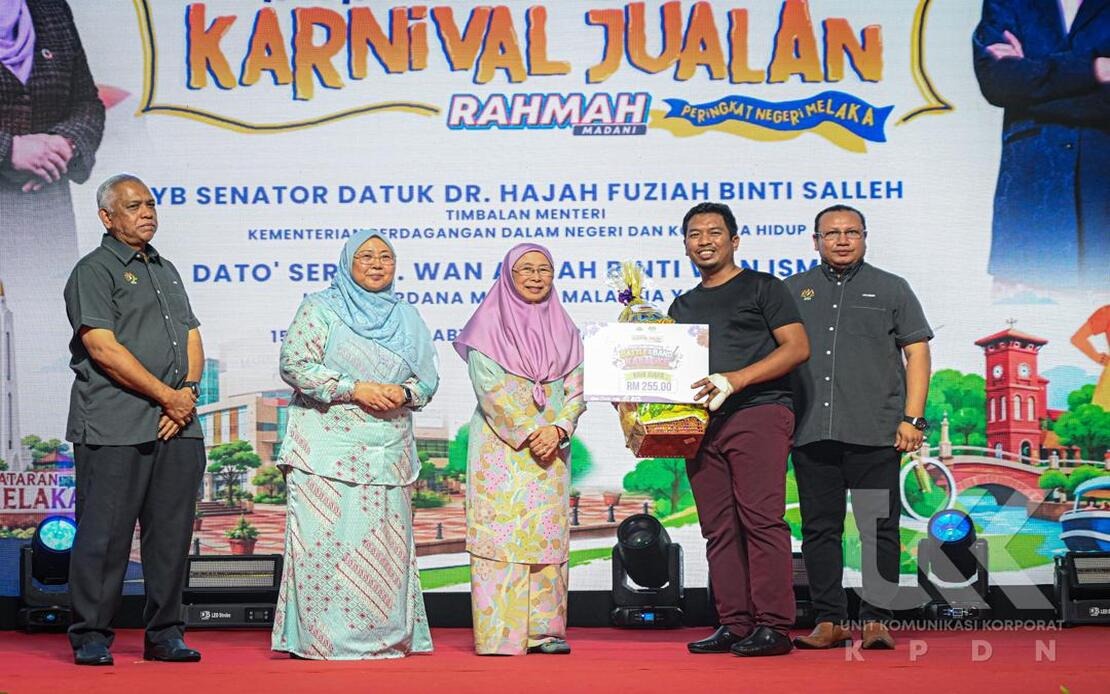
A recent Ministry carnival in Melaka showcased the ecosystem of government affordability initiatives operating in concert. Beyond Menu RAHMAH and MADANI RAHMAH displays, the event featured advisory services, business networking opportunities, and participating traders offering goods at discounted prices. The carnival format democratises access to these programmes, particularly for consumers unfamiliar with registration processes or skeptical about legitimacy. Nearly 3,000 visitors attended on the first day alone, suggesting substantial community interest.
The carnival's integration of entertainment elements—stage activities, competitions and an esports tournament in partnership with Todak—indicates recognition that affordability messaging must compete for public attention against numerous other priorities and commercial messages. By packaging practical economic relief alongside social engagement opportunities, organisers increase attendance and word-of-mouth promotion organically.
For Malaysian consumers, the cumulative effect of Menu RAHMAH and MADANI RAHMAH represents genuine, accessible relief from cost-of-living pressures that have dominated public concern for several years. The programmes' expansion demonstrates government commitment to sustainability rather than performative temporary measures. However, their continued success depends on maintaining quality standards at participating outlets, ensuring prices remain genuinely competitive against alternatives, and preventing operator fatigue as profit margins compress under affordability mandates.

