The streets of Dataran Putrajaya erupted in a sea of patriotic colour on August 31 as tens of thousands of Malaysians converged on the Federal Government's administrative capital to commemorate the nation's 69th year of independence. The sprawling venue, transformed into a festival ground, played host to citizens spanning multiple generations and ethnic backgrounds, all united in their celebration of the Merdeka spirit. The palpable sense of national pride and communal joy that characterised the gathering underscored the enduring significance of National Day as a moment for Malaysians to reflect collectively on their shared nationhood and progress since 1957.
The 2026 celebration carried particular symbolism in its choice of venue and thematic framework. National-level festivities have increasingly gravitated towards Putrajaya, which now stands as the preferred location for these marquee state ceremonies. The Federal Territory has previously hosted the nation's premier independence commemoration on seven occasions—in 2003, 2005, 2018, 2019, 2023, 2024, and 2025—cementing its role as the ceremonial heart of Malaysian democracy. This year's proceedings operated under the unifying banner of "Malaysia MADANI: Kesejahteraan Dinikmati," a thematic direction that emphasises the wellbeing and prosperity envisioned for all citizens as the nation charts its course through the opening decades of the 21st century.
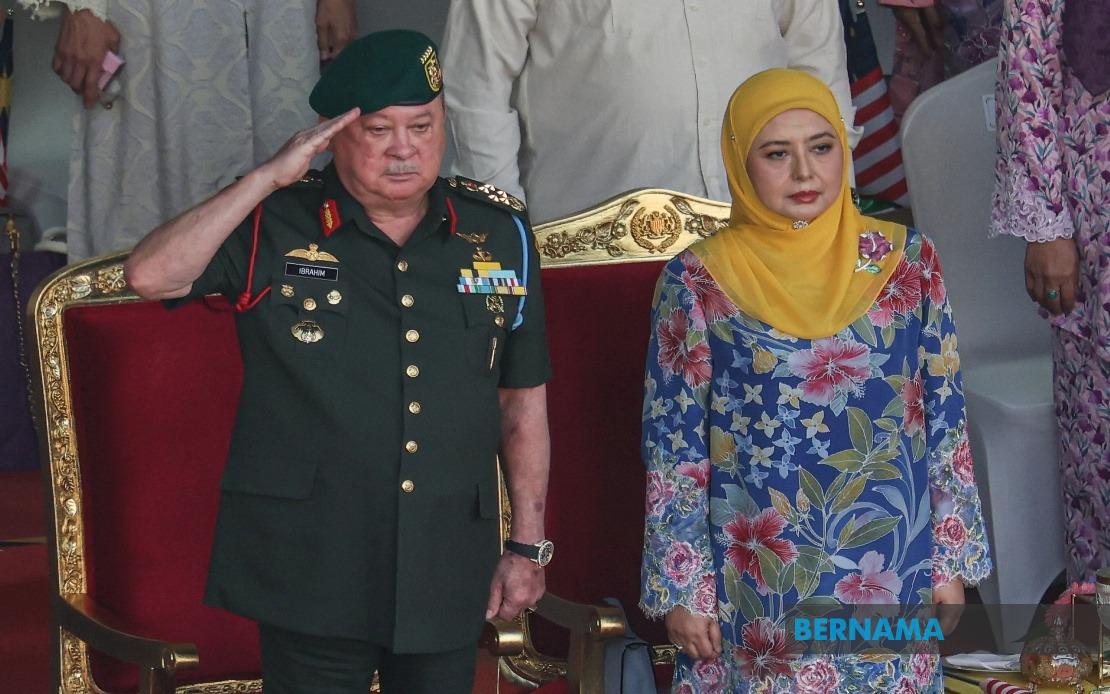
The morning's ceremonial programme commenced with the arrival of Prime Minister Datuk Seri Anwar Ibrahim and his spouse, Datuk Seri Dr Wan Azizah Wan Ismail, at the royal stage just before 8 am. The atmosphere intensified moments later when Their Majesties Sultan Ibrahim and Raja Zarith Sofiah appeared to preside over the festivities, triggering a spectacular display of airborne pageantry. Five military helicopters, their fuselages adorned with the Jalur Gemilang, conducted a striking flypast above the assembled multitudes, their passage accompanied by renditions of the national anthem Negaraku and the ceremonial march "Hormat Diraja." This visual spectacle served to crystallise the occasion's national importance and the commanding presence of Malaysia's constitutional monarchy within the fabric of the nation's public life.
The substantive proceedings drew together the country's political and diplomatic elite. Deputy Prime Minister Datuk Seri Dr Ahmad Zahid Hamidi stood alongside various Cabinet-level officials, with Communications Minister Datuk Seri Fahmi Fadzil playing a particularly prominent role as chairman of the overarching committee overseeing both National Day and Malaysia Day observances for 2026. The gathering encompassed international representation as well, with foreign diplomatic missions and their delegations present to acknowledge Malaysia's independence milestone and to underscore the nation's standing within the global community. This diplomatic dimension reflects how National Day functions not merely as an internal commemorative exercise but also as an occasion through which Malaysia reaffirms its position and relationships within the international system.
The ceremonial centrepiece commenced with the collective singing of Negaraku, establishing the solemnity and reverence befitting the nation's foundational anthem. This was immediately followed by the formal hoisting of the Jalur Gemilang accompanied by a fourteen-gun salute—a percussive flourish deliberately calibrated to correspond with Malaysia's fourteen constituent states. The 41st Battery of the Royal Artillery Regiment (Ceremonial), under the direction of Major Hafizan Mat Ghani, executed this centuries-old military tradition with precision, their coordinated volleys punctuating the morning air and lending gravitas to the symbolic elevation of the national emblem.
A cornerstone moment arrived with the collective recitation of the Rukun Negara, Malaysia's foundational five principles that serve as the ideological bedrock of national unity and social cohesion. Malaysian Fire and Rescue Department Deputy Commissioner Datuk Abdul Razak Muda led this segment, joined by sixty-nine uniformed personnel from his department—a numerical choice echoing the sixty-nine years marking the nation's independence journey. Critically, the inclusion of sign language interpreter Nur Alyanatasha underscored an evolving commitment within official ceremonies to ensure accessibility and inclusivity for all Malaysians, regardless of physical circumstance, a development that reflects contemporary expectations of national institutions.
The emotional crescendo arrived when the electrifying cry of "Merdeka" resonated seven times across the plaza following the Rukun Negara recitation, a ritual invocation dating back to Malaysia's original independence proclamation. In synchronized fashion, thousands of mini Jalur Gemilang emerged throughout the crowd, creating a cascading vista of fluttering flags and palpable expressions of collective national identity. This moment transcends mere ceremonial convention; it represents a tangible reaffirmation of the bonds connecting disparate Malaysians—urban and rural, young and elderly, from Sabah to Perlis—in their shared commitment to the nation and its ideals.
The choice of Dataran Putrajaya as the venue for these celebrations carries deeper implications for how Malaysia's leadership projects national identity and values. By repeatedly situating these festivities within the purpose-built administrative capital, successive governments have signalled an intention to anchor national commemoration within sites of political power and institutional authority. The scale of attendance and the logistical sophistication required to accommodate tens of thousands of citizens demonstrate both the enduring resonance of National Day within Malaysian consciousness and the governmental capacity to orchestrate large-scale civic participation. These gatherings function as more than historical retrospectives; they operate as contemporary statements about the nation's trajectory and its vision for the future.
For Southeast Asian observers and international audiences, Malaysia's National Day observances offer instructive lessons in how multicultural, multi-religious democracies maintain social cohesion and national pride amidst considerable diversity. The deliberate emphasis on inclusivity—reflected in the participation of emergency services personnel, the provision of accessibility accommodations, and the bringing together of Malaysians from all backgrounds—speaks to an approach to nationalism that privileges unity without demanding conformity. As Malaysia continues navigating complex regional geopolitics and rapid socioeconomic transformation, these moments of collective national reflection assume heightened significance, anchoring citizens in shared historical memory and common constitutional aspirations whilst accommodating the diverse ways in which Malaysians understand and experience their citizenship.

