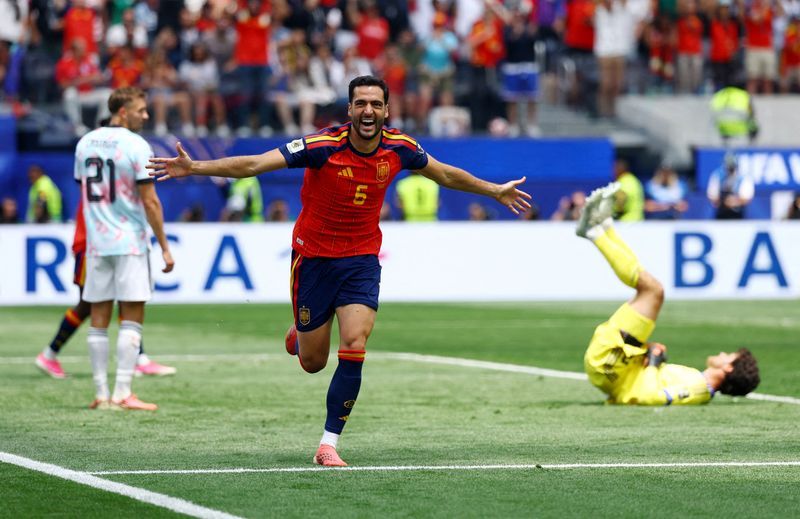
Spain secured a berth in the World Cup semifinals with a dramatic 2-1 victory over Belgium at Los Angeles Stadium on Friday, extending their tournament run through a combination of technical superiority and timely substitutions. The decisive moment came in the 88th minute when substitute Mikel Merino capitalised on a goalkeeper error to fire home from close range, sending the sold-out crowd into rapturous celebration on a stifling evening in Inglewood, California. Spain will now face tournament favourites France in Dallas on Tuesday evening in pursuit of a place in the final, giving the Spanish national team a genuine opportunity to add to their tournament pedigree.
The opening thirty minutes revealed Spain's attacking intent and quality, as they established control through the midfield and pressed Belgium into a reactive posture. Fabian Ruiz broke the deadlock in the 30th minute, demonstrating clinical finishing after Belgium goalkeeper Thibaut Courtois had made a diving save. Ruiz's goal vindicated coach Luis de la Fuente's bold tactical decision to deploy the Paris Saint-Germain midfielder in place of Pedri from the outset, a selection that raised eyebrows before kickoff but proved immediately effective in unlocking Belgium's defensive shape.
Belgium's response came precisely eleven minutes later when Charles De Ketelaere timed his run impeccably to meet Timothy Castagne's cross, heading past keeper Unai Simon to level the contest. This equaliser marked the first goal Spain had conceded throughout the tournament, demonstrating how tightly they had controlled previous matches. The goal injected momentum into the Belgian side and shifted the dynamics of the encounter, forcing Spain into a more measured approach as both teams navigated the oppressive heat that characterised the opening half of the match.
The Belgian squad laboured under significant injury constraints that weakened their competitive position from the outset. Captain Youri Tielemans suffered a setback during the warm-up and was withdrawn from the starting lineup mere minutes before the match began, necessitating Hans Vanaken's introduction into the midfield. The situation deteriorated further with the absence of midfielder Amadou Onana, who sustained a torn ACL during Belgium's round-of-16 encounter against the United States. These personnel losses stripped depth and flexibility from Roberto Martínez's tactical options, hampering their ability to adjust their approach as the match developed.
The second half witnessed Spain reassert their dominance, particularly following the interval break. The Spanish side emerged with renewed energy and began systematically dismantling Belgium's increasingly vulnerable defensive structure, with sustained pressure gradually weakening their opponents' resolve. Coach de la Fuente made the crucial substitution of introducing Merino after 86 minutes, a change that proved immediately consequential when the midfielder pounced on a critical error two minutes later.
The winning goal originated from a low strike by Pau Cubarsi that backup goalkeeper Senne Lammens, pressed into service after Courtois's injury, failed to secure cleanly. Lammels had taken over the goalkeeper duties in the second period following his senior colleague's departure, but he could not handle the straightforward save, allowing the ball to bounce directly in front of him. Merino reacted with sharp instincts and superior positioning to convert from point-blank range, leaving Lammels stranded and the Belgium defence helpless to intervene. The moment encapsulated the fine margins that separate World Cup progression from elimination at this stage of the tournament.
Spain's path to the semifinals represents a significant achievement in their contemporary competitive cycle. The Spanish national team has reached this stage only once previously in World Cup history, achieving that distinction in 2010 when they went on to claim the tournament trophy. Their only other semifinal appearance came in 1950, when the tournament's final round operated as a group stage rather than knockout fixtures, limiting any direct comparison with modern competition formats. This latest run demonstrates that Spanish football remains a formidable force at the highest level of international competition.
The quarterfinal venue of Los Angeles Stadium attracted considerable celebrity attention, reflecting the cultural significance of the World Cup in the United States. Among those observing the encounter were British musicians Courtney Love and Noel Gallagher alongside American actor Brad Pitt, whilst Spanish representation included actors Penélope Cruz and Javier Bardem, underscoring Spain's prominent position within global popular culture. The sold-out capacity crowd provided significant vocal backing for the Spanish contingent, tilting the atmospheric advantage clearly in La Roja's favour throughout the contest.
Spain's progression establishes a compelling semifinal matchup against France, who enter as tournament favourites and possess a formidable record in knockout competition. The Dallas showdown on Tuesday will pit two of Europe's elite footballing nations against each other with a World Cup final place at stake, offering the possibility of either team advancing to a definitive match against the survivors of the other semifinal. For Spanish supporters and analysts, the victory over Belgium provides genuine encouragement that their side possesses the quality and resolve necessary to challenge France and potentially secure another World Cup crown to match their triumph across two decades ago.

