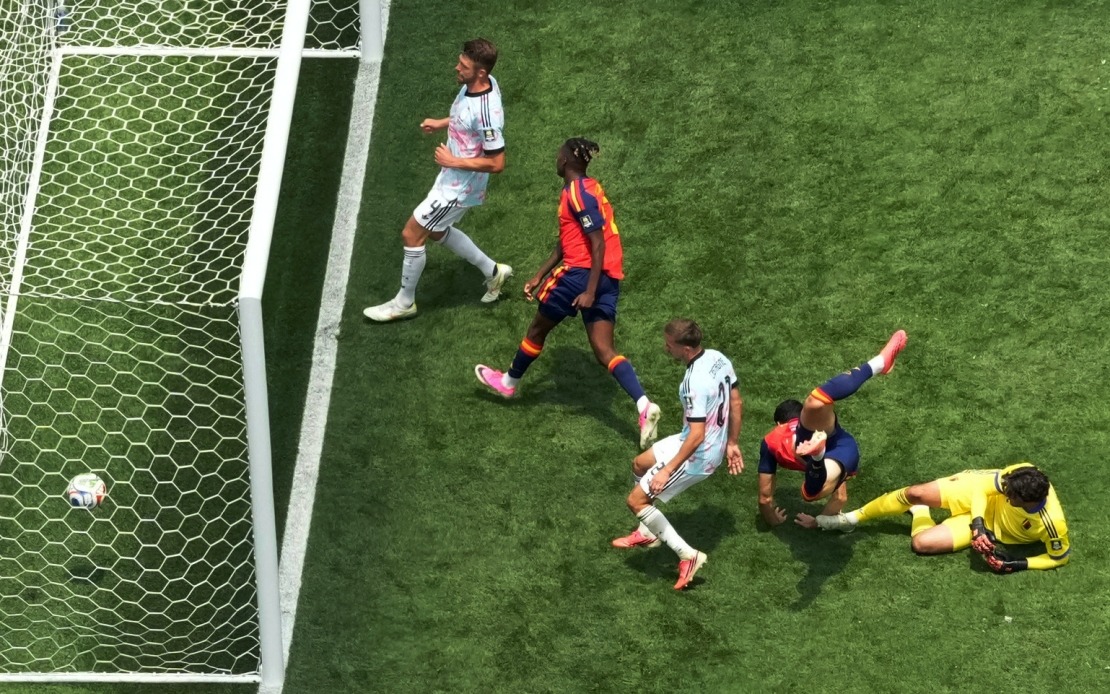
Spain advanced to the semi-finals of the FIFA World Cup 2026 after midfielder Mikel Merino netted a dramatic 88th-minute goal to secure a 2-1 triumph over Belgium at Los Angeles Stadium, California, on Friday. The substitute proved decisive once again, having already delivered the winning strike in Spain's round-of-16 clash against Portugal four days earlier. His intervention sent the 2010 world champions through to the tournament's final four for the first time since 2010, reigniting the prospect of another deep run by La Roja in football's premier competition.
The match unfolded with Spain controlling proceedings in the opening stages, dominating possession and creating early opportunities that suggested dominance. In the 21st minute, 18-year-old sensation Lamine Yamal threatened when his curled attempt narrowly flew past the left post, signalling the Spanish side's attacking intent. The promising display continued after the hydration break when midfielder Fabian Ruiz capitalized on a rebound in the 30th minute to put Luis de la Fuente's squad ahead. The goal arrived after Belgian goalkeeper Thibaut Courtois, the 34-year-old veteran, had produced a crucial save to deflect an effort from winger Dani Olmo.
Courtois remained a formidable obstacle to Spain's aspirations, demonstrating his experience with another important save two minutes later. The veteran shot-stopper displayed his full repertoire of skills when he dived low to his right to keep out Yamal's free-kick, which appeared destined for the bottom corner. His performance underscored Belgium's defensive resilience despite facing consistent pressure from the Spanish midfield and attack. However, the Belgian custodian's heroics were ultimately insufficient to prevent his team from conceding again in the match.
Belgium equalized through an unconventional route when full-back Timothy Castagne delivered a precisely weighted cross from the right flank in the 41st minute. Forward Charles De Ketelaere rose decisively to power a downward header past Spanish goalkeeper Unai Simon, restoring parity in a contest that had swung in Spain's favour. The moment marked Belgium's first goal conceded by Spain in the tournament, indicating the defensive solidity the Spanish team had maintained until that point. Rudi Garcia's squad, managed by the Frenchman, sought to build on this momentum through the remainder of the opening period.
The second half witnessed Belgium emerging with renewed tactical intent, nearly seizing the advantage within ten minutes of the restart. Full-back Maxim De Cuyper tested Spanish defences with an attempt that whistled past the side netting, illustrating the Red Devils' determination to overturn the deficit and progress further. Despite this aggressive approach, Belgium found themselves unable to maintain the threat consistently, allowing Spain to reassert control of the midfield and territorial advantage. The momentum continued to shift as the contest entered its final stages.
Courtois continued to perform heroically, producing back-to-back saves within sixty seconds to deny both Yamal and forward Mikel Oyarzabal, prolonging Belgium's resistance in the encounter. However, the goalkeeper's departure in the 71st minute proved the turning point in a match that had remained tightly contested. Manchester United goalkeeper Senne Lammens replaced Courtois due to an apparent leg injury, and his introduction fundamentally altered the complexion of proceedings. When centre-back Pau Cubarsi unleashed a long-range effort, Lammens spilled the attempt, leaving the ball loose in the penalty area.
Merino demonstrated the predatory instincts required at the highest level of international football, reacting with alacrity to convert the rebound with a poacher's finish in the 88th minute. The midfielder's clinical composure in the closing stages echoed his match-winning contribution against Portugal, establishing himself as Spain's clutch performer in this tournament. His intervention proved devastating for Belgium's World Cup ambitions, ending their campaign in disappointing fashion despite mounting a competitive challenge throughout. Spain's progression sets up an enticing semi-final encounter that promises to captivate the global football audience.
La Roja will confront France in Dallas Stadium on July 15, facing the two-time world champions who dismissed Morocco 2-0 on Thursday. The showdown represents a mouth-watering clash between two powerhouses of international football, with both teams eyeing the World Cup trophy. France's progression demonstrated their own credentials as tournament contenders, while Spain's victory confirms their status as genuine challengers capable of winning the competition. The semi-final fixture will determine which side advances to the showpiece final on July 19.
The FIFA World Cup 2026, co-hosted by Canada, Mexico, and the United States, represents an expanded tournament featuring 48 nations, marking the largest edition in the competition's history since its inauguration in Uruguay in 1930. This structural change fundamentally alters the dynamics of international football's most prestigious championship, extending the tournament from June 11 through July 19 and providing more opportunities for nations to showcase their talents on the global stage. Spain's advancement within this expanded framework demonstrates their ability to navigate the increased complexity and competitiveness that the enlarged format introduces.
The victory establishes Spain as genuine contenders to claim a second World Cup title, building on their success in South Africa in 2010. Luis de la Fuente has constructed a squad that combines experienced campaigners with emerging talent, exemplified by the integration of youngster Yamal alongside established stars. The team's progression to the semi-finals validates their tactical approach and squad composition, suggesting they possess the credentials necessary to compete against the tournament's elite. The clash against France will represent the ultimate examination of their credentials as potential champions.

