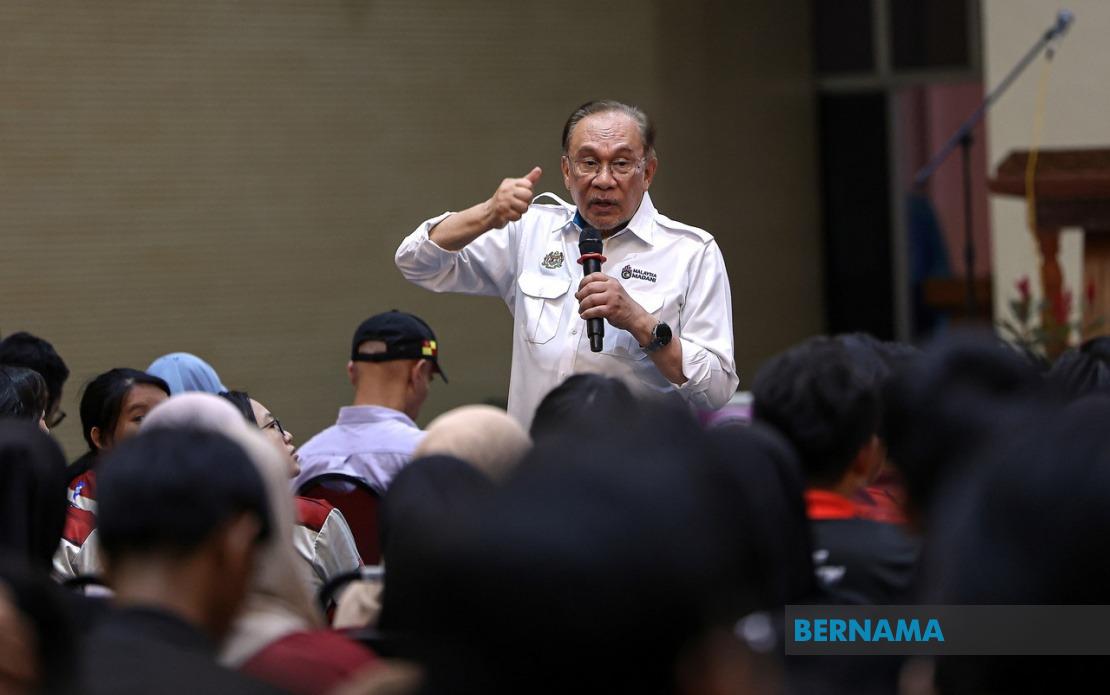
Prime Minister Datuk Seri Anwar Ibrahim has outlined a dual-track approach to student admissions for Malaysia's matriculation programme, one designed to recognize exceptional academic performance while simultaneously addressing educational disparities faced by vulnerable populations. Speaking at a youth engagement event in Seremban on July 22, Anwar articulated the government's vision of widening higher education access through a framework that weighs both scholarly accomplishment and socioeconomic circumstance. The policy framework reflects an attempt to navigate the historically contentious intersection of meritocracy and affirmative action that has long animated Malaysian education debates.
Under the new matriculation intake criteria, students who attain the maximum achievement level of 10As in the Sijil Pelajaran Malaysia examination are eligible for automatic admission to the programme without regard to ethnic background. This merit-based fast track serves as a counterbalance to quota systems, signalling that exceptional performance—defined as perfect marks across all examined subjects—bypasses conventional selection gatekeeping. The automatic admission pathway applies uniformly to Malaysian students of all communities, whether Chinese, Indian, or Malay, establishing academic excellence as the primary determinant for this cohort of high-achieving applicants. By exempting top performers from conventional selection mechanisms, the policy acknowledges that Malaysia loses nothing by admitting its brightest students regardless of demographic profile.
Simultaneously, Anwar reaffirmed the government's commitment to maintaining the Bumiputera quota within matriculation admissions structures. This component of the policy responds to demographic realities and geographic inequities that persist across Malaysia's educational landscape. The Bumiputera provision specifically accounts for students originating from rural and interior localities, including remote communities across Sabah and Sarawak where educational infrastructure remains underdeveloped and economic barriers to learning are particularly acute. These quota reservations function as a corrective mechanism, ensuring that geographical disadvantage does not automatically exclude academically capable students from accessing the foundational pathways that lead toward university education.
The articulation of this two-pronged strategy addresses long-standing tensions between competing educational philosophies. Malaysia's public discourse has for decades grappled with balancing meritocratic principles—the idea that admission should reflect individual capability—against social equity considerations that recognize unequal starting points across ethnic groups and geographic regions. Anwar's framing attempts to satisfy both imperatives by creating separate pathways: top achievers gain expedited access through pure merit, while Bumiputera quotas ensure that capable students from disadvantaged backgrounds are not excluded simply because they operate within constrained educational ecosystems.
The matriculation system itself occupies a critical juncture in Malaysia's education architecture. These pre-university programmes serve as the primary pathway through which Malaysian students enter the nation's public universities, making admission criteria consequential for long-term economic and social mobility. Matriculation intake decisions thus carry implications far beyond individual student outcomes, shaping the demographic composition of future professional cohorts in medicine, engineering, law, and other fields that exert significant influence across Malaysian society. The policy announced by Anwar therefore represents a substantive statement about how the government envisions the relationship between educational opportunity and national development.
Geographic equity emerges as a particularly important consideration within this policy framework. Rural and interior areas, particularly in East Malaysia, have historically experienced educational disadvantages stemming from limited school infrastructure, teacher shortages, and reduced access to quality preparatory tuition. By explicitly acknowledging these communities within the Bumiputera quota mechanism, the government recognizes that academic potential exists in every corner of Malaysia but that structural barriers prevent some capable students from achieving the highest examination results. This recognition suggests that the matriculation intake policy functions partly as a corrective tool, compensating for upstream inequities in the schooling system itself.
The timing of this policy articulation reflects broader governmental priorities under Anwar's administration. Education policy has constituted a central element of the government's reform agenda, with successive announcements aimed at increasing accessibility and improving quality across the system. The matriculation intake framework sits within a larger conversation about how Malaysia can simultaneously pursue excellence and equity—how the nation can develop its brightest human capital while ensuring that talented young Malaysians are not excluded from opportunity based on circumstances beyond their control. The announcement during a youth engagement programme underscores the government's intent to communicate directly with young voters about education commitments.
Racial dimensions of education policy have historically proven politically sensitive across Malaysian contexts. By emphasizing that the highest-performing students across all communities qualify for automatic entry, Anwar sought to signal that the government values excellence and recognizes talent wherever it emerges. This approach potentially appeals to segments of the electorate concerned about meritocratic standards while simultaneously maintaining the constitutional and political safeguards associated with Bumiputera provisions. The rhetorical strategy attempts to reframe quota discussions not as exclusionary mechanisms but as tools for identifying and nurturing capability that might otherwise remain underdeveloped due to circumstantial barriers.
The presence of Youth and Sports Minister Dr Mohammed Taufiq Johari at the Seremban event highlighted the ministerial coordination surrounding education matters. Youth policy and education strategy intersect substantially, particularly regarding access to higher education among young Malaysians and workforce development for the nation's emerging economic needs. The joint presence of both the Prime Minister and Youth Minister signalled government-wide commitment to the matriculation policy framework being articulated.
Implementing such a dual-track system creates administrative and practical considerations. Educational institutions must effectively identify and process both merit-based automatic admissions and quota-allocated places, ensuring transparency while maintaining program quality standards. The policy's success ultimately depends on genuine execution fidelity at matriculation colleges and supporting agencies responsible for operationalizing the criteria. Clear communication regarding admission requirements and pathways becomes essential so that students and parents understand their eligibility and application prospects under the new framework.
Looking forward, the matriculation policy announced by Anwar reflects governmental recognition that Malaysian higher education must evolve to address contemporary realities while respecting constitutional foundations. As Malaysia positions itself for economic advancement and talent competition intensifies globally, the nation requires both excellence cultivation and broad-based participation in tertiary education. The matriculation framework represents an attempt to operationalize that dual objective, though the policy's actual impact will only become apparent as implementation proceeds across successive intake cohorts.

