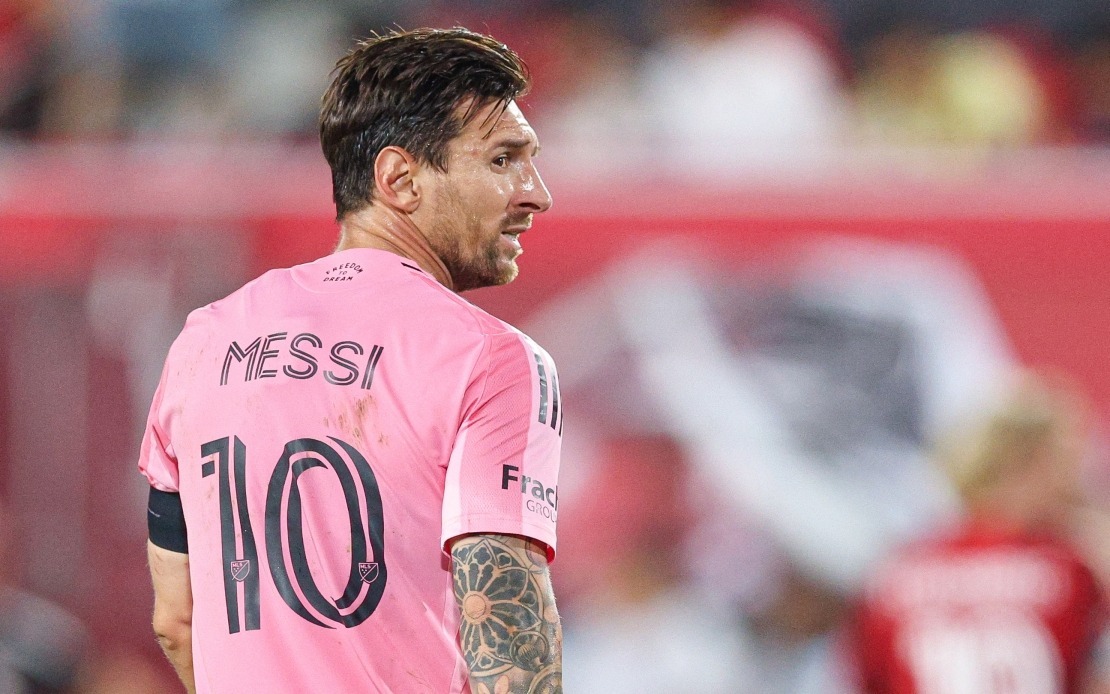
Lionel Messi took the field for Inter Miami on Wednesday evening as a second-half substitute, marking his return to competitive action just days after the death of his father Jorge. The Argentina captain's appearance came in a Leagues Cup group stage encounter against Leon that ended in defeat for the Major League Soccer side, with the Mexican visitors prevailing 3-2 in what proved to be Miami's final fixture in the tournament's group phase.
The timing of Messi's return carried particular emotional weight given that he had issued a deeply personal statement in the days preceding the match, expressing profound uncertainty about whether he would continue his playing career. In his social media address, the football icon questioned whether he possessed the emotional reserves to persist without his father's lifelong presence and guidance. His words revealed the depth of his grief: he questioned how he could carry on without Jorge, and expressed doubts about resuming football when he had always relied so heavily on his father's steadying influence throughout his remarkable journey to becoming one of sport's greatest athletes.
Jorge had served as Messi's agent and closest advisor since the young prodigy was just fourteen years old, witnessing and facilitating every major milestone in his son's extraordinary career. Beyond his professional duties, Jorge remained present for each of Lionel's greatest triumphs, including Argentina's victory in the 2022 FIFA World Cup in Qatar, where he watched his son lead the national team to glory. The elder Messi had continued encouraging his son to pursue participation in one additional World Cup tournament, even as his own health declined significantly over recent months.
Messi had previously withdrawn from Miami's MLS fixture against Monterrey on the preceding Saturday, a match the club lost 2-1. Instead of attending that game, he observed a private funeral service held at a cemetery in Perez, a town near his hometown of Rosario in Argentina, where he paid his final respects to his father. This marked the period of his most acute grief, and his absence from competitive action reflected both his emotional state and his need to be present for his family during those crucial hours.
The decision to include Messi in the Leon match represented a significant moment of both personal courage and professional duty. Coming on during the second half of Wednesday's contest, he demonstrated his characteristic commitment to his team despite the overwhelming personal circumstances surrounding him. The result itself—a defeat for Inter Miami—proved secondary to the fact that Messi could find it within himself to participate at all, signalling that despite his uncertainties about his future, he retained sufficient reserves of strength and dedication to return to the pitch.
Inter Miami's head coach Guillermo Hoyos offered measured commentary in the aftermath, drawing upon his own experiences with profound personal loss. He acknowledged the magnitude of what his star player was enduring, describing it as a blow from which recovery demands considerable time. Hoyos reflected on his own father's passing, recalling how deeply he had relied upon that paternal guidance and how adrift he had felt in the aftermath. He characterized the death of a father as one of life's most destabilizing experiences, particularly acute for someone of Messi's prominence and sensitivity. In doing so, Hoyos humanized the situation, moving beyond mere sporting analysis to recognize the genuine human suffering involved.
The opposing coach, Javier Gandolfi of Leon, added his own perspective on Messi's character and significance. In remarks following the contest, Gandolfi elevated his assessment beyond pure footballing ability, suggesting that Messi represents not merely a preeminent player within the sport's history but also a figure of exceptional human quality. Gandolfi's commentary emphasized that Messi's distinction lay not solely in what transpired during matches but also in the broader conduct and bearing he demonstrated away from the pitch—qualities that set him apart from his contemporaries and predecessors.
For Malaysian and Southeast Asian observers, Messi's situation offers a poignant reminder of the human dimensions underlying professional sport at its highest levels. The globalization of football has meant that figures like Messi transcend their sports and nations, becoming sources of inspiration and fascination across cultural boundaries. His willingness to continue competing despite devastating personal loss speaks to resilience and commitment that resonates far beyond the football pitch, touching upon universal experiences of grief and the struggle to find meaning and purpose when facing life's most difficult challenges.
The forthcoming weeks will likely determine whether Messi's appearance against Leon signals a genuine commitment to continuing his career with Inter Miami or merely represents a temporary return before potentially stepping away from professional football. His emotional statement before the match suggested genuine uncertainty rather than a definitive conclusion, leaving open the question of whether time, family support, and the healing process might alter his perspective. What remains clear is that whatever decision Messi ultimately reaches regarding his future in football, he will do so carrying the weight of his father's absence—an absence that now defines this new chapter of his life and career.

