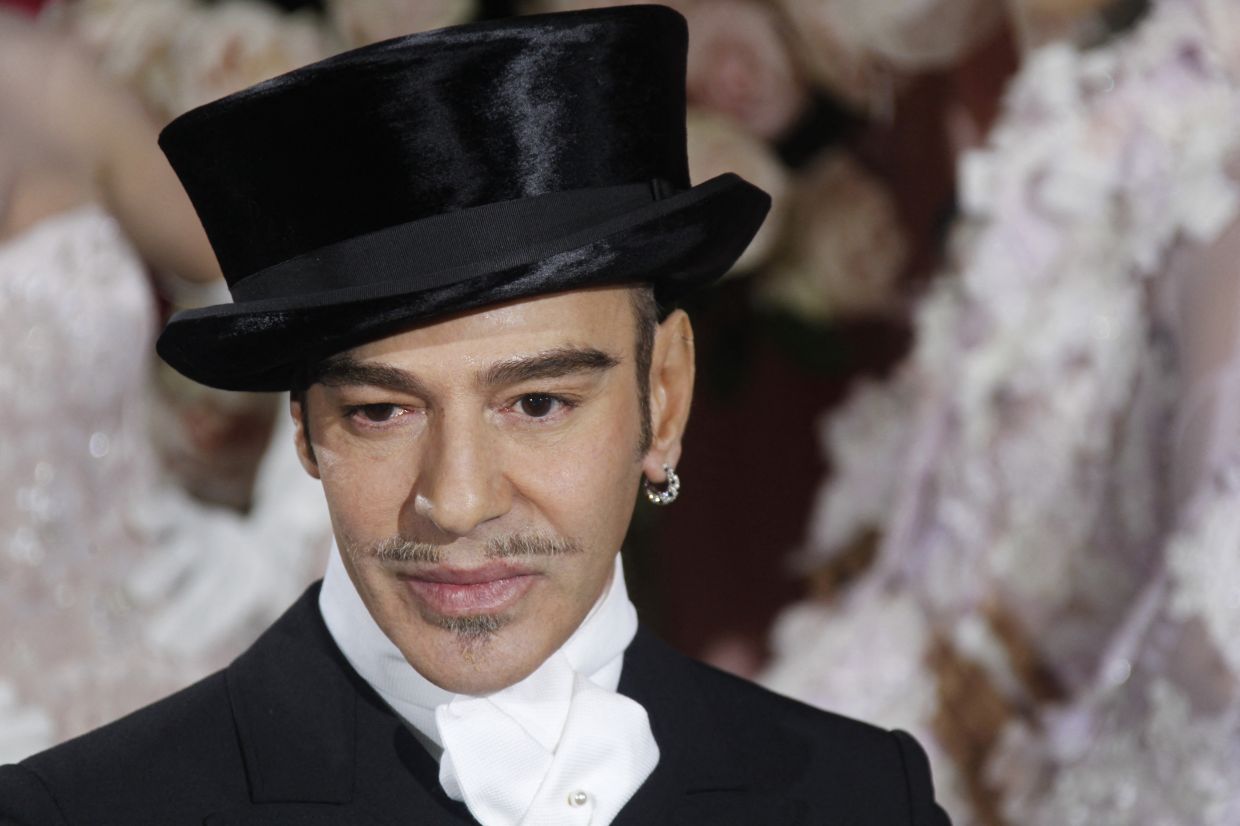
The Metropolitan Museum of Art's Costume Institute has announced an ambitious and emotionally fraught decision: to devote its 2025 spring exhibition to John Galliano, a designer whose name conjures both admiration for his unparalleled technical mastery and revulsion at his documented bigotry. The exhibition, set to launch at next May's Met Gala, represents a calculated reckoning with how the fashion world addresses the work of a creative genius whose personal conduct fundamentally compromised his standing and forced the industry to grapple with uncomfortable questions about separating art from artist.
Galliano's trajectory embodies a peculiar tragedy within elite fashion circles. The British designer spent nearly fifteen years as creative director at Christian Dior, occupying what many consider the most coveted position in the entire industry. His tenure was marked by collections of extraordinary invention—romantic, theatrical, and audaciously complex garments that redefined haute couture for a generation of collectors and fashionistas. Yet this pinnacle collapsed spectacularly in 2010 and 2011 when a series of antisemitic and racist remarks he had made became public, circulating virally in an era when social media was only beginning to weaponize such disclosures. A Paris court subsequently convicted him of public insults based on race, religion, ethnicity, and origin, and Dior severed its relationship with him immediately.
What followed was a period of professional exile and personal reckoning that lasted several years. Galliano underwent treatment for substance addiction and pursued both public and private rehabilitation efforts, engaging in the difficult work of confronting his own prejudices and attempting to rebuild his reputation. The designer did not simply disappear or attempt to hide; instead, he embarked on a lengthy process of acknowledgment and change that the fashion establishment largely watched with skepticism. Many believed his career had reached its terminus, that no major fashion house would risk associating with someone so thoroughly discredited by such serious moral failures.
His professional resurrection came in 2014 when the Paris-based Maison Margiela took the controversial step of appointing him as creative director. This decision was itself contentious, yet it proved transformative. Over the decade that followed, Galliano demonstrated that his design talents remained undiminished, producing a succession of intellectually sophisticated and beautifully executed collections that gradually shifted industry perception. While not everyone accepted or forgave him, the quality of his work and his apparent commitment to genuine personal change earned him a degree of renewed respect. His appointment to the Met Gala's spotlight represents a remarkable, if complicated, form of reinstatement within fashion's most elite circles.
Galliano becomes only the third living designer to receive a solo retrospective at the Costume Institute, a distinction reserved for those whose influence on fashion history is deemed truly transformative. His inclusion in this rarefied category signals that the fashion world has, at least tentatively, reconciled with his legacy—though the museum has taken deliberate steps to ensure this reconciliation does not entail whitewashing or minimizing his past misconduct. The Metropolitan Museum issued a statement emphasizing that the exhibition will directly confront rather than circumvent the most difficult aspects of his history, establishing that artistic accomplishment must be understood alongside ethical accountability.
The curatorial approach reflects months of careful negotiation and consultation. Andrew Bolton, the Costume Institute's primary fashion curator who oversees the institution's most significant exhibitions, led discussions with Jewish community leaders in New York before the announcement was finalized. These conversations, which also included Galliano himself and Vogue's influential editor-in-chief Anna Wintour, ensured that the exhibition would not be perceived as an uncritical celebration of a man whose words had caused documented harm. The museum's willingness to undertake this consultation demonstrates recognition that hosting such an exhibition carries responsibilities that extend beyond the typical art-historical remit.
The exhibition's structure reflects this commitment to complexity and honesty. Its opening section, titled "Bearings," explicitly addresses the rupture created by his antisemitic, racist, and anti-Asian conduct between 2010 and 2011. This portion will not gloss over the consequences—his dismissal from both Christian Dior and his eponymous label, his legal conviction, or the damage his words inflicted on affected communities. It will also document his acknowledgment of these failures and his documented efforts to address underlying issues including substance addiction. Rather than treating these matters as embarrassing footnotes to an otherwise triumphant career narrative, the curators position them as central to understanding how his life and work evolved.
The exhibition's subsequent sections shift focus to different dimensions of his creative practice. "Horizons" will explore the intellectual and artistic sources that have animated his designs—historical references, geographical inspiration, visual art, narrative traditions, and the performative dimensions of fashion presentation. This section allows visitors to understand the conceptual rigor beneath his most fantastical creations, revealing that his designs emerge from deep research and sophisticated thematic frameworks rather than mere aesthetic whimsy. The final section, "Atlas Of Transformation," will concentrate on the purely technical dimensions of his practice: his innovations in tailoring, his experiments with unconventional materials, and his relentless pursuit of new methods for realizing his visions.
For Malaysian and Southeast Asian audiences, Galliano's retrospective carries particular resonance given the region's complex relationship with global fashion cycles and Western designers. Southeast Asian fashion enthusiasts and industry professionals have long followed Dior and Maison Margiela closely, making Galliano's work familiar even during his period of professional exile. His story raises questions about redemption, accountability, and whether individuals who have caused harm can genuinely transform themselves. It also invites reflection on whether the fashion industry's standards for ethical conduct should match those applied to other professional sectors, or whether the field operates according to different principles.
The May 2025 Met Gala will undoubtedly draw intense scrutiny from fashion media, social commentators, and those who remain unconvinced that Galliano has adequately answered for his previous conduct. Red carpet coverage will likely generate considerable discussion about whether his rehabilitation should be celebrated, tolerated, or rejected. The exhibition itself represents fashion's tentative attempt to acknowledge that even its most gifted practitioners can commit serious wrongs, and that moving forward requires neither erasing history nor abandoning the possibility of meaningful change. Whether this particular reckoning satisfies those most affected by his antisemitic and racist remarks remains to be seen, but the Met's approach suggests that the industry is at least beginning to grapple seriously with these questions rather than avoiding them entirely.

